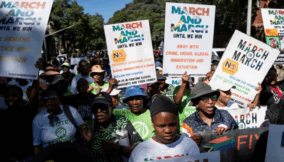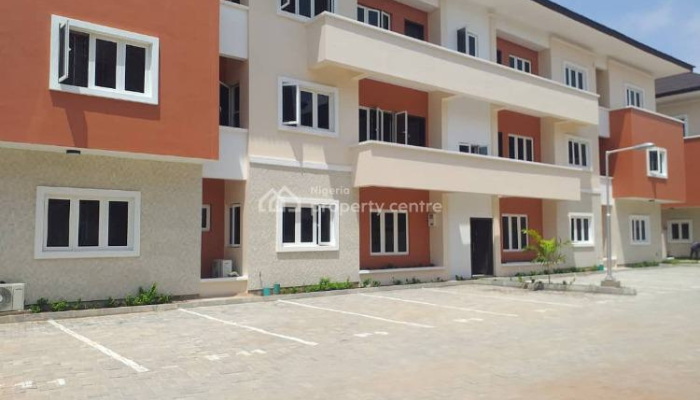
The crisis in the Nigerian rental market is, increasingly, assuming a dangerous dimension as even areas described as urban slums or informal settlements in the city centres are now unaffordable to many residents, especially young workers.
Aderemi Oludare is a young Nigerian working at a tech firm on Lagos Island. Oludare, who started work six years ago, first squatted with a friend for one year plus before he got his own accommodation in an obscure street in Yaba.
In just two years, his rent almost doubled from N850,000 per annum to N1.5 million. He endured that for just one more year and moved to the side of Orile that is close to Surulere, where he started paying N500,000 per annum for a one-room self-contained apartment.
Oludare has lived for four years in his ‘new home,’ and his rent has moved progressively to N2 million per annum without any visible justification—no renovation, no expansion or whatever—just that his landlord wants more money.
“Now, I want to move out of that place. Orile is now a hot cake. I have searched for alternatives to where I am staying, and my findings are even more scary. Some landlords are demanding even higher rent—N2.2 million, N2.5 million and even more,” Oludare told this reporter, seeking help and advice on where to get lower rent.
Oludare disclosed that his eyes and mind are on Okokomaiko–Ijanikin axis, where he hopes to see something better and more affordable. That move is already decided, and the move is on.
Read also: Brent’s $100 ceiling faces test as China, Washington stockpiles lose grip
Anthony Ifediba, another young worker, has a similar story. He is, however, not the endurant type, having moved locations three times across six years from Yaba to Aguda, and now further away to Ojodu Berger, where he pays about 30 percent less rent, from N1.2 million down to N800,000 per annum for a one-bedroom self-contained apartment.
Oludare’s and Ifediba’s stories are not isolated cases or peculiar to them. It is the story of many young Nigerians who, after coming out of school and getting jobs, begin to reimagine their lives with the idea of settling down and forming families at the top of their considerations.
“How can I even imagine bringing a woman to join me when my current accommodation is not even enough for me alone? The whole thing sounds incredible that, as a graduate working and earning income, you cannot afford decent accommodation in a good location for you alone, not to talk of a family of, perhaps, four people,” Ifediba wondered.
The rent situation in Nigeria, especially in the country’s major cities, including Lagos, Abuja, Port Harcourt, Enugu, Ibadan, and Kano, is dire. Renters are contending with abnormal rent increases on a yearly basis, some rising over 100 percent in just 12 months.
Chudi Ubosi, a principal partner at Ubosi Eleh & Co, noted in an interview with BusinessDay that, in the last 24 months, rent prices in Lagos have surged by 50 percent to 200 percent.
He attributed this dramatic increase to a combination of factors, including limited land supply, high demand in prime locations, rising construction costs, and the impact of inflation and currency depreciation.
According to him, “the surge in rental prices has pushed the income-to-rent ratio to nearly 70 percent, significantly exceeding the United Nations’ recommended 30 percent affordability benchmark. This situation has led to a rental boom, with many tenants facing financial strain and having to relocate to find more affordable housing.”
In defence of their penchant for rent increases, which tenants describe as insensitive and inhuman, landlords cite inflation, construction costs, and market dynamics as reasons.
These factors are interconnected, as inflation affects the cost of building materials and other expenses, which landlords must cover. Additionally, construction costs and market dynamics can influence the overall value of the property, leading to adjustments in rent.
The price of cement, for instance, which is a major construction component, has gone up considerably in the last 12 months, from N7,500 per 50kg bag in the second quarter of 2025 to between N11,500 and N15,000 in the second quarter of 2026.
To confront this crisis, analysts suggest that beyond the public-private partnerships and mortgage reform, other interventions deserve serious consideration.
They contend that cities like Lagos must legislate and enforce a cap on advance rent collection, citing the Tenancy and Recovery of Premises Bill introduced in 2025 by the Lagos State House of Assembly to tighten rules on rent advances and regulate agent commissions.
The analysts also recommend incentives for local production of building materials, explaining that import dependency is bleeding developers and, ultimately, tenants. “Tax relief and dedicated industrial land allocations for domestic cement, steel and roofing manufacturers would reduce input costs at source and structurally ease the price of construction,” they stated.

Join BusinessDay whatsapp Channel, to stay up to date
Open In Whatsapp