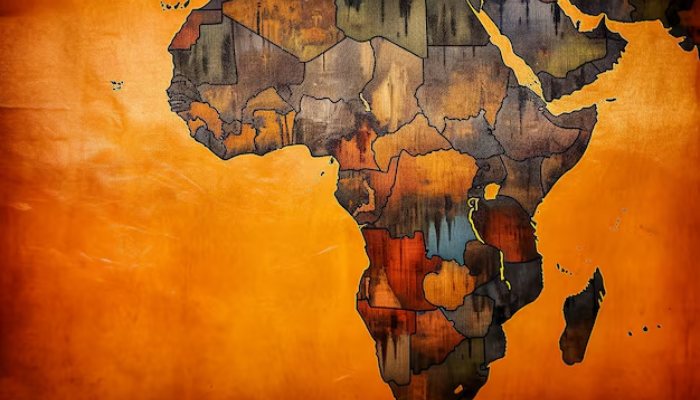
There are defining moments in the life of nations and continents when circumstances compel a fundamental reassessment of direction and destiny. Africa stands at such a moment Today. Never before has the continent possessed such immense promise, yet rarely has it faced a more consequential choice.
Will Africa unite around a shared vision of economic transformation and development, or will it continue to approach the future as a collection of fragmented markets, competing interests, and disconnected national ambitions?
This question has become even more urgent in light of recent xenophobic tensions in South Africa and the growing realisation that Africa’s future prosperity depends less on what separates its nations and more on what unites them. It was a reality recently highlighted by renowned economist Jeffrey Sachs, whose message to African leaders was both simple and profound: Africa must recognise the power of unity or risk remaining on the margins of global influence.
His warning deserves serious reflection—not because it is new, but because it is becoming increasingly urgent.
The Great African Contradiction
Few regions of the world present a paradox as striking as Africa.
The continent is home to more than 1.4 billion people and is projected to account for a substantial share of global population growth throughout the remainder of this century. Africa possesses some of the world’s largest reserves of critical minerals, vast tracts of arable land, abundant renewable energy resources, and a youthful population that could become one of the greatest economic assets of the modern era.
Yet despite these extraordinary advantages, Africa continues to contribute only a modest share of global manufacturing, trade, innovation, and economic output.
This contradiction raises an important question: Why does a continent so richly endowed continue to underperform relative to its immense potential?
Many explanations have been advanced over the years. Colonial legacies, governance challenges, weak institutions, infrastructure deficits, and external dependence have all contributed to the problem. While these factors remain important, another challenge often receives insufficient attention—Africa’s fragmentation.
A Continent Acting Like Fifty-Five Small Markets
Although geographically one continent, Africa often behaves economically as fifty-five separate markets.
Cross-border trade remains relatively low compared to other regions of the world. Infrastructure systems are frequently disconnected. Regulatory frameworks vary significantly from one country to another. The movement of goods, services, capital, and people often encounters barriers that limit economic efficiency and discourage investment.
The result is that African economies frequently compete individually in a world increasingly dominated by large and integrated economic blocs.
China derives strength from scale. India benefits from scale. The European Union has transformed scale into economic influence. The United States continues to leverage the advantages of a large integrated market.
Scale matters because it creates economic efficiency, attracts investment, stimulates innovation, strengthens competitiveness, and enhances bargaining power.
No African nation, acting alone, can match the economic influence of these major powers.
Together, however, Africa can.
And that may be the continent’s greatest untapped strategic advantage.
The Cost of Xenophobia and Internal Division
Recent xenophobic incidents in South Africa serve as a painful reminder of the dangers of internal division.
When Africans view fellow Africans as competitors rather than partners, the continent weakens itself. Xenophobia undermines the very foundations upon which regional integration, economic cooperation, and shared prosperity must be built.
The pharmacist from Lagos, the entrepreneur from Nairobi, the engineer from Kigali, the trader from Accra, and the investor from Johannesburg should not see one another as threats. They are partners in the collective project of African development.
The future of Africa cannot be built on suspicion and exclusion. It must be built on trust, mobility, collaboration, and mutual opportunity.
If Africa is to compete globally, Africans must first learn to cooperate on the continent.
The Vision Nkrumah Saw Decades Ago
The debate about African unity is not new.
More than six decades ago, Ghana’s first president, Kwame Nkrumah, argued that political independence without continental integration would leave Africa vulnerable.
At the time, many considered his vision idealistic.
Today, it appears remarkably practical.
Nkrumah understood something that remains true Today: many of Africa’s greatest challenges transcend national boundaries.
Poverty does not stop at border posts. Climate change does not recognise passports. Insecurity spreads across regions. Infrastructure networks require regional coordination. Energy systems perform better when interconnected. Digital economies thrive through scale and connectivity.
The future increasingly rewards cooperation rather than isolation.
The New Global Reality
The world is undergoing a profound transformation.
Artificial intelligence is reshaping industries. Global supply chains are being reorganised. Competition for strategic minerals is intensifying. Climate adaptation is becoming an economic necessity. Geopolitical alliances are shifting rapidly.
In this emerging environment, countries and regions that collaborate effectively will enjoy significant competitive advantages over those that remain fragmented.
For Africa, this presents both risk and opportunity.
The risk is that the continent continues to serve primarily as a supplier of raw materials while other regions capture the higher-value opportunities in manufacturing, technology, innovation, and industrialisation.
The opportunity is for Africa to position itself as a major economic bloc capable of shaping global conversations rather than merely responding to them.
AfCFTA: Africa’s Most Important Economic Project
Perhaps the most significant instrument for achieving this transformation is the African Continental Free Trade Area (AfCFTA).
If fully implemented, AfCFTA could become one of the largest free-trade zones in the world.
Its significance extends far beyond trade liberalisation.
It represents an opportunity to redesign Africa’s economic architecture fundamentally.
A genuinely integrated African market could stimulate industrialisation, strengthen regional value chains, create millions of jobs, attract investment, encourage innovation, and improve resilience against external economic shocks.
Most importantly, it could transform Africa from a collection of national economies into a formidable continental economic force.
Unity Does Not Mean Uniformity
One of the greatest misconceptions about African integration is the assumption that unity requires abandoning national identity.
Nothing could be further from the truth.
Africa’s diversity is one of its greatest strengths. Its cultures, languages, traditions, and histories represent one of humanity’s richest civilisational assets.
Unity does not require uniformity.
Rather, it requires alignment around shared interests, common aspirations, and collective progress.
The objective is not to erase differences.
The objective is to leverage those differences within a framework of cooperation that benefits all.
A Leadership Test for This Generation
Ultimately, the challenge of African integration is not merely an economic issue.
It is a leadership issue.
The leaders who will shape Africa’s future must be willing to think beyond narrow national interests and embrace a broader continental perspective.
They must ask bigger questions.
How do we build interconnected transport networks across Africa?
How do we create integrated regional energy markets?
How do we increase intra-African trade?
How do we establish world-class universities and research ecosystems?
How do we transform Africa’s demographic advantage into productive economic growth?
How do we ensure that African resources generate African prosperity?
The answers to these questions will determine whether Africa merely participates in the future or helps shape it.
The Choice Before Us
History occasionally presents civilisations with defining moments.
Africa’s moment has arrived.
The continent possesses the resources.
It possesses the talent.
It possesses entrepreneurial energy.
It possesses the demographic advantage.
What remains is the collective will to act together.
The message from Jeffrey Sachs is therefore more than an economic observation. It is a strategic imperative.
The future will increasingly belong to regions that integrate, collaborate, and leverage collective strength.
For Africa, unity is no longer simply the aspiration of Pan-African idealists.
It is rapidly becoming an economic necessity.
The choice before the continent is clear.
Africa can continue to approach the future as a collection of fragmented economies struggling individually for relevance.
Or it can embrace integration and emerge as one of the defining economic forces of the twenty-first century.
The stakes could not be higher.
Africa’s greatest competitive advantage may ultimately not be found beneath its soil, within its mineral reserves, or even in the size of its population.
It may be found in its ability to stand together.
History consistently shows that nations and regions that fail to unite around their collective interests eventually pay a heavy price for division.
Africa cannot afford that price.
The time to unite is now.
Prof. Lere Baale; CEO, Business School Netherlands International (BSN Nigeria)

Join BusinessDay whatsapp Channel, to stay up to date
Open In Whatsapp