…as calls grow for better schools, teacher welfare
The Federal Government’s proposal to eliminate the separation between Junior Secondary School (JSS) and Senior Secondary School (SSS) by extending compulsory basic education from nine to 12 years has generated widespread reactions, with many Nigerians welcoming the move as a step towards reducing school dropouts while insisting that broader reforms are needed to address the country’s education challenges.
Many stakeholders agree that making education seamless could improve retention rates if complemented by sustained investments in school infrastructure, teacher welfare, digital learning facilities and social interventions that tackle poverty and improve access to education across the country.
The policy recommendation seeks to retain Nigeria’s existing 6-3-3 structure but transform it into a seamless 12-year compulsory basic education programme.
Under the current arrangement, pupils spend six years in primary school, three years in junior secondary school and another three years in senior secondary school before proceeding to higher education or vocational training.
The proposed reform does not add extra years of schooling. Instead, it removes the transition barrier between JSS and SSS, allowing students to progress through a continuous 12-year basic education programme without the disruption associated with moving from junior to senior secondary school.
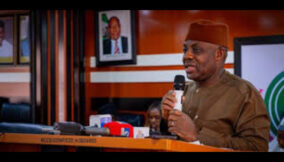
Olatunji Alausa, Minister of Education, had explained that the reform is intended to improve retention in schools and tackle Nigeria’s high dropout rate.
According to him, while the country has about 80,000 public primary schools, there are only about 15,000 junior secondary schools, creating a significant bottleneck that leaves millions of children unable to continue their education.
He said although about 24 million children enrol in primary school, only around four million complete senior secondary education.
Reacting to the proposal, Olajumoke Oluwaseun of Festland International School said the reform addresses a critical stage where many students abandon their education.
“I think the minister is right to an extent because if you engage most young people in rural areas and ask them why they are not in school, they will tell you that they already have a JSS certificate,” she said.
According to her, many parents encourage children to learn vocational skills immediately after junior secondary school instead of returning for senior secondary education.
She added that in communities where child marriage remains prevalent, some girls are withdrawn from school after obtaining their JSS certificates.
“I believe that break in between can be responsible for the dropout rate. Students can easily veer off at that stage when they are required to register, pay fees and sit for examinations before progressing,” she said.
Josiah Phinehas, a Community engagement specialist, also backed the proposal, describing the separation between JSS and SSS as an unnecessary barrier.
“Twenty million out-of-school children is a national emergency. Forcing kids to switch schools after JSS3 only created barriers, confusion and dropouts,” he said.
He argued that a seamless secondary education system would improve student retention, reduce costs for parents and provide greater stability for learners.
However, Phinehas stressed that implementation would determine the success of the policy.
“The real work is to implement the reform quickly, fix infrastructure, train teachers and make quality education truly accessible. This is how we build human capital,” he added.
Adepoju, an Abuja resident, shared similar views, recalling how several of his classmates failed to return after completing JSS despite attending a tuition-free missionary school.
“I know 4 of my classmates that didn’t return after the JSS exam to the SSS class. They dropped out and it was a missionary school so tuition fee was free. That break in transition affects some students. This new reform will end that break so students can have a continuous education.
“That Junior WAEC should be scrapped, we don’t need to create any obstacles for students to get promoted to SS class other than the regular promotion exams that takes them to the next class,” he said
According to him, the proposed reform would eliminate unnecessary obstacles created by the transition process and could improve progression rates.
He also called for the abolition of the Junior WAEC examination, arguing that promotion to senior secondary school should be based on regular school assessments rather than another qualifying examination.
Not all respondents, however, believe restructuring the education system alone will solve Nigeria’s education crisis.
Jethro Isah, a Policy advocate, argued that poverty remains the biggest factor driving children out of school.
He noted that many families are struggling to survive the country’s economic challenges, forcing children to abandon education to support household incomes.
Isah also highlighted poor learning infrastructure, inadequate laboratories, obsolete teaching facilities and the absence of practical digital, financial and technical education in many public schools.
“Poverty. Many families are poor just trying to survive the harsh economy Brought upon them by this govt. Back then basic education was the primary mandate in the family.
“Now it’s to eat and sleep under a roof. Families are in survival mode. So therefore instead of the children to read, they’ll have to help their parents work to secure daily meals.
“Look at the building structures of schools, same schools where elections are held.
Many schools in rural communities are dilapidated,” he noted
He further advocated improved teacher welfare, saying better salaries and increased investment in schools would have a more lasting impact than structural reforms alone.
Similarly, Marvel Nwaochei maintained that the transition from JSS to SSS has never been the principal cause of Nigeria’s out-of-school children crisis.
According to him, poverty, weak infrastructure and insufficient government commitment remain the real issues.
He also questioned how the proposed reform would address children whose parents deliberately refuse to enrol them in school, including many Almajiri children.
Nwaochei called for stronger child welfare interventions, including dedicated institutions capable of identifying vulnerable children, providing shelter and ensuring they receive quality education.
Drawing a comparison with Sweden, he noted that authorities there actively monitor school enrolment and intervene when children are not attending school.
“We can’t solve the out-of-school children situation by simply changing the structure of education. We must address the reasons why children are not in school and provide solutions to those problems,” he said.

Join BusinessDay whatsapp Channel, to stay up to date
Open In Whatsapp