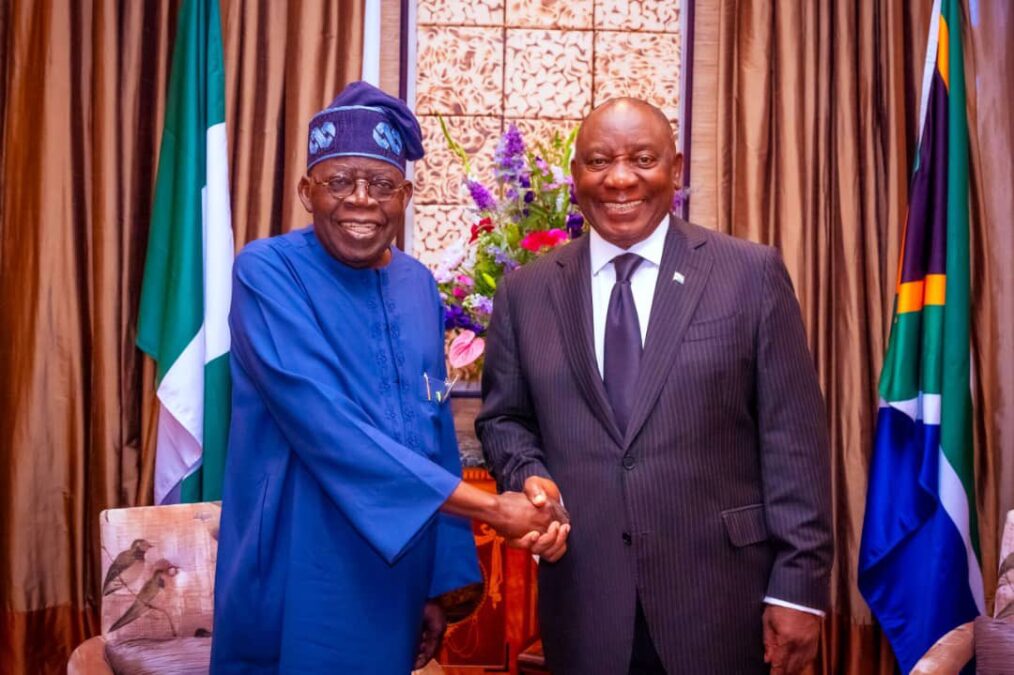
The standoff in South Africa against nationals of other countries has become worrisome. Of all the illegal migrants, Nigerians are the main target. It is just unfortunate that Nigerians have become an endangered species. Whether they choose to stay in their own country or decide to go hustle in other places, they are being singled out for mischief. Their itinerant nature would have been reduced if successive governments and administrations had been responsible with power. To the government that is crying blue murder against the South African authorities, it is fitting to say, “physician heal thyself.”
The Armageddon in S/Africa
Tuesday, June 30, 2026 was a red-letter day for about 271 Nigerians who were evacuated from South Africa following the outbreak of anti-migrant violence and xenophobic unrest.
Over 300 evacuees had earlier been brought back. Reports had it that more than 1000 Nigerians resident in South Africa had indicated interest in leaving the country.
By tomorrow, Friday, it is expected that more evacuees will return to their fatherland, unsure what the future holds for them.
For years, South Africa has been hostile to foreigners, chiefly Nigerians, whom they accuse of eating their lunch in many respects- taking over their jobs, their women and other privileges they should be enjoying.
They are irked that their government has not been quick in enforcing their anti-immigration laws.
For years, this dangerous rhetoric has been pushed, but the intensity seems to have grown to the point that more lives are being threatened and means of livelihood are either confiscated or destroyed.
Read also: Nigeria seeks compensation from South Africa over migrant exodus
The ferocious nature of the protests appears to be fuelled by politicians who want to leverage the opportunity to show how nationalistic they are. They are being fingered as sponsoring the “March in March” protest, which has been changed to “March and March” as a result of the traction the March episode garnered.
Local government elections are billed to be held in November, and with the growing unpopularity of the ruling party- the African National Congress (ANC), a national liberation movement founded in 1912, opposition parties are doing everything possible to swing support to their side.
Fingers are pointing towards uMkhonto weSizwe Party (MKP), which is the official opposition in the country’s National Assembly. It is a left-leaning populist party that formed as a breakaway from the ANC.
Max BoQwana, chief executive officer, Thabo Mbeki Foundation, alluded to this in an interview with Channels Television on Tuesday.
The anti-immigration sentiment in South Africa has gone so deep that anything that goes wrong in the country is blamed on migrant Nigerians in their midst. For instance, before the start of the on-going World Cup a few days ago, a young South African woman made a video which she circulated on social media, saying that one of the country’s players who had travelled for the Mundial was psychologically disturbed and disoriented because a neighbour called him that a Nigerian man was sighted around his (the footballer’s) girlfriend, and that chances were that he would lose the girlfriend. She summarised that with that news, the player would never concentrate on the field of play.
Today in South Africa, Nigerian men who married South African women and vice versa are not spared. Their children are also not spared despite the blood affinity.
A Mayor of one of the provinces was reported to have collected the keys of shops belonging to Nigerians and handed them to their nationals who were apprentices to Nigerians. Many shops stocked with goods, and workshops owned by Nigerians have been reallocated.
A Nigerian man was killed in part of the country a few days back, which was confirmed by the Acting Nigerian High Commissioner to S/Africa, Alexander Ajayi, during a recent interview with a television station.
Cyril Ramaphosa, president of South Africa, has rather chosen to play the ostrich in the entire matter. Although he has made some statements regarding the crisis, he has not been presidential enough in following through with his pronouncements.
Observers say that Ramaphosa is being circumspect not to endanger his party (ANC)’s chances in the coming elections by choosing not to openly condemn or punish the brains behind the protests.
Despite the harsh treatment being meted out to Nigerians in South Africa, thousands of them have decided to stay put. For them, there is no need to return to Nigeria. They simply believe that “what is in the house of bee is also in the house of wasp.”
Nigerian government worthy of many strips
While the effort of the government to frown at the ill-treatment of Nigerians in South Africa is commendable, the simple question many are asking is, when is Nigeria going to put its house in order to check the craving by her citizens to emigrate to countries, even where they know Lucifer is president or commander-in-chief?
Today, many citizens believe they cannot function in a disorganised society like Nigeria where life is short and brutish.
The Nigeria’s paradox
Many observers have said that the Nigerian government did not have the moral high ground to condemn what is going on in South Africa as, according to them, worse things happen here. They point to the high level of hatred, ethnic and religious division and campaign of calumny against people who do not belong to the same political family. They also point to all manner of attempts to emasculate political opposition and how such unfortunate political game is sending out negative signals against the country’s avowed democracy.
Hatred may have different manifestations. The meaning is the same all over the world. The causative agents may vary from place to place.
Nigeria may frown at the harsh treatment of her citizens outside the shores of the country. But are citizens better treated in their own country? While there is the need to condemn the maltreatment of Nigerian nationals in foreign lands, authorities in Nigeria must look themselves in the mirror and ask whether their dealings with their compatriots are any better than what they get elsewhere.
Read also: South African Police arrest over 900 after nationwide anti immigrant protests
While Nigeria rolls out the drums of empathy and charity to welcome the returnees from South Africa, what about millions of patriotic and citizens who are languishing in penury in-country as a result of harsh anti-people policies and their implementation?
The figures are staggering of Nigerians who have been extrajudicially killed by their own security agents paid with their own taxes. Many are dying on daily basis for hunger. Millions are living in the worst of all conditions in-country. The only difference, perhaps, is that they were not being ferried back from any country.
While others were voting with their feet to other countries, even the most hostile nations, to escape the ever-present socio-economic and political bad weather, they decided to stay back here to face life with equanimity, with no government assistance whatsoever.
Is there anything happening in South Africa that has not happened in Nigeria – even against the citizens? We see situations where soldiers and policemen have pulled a trigger on innocent citizens, even when they knew that life has no duplicate. We have seen where people of other regions living in other regions are being harangued and discriminated against because of certain stereotypes attached to them.
Are we not aware that some Nigerians have begun to relocate to their villages or geo-political zones from their base ahead of the next general election in 2027 simply because they are not sure of peace during the election?
In this same country in 2023, there were dangerous rhetoric before, during and after the elections. Some divisive elements threatened to drown in the lagoon certain people who did not share their political persuasions. Some innocent Nigerians who went out to exercise their franchise were killed; some were maimed, while some nearly lost their eyes. These were targeted attacks at those not from the same regions as the attackers. Were the attackers prosecuted? How many of the political thugs went to prison as a result of the lives they took?
In South Africa, children born of mixed parents are being rejected and discriminated against. Does that sound distant? But we saw it here in Nigeria in 2023. A governorship candidate of a party was nearly ostracised from his state because his mother is from a tribe that is not wanted, as it were! That unfortunate sentiment became a campaign point.
Ahead of the 2027 general election, the stereotyping is worsening. Divisive and hate speeches are being spewed out into the polity with reckless abandon. The social media has become a battleground where supporters of parties and candidates are doing battle.
The anti-immigration protesters in South Africa mounted campaigns to drive home their demands. They issued a “you must leave our country” ultimatum which expired on June 30th. The government watched without serious efforts at disowning the pronouncement. The entire world watched with awe as young men and women marched across the major cities of South Africa to drive home their point.
The politicians in the country are providing the oxygen from the backend. Is there no striking similarity to what goes on here in the country?
We are seeing, hearing and reading about all manner of “jankara” judgments oozing out from places that were originally created to be a refuge, where any citizen whose rights have been trampled upon should run into and be secured. Not anymore. Who is behind those frivolous and abracadabra judgments?
Are we not being daily inundated by a cacophony of voices from the loudspeakers mounted by street urchins, touts and political jobbers, parroting hate words against political opponents of their paymasters? We are being excessively hostile to ourselves in the name of politics.
The bile being released by politicians against one another for the sake of political office is dangerously affecting the unity of Nigeria.
If these were happening to us in South Africa, we would have screamed to the high heavens and sprung on our feet, feigning to love our citizens.
We have come to a point in Nigeria where a large number of citizens die daily by unnatural means, yet the government is not alarmed. Some reports have claimed that over one thousand people have died in the last six months in insecurity-related cases in Nigeria. If that is anything to go by, it taints the efforts of the government in bringing back the citizens from South Africa.
Whether a Nigerian is killed in South Africa or in his own country under the same tag of “you are not one of us”, are there different definitions for death in South Africa and death in Nigeria? Death is death anytime, anywhere!
If we officially create a boundary or discrimination against one another; if there are positions that certain citizens from certain regions cannot hold, no matter how qualified they may be, are we not fanning the embers of division and acrimony?
Why then do we demonise South Africans who want our people to leave their country?
The world is a global village. Are we not ridiculing ourselves when we begin to create a false narrative that the lives of our people matter, when whatever we do here and how we conduct the affairs of government are like an open secret to the world?
Tell me, shouldn’t “charity begin at home”?
While we lament the dying spirit of brotherhood in South Africa, we must first remove the log of wood in our own eyes. We can’t possibly go to equity if our hands are not clean.

Join BusinessDay whatsapp Channel, to stay up to date
Open In Whatsapp