Nigeria has secured a seat at the table where the world’s energy future gets decided, joining the International Energy Agency as an associate member in what the agency’s chief calls the swiftest membership process in its 52-year history.
The IEA’s governing board, made up of representatives from its 53 member governments, unanimously approved Nigeria’s application, capping a process that began in May when Ekperikpe Ekpo, minister of state for petroleum resources (Gas), formally applied on Nigeria’s behalf in May.
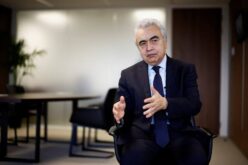
Fatih Birol, the agency’s executive director, who has run the Paris-based agency since 2015 and has worked in the energy sector for more than three decades, said he could not recall a faster turnaround for any applicant in his tenure.
“To become a member of the IEA is not an easy task, to be honest. In some cases, it takes years, sometimes even longer. The Nigerian government applied to join the IEA family in May, just a few months ago,” Birol said.
He added, “There were many discussions across different committees. I personally spoke with all the governments to accelerate and facilitate Nigeria’s accession.”
“It is the fastest ever process in any application,” Birol said, noting he has spent 32 years at the agency and has watched other countries wait years, sometimes far longer, to clear the same hurdles. “It made me very happy.”
Birol said he informed Ekpo of the decision personally, followed by a call to Ayodele Oke, Nigeria’s ambassador to France and a formal letter confirming the accession. He also credited President Bola Tinubu for backing the push.
Founded in 1974 in the aftermath of the Arab oil embargo, the IEA has grown from an oil-security watchdog for industrialised economies into the closest thing the world has to a central data and policy clearinghouse for energy markets, covering crude, gas, power grids, nuclear, hydrogen and the buildout of clean technology.
Read also: Nigeria finally takes seat at World Energy Council as Victor Ekpenyong joins Board
Its 32 full member governments and, until now, 13 association countries account for more than three-quarters of global energy demand, and the bloc coordinates emergency oil-stock releases that have been deployed during past supply shocks, including a record 400-million-barrel release this past March after the conflict between Israel and Iran rattled Middle Eastern crude flows.
Birol said Nigerian officials will now get “the best energy data in the world on a momentary basis”, oil and gas markets, technology trends, where investment is flowing, the same real-time feed given to other member governments, plus a seat in the closed-door forums where countries from the United States and Japan to Germany and Brazil hash out market outlooks.
The agency has also pledged technical advisory support, assessing trading partners, evaluating technology readiness, gauging refining-sector investment needs, along with training slots for Nigerian officials across oil markets, LNG, transportation fuels, and nuclear power, which Birol said Nigeria will receive as “the best available information in the world,” free of charge.
“This will provide the Nigerian government with this exclusive information, such as we also give to other member countries on a momentary basis,” Birol said. “And it will provide the basis for the right decisions at the right time with the right information.”
The case for admitting Nigeria rested heavily on barrels and geography. Africa’s biggest oil-producing country pumps roughly 1.7 million barrels of crude a day, and the Dangote refinery outside Lagos, now one of the largest single-train refineries in the world, is processing around 650,000 barrels daily, output Birol argues underpins fuel security well beyond Nigeria’s borders.
Birol said he told European counterparts that without refined product flows from plants like Dangote’s, “many Europeans would not be able to travel this summer to their summer holidays.”
With over 50 member and association governments now under its umbrella, the IEA’s leadership has framed Nigeria’s entry as existential to its own mandate. ”
“Africa should be part of the IEA fully,” Birol said, if the agency wants to live up to the word “international” in its name, noting the bloc’s African roster previously ran only to South Africa, Senegal, Egypt and Kenya. Nigeria’s addition, he said, was “one of the happiest moments in my professional life.”
The accession also formalises a relationship that already sits at an awkward geopolitical intersection: Nigeria remains a member of OPEC, whose production-quota discipline and climate posture periodically diverge from the market-liberalising, transition-focused instincts of the IEA.
Birol brushed off suggestions of a conflict, saying the IEA “walks closely with OPEC’s secretariat,” and arguing Nigeria’s output, 1.7 million barrels a day, plus Dangote’s contribution, means “OPEC colleagues would agree that Nigeria makes a strong contribution to global energy security.”
Where the accession carries the most social weight is energy access. Nigeria is home to a significant share of the roughly 960 million sub-Saharan Africans who lacked clean cooking fuel as of the latest tracking, and national access to clean cooking technology stood at just above 30 percent as of the most recent World Bank readings, well behind the pace needed to hit universal-access goals by 2030.
Nigeria is also among a handful of countries, alongside Kenya, that the IEA credits with expanding clean cooking access at roughly 2.7 percentage points of population a year in recent years, a rate on par with faster-moving economies in Asia and Latin America.
Birol pointed to the IEA’s 2024 Summit on Clean Cooking in Africa, which mobilised $2.2 billion in public and private financing commitments, as a template for what membership could accelerate for Nigeria, with LPG distribution chief among the fuels the agency is pushing as a bridge technology.
A second summit, co-chaired by Kenyan President William Ruto and Norway’s prime minister, is scheduled for Nairobi in July, and Birol said he hopes Nigerian President Bola Tinubu will attend alongside a planned visit to Abuja in September.

Join BusinessDay whatsapp Channel, to stay up to date
Open In Whatsapp