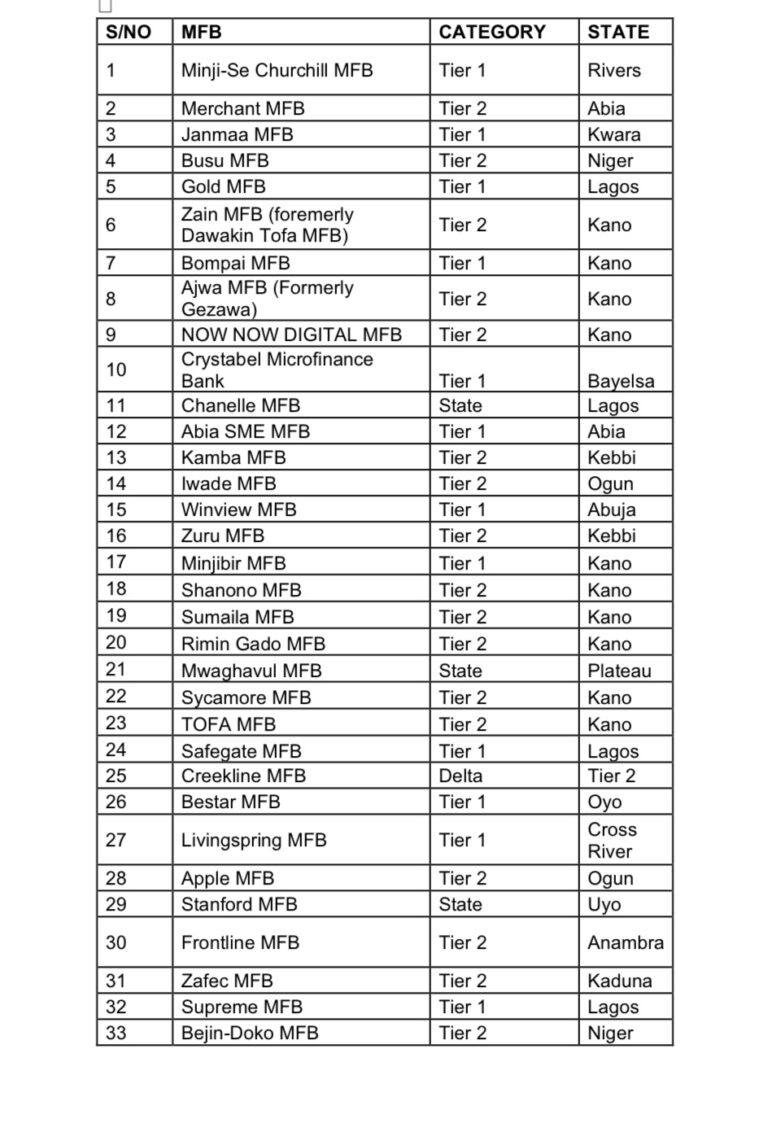
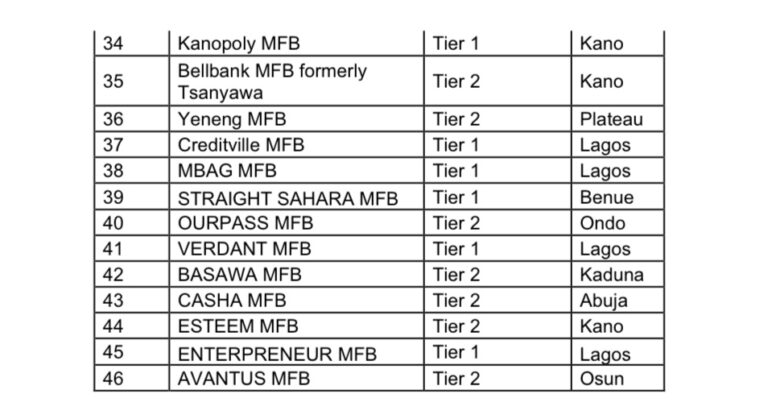
The Central Bank of Nigeria (CBN) has revoked the operating licenses of 46 Microfinance Banks with effect from July 1, 2026, in accordance with its powers under Sections 12 and 13 of the Banks and Other Financial Institutions Act (BOFIA), 2020.
The revocation was approved by the Governor of the Central Bank of Nigeria, Olayemi Cardoso, following the banks’ failure to meet the regulatory requirements for continued operation as licensed financial institutions.
According to the revocation order, the action became necessary because of one or more of the circumstances such as insufficient assets to meet liabilities, closure of operations without the CBN approval, inactivity and cessation of financial intermediation, failure to commence operations within 12 months of licence approval, and failure to maintain minimum capital funds unimpaired by losses.
Accordording to a statement signed by Sidi-Ali, Hakama, acting director, Corporate Communications Department the revocation of the licenses is part of the Bank’s ongoing efforts to safeguard the stability of the financial sector, protect depositors, and ensure that licensed institutions comply with current laws and regulatory requirements.
Read also: CBN’s data localisation order may expand beyond banking as Nigeria eyes cloud investment boom
“The Central Bank of Nigeria remains committed to promoting a safe, sound and resilient financial system and will continue to take appropriate supervisory and regulatory actions, where necessary, to maintain public confidence in the Nigerian financial system,” the circular stated.
Some of the MFBs include Minji-Se Churchill MFB Tier 1 in Rivers State, Merchant MFB Tier 2 in Abia State, Janmaa MFB Tier 1 in Kwara State, Busu MFB Tier 2, Niger State, Gold MFB Tier 1, Lagos State, Zain MFB (foremerly Dawakin Tofa MFB) Tier 2, Kano State, Bompai MFB Tier 1 in Kano State, Ajwa MFB (Formerly Gezawa) Tier 2, Kano State and NOW NOW DIGITAL MFB Tier 2 in Kano State, among others.

Join BusinessDay whatsapp Channel, to stay up to date
Open In Whatsapp