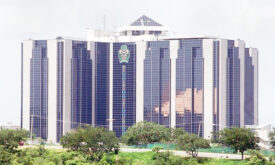
Nigeria is entering the second half of 2026 with its economy showing its strongest signs of stability in years. But a resurgence in inflation and mounting political spending ahead of the 2027 general elections threaten to test the durability of those gains.
The months ahead are expected to shape the direction of Africa’s fourth-largest economy. Businesses and investors in H2 2026 will determine whether Nigeria’s reform programme evolves into a sustainable recovery or faces another period of macroeconomic turbulence.
The first half of 2026 was characterised by cautious but measurable progress.
Nigeria’s economy expanded by 3.89 percent year-on-year in the first quarter of 2026, broadly sustaining the momentum recorded in 2025, when GDP growth rose to 3.13 percent in Q1 from 2.27 percent in Q1 2024.
Although growth remains below the Central Bank of Nigeria’s (CBN) projection of 4.49 percent for the full year, economists say the expansion signals that the structural reforms introduced over the past two years are gradually filtering into the real economy.
During the quarter under review, agriculture grew by 3.15 percent, an improvement from the 0.07 percent recorded in the corresponding quarter of 2025. The growth of the industry sector stood at 3.50 percent from 3.42 percent recorded in the first quarter of 2025, while the services sector recorded a growth of 4.31 percent from 4.33 percent in the same quarter of 2025.
The National Bureau of Statistics’ GDP rebasing exercise, completed in 2025 using 2019 as the new base year, also provided a clearer picture of Nigeria’s economic structure, raising nominal GDP to about $243.3 billion and restoring the country as Africa’s fourth-largest economy.
Perhaps the biggest macroeconomic success story of early 2026 was Nigeria’s rapid disinflation.
Following one of the most aggressive monetary tightening cycles in the country’s history, headline inflation declined consistently for eleven consecutive months, falling from around 34 percent in 2024 to 15.06 percent in February 2026.
The improvement reflected the cumulative impact of higher interest rates, exchange-rate stability, improved food supply in several agricultural regions and statistical base effects following the rebasing of the Consumer Price Index.
However, that progress began to reverse in March.
The escalation of geopolitical tensions in the Middle East pushed global crude oil prices higher, increasing domestic fuel costs despite expanding local refining capacity. The resulting rise in transportation costs filtered through to food prices and broader consumer inflation.
Headline inflation rose from 15.06 percent in February to 15.38 percent in March, 15.69 percent in April, and 15.93 percent in May, marking the highest reading since November 2025.
Food inflation climbed to 17.8 percent in May as transportation costs increased and insecurity continued disrupting agricultural production across parts of the Middle Belt and North-West. Core inflation, which excludes food and energy, also accelerated to 16.82 percent.
While inflation remains significantly below the peaks recorded in 2024, economists say the recent reversal highlights the fragility of Nigeria’s disinflation process and its continued vulnerability to external commodity shocks and domestic supply.
CBN begins policy shift
Against the backdrop of moderating inflation earlier in the year, the Central Bank of Nigeria initiated its first monetary policy easing in more than two years.
At its 304th Monetary Policy Committee meeting in February, the apex bank reduced the Monetary Policy Rate by 50 basis points to 26.5 percent, signalling that the aggressive tightening cycle had likely peaked.
The move was interpreted by investors as the beginning of a gradual policy normalisation process aimed at balancing inflation control with economic growth.
The rate cut had raised expectations that Nigeria was entering a gradual monetary easing cycle designed to support growth after inflation showed signs of moderation.
But the recent resurgence in prices has prompted a more cautious approach, with policymakers likely to prioritise inflation control over further rate reductions.
That caution is increasingly reflected in international forecasts.
The International Monetary Fund became more cautious. In its April 2026 World Economic Outlook, the Fund revised Nigeria’s 2026 growth forecast down by 0.3 percentage points to 4.1 percent.
Similarly, S&P Global has lowered Nigeria’s 2026 growth forecast by 30 basis points to 3.7 percent and reduced its 2027 projection to 3.5 percent, warning that persistent inflation across emerging markets could delay monetary easing and weigh on economic activity.
According to S&P Global, higher food and refined energy prices remain the biggest upside risks to inflation, while geopolitical uncertainty surrounding oil supplies continues to elevate transport and logistics costs.
“We anticipate that higher costs for refined energy products and food will sustain elevated inflation,” the agency said.
Election spending to shape H2
One of the defining themes of the second half of the year will be the build-up to Nigeria’s 2027 general elections.
Historically, pre-election periods have stimulated economic activity through increased government expenditure, infrastructure projects, political campaign spending, and higher liquidity within the economy.
Many analysts expect similar dynamics to emerge from the third quarter, providing additional support for consumer spending and business activity.
However, the same spending could also complicate the inflation outlook.
Samuel Oyekanmi, chief research officer at Norrenberger, said preparations for the elections are already influencing fiscal policy.
“Election preparation for 2027 will be a major driver of economic activities in the second half of the year. The borrowing plan of the federal government for Q3 already indicates increased spending activities, which is good in driving broad-based economic growth, especially from an infrastructural development point of view,” he said.
While growth remains uneven, Oyekanmi noted that sectors including financial services, telecommunications, mining, and oil and gas continue to outperform, adding that stronger industrial sector expansion will be crucial for more inclusive growth.
He expects the naira to trade between N1,350 and N1,500 per dollar, provided the CBN maintains policy discipline and positive real interest rates continue attracting foreign portfolio inflows.
Although Nigeria’s external reserves have strengthened above $50 billion, he warned that long-term stability will depend on converting temporary monetary gains into deeper structural reforms.
Oyekanmi also expects inflation to moderate towards the end of the third quarter if the ceasefire involving Iran, Israel, and the United States holds, although insecurity, seasonal food supply disruptions and election-related spending remain key downside risks.
On financial markets, he expects increased government borrowing to push fixed-income yields higher, prompting investors to rotate out of equities in the near term before sentiment improves later in the quarter.
According to Zedcrest Research’s H2 2026 Nigeria Macroeconomic Outlook, Nigeria is moving from a phase of macroeconomic stabilisation into one where sustaining growth while containing inflation becomes policymakers’ greatest challenge.
The research house projects headline inflation will end the year around 16.79 percent, driven increasingly by structural domestic factors rather than exchange-rate volatility.
It identifies diesel costs as one of the strongest drivers of food inflation because Nigeria’s food distribution system relies heavily on diesel-powered transportation. Chronic electricity shortages are also forcing manufacturers to depend on generators, raising production costs and feeding into core inflation.
The report argues that while global crude oil prices remain important, Nigeria’s inflation outlook will increasingly depend on domestic crude production, refinery efficiency, fuel availability, and transport infrastructure.
“Stable crude production, improved refinery operations, stronger domestic fuel availability, and more efficient transportation networks will remain critical to achieving sustained moderation in inflation,” the report said.
Despite the inflation risks, Zedcrest remains optimistic on growth, forecasting GDP expansion of between 4.0 and 4.3 percent in the second half, which would bring full-year growth to about 4.2 percent.

Join BusinessDay whatsapp Channel, to stay up to date
Open In Whatsapp