Inside many health facilities, public health data begins long before it reaches researchers, policymakers, or surveillance systems. It often starts with patient records, clinic statistics, stock documentation, service flow, and the everyday administrative processes that determine whether health information is accurate, complete, and useful.
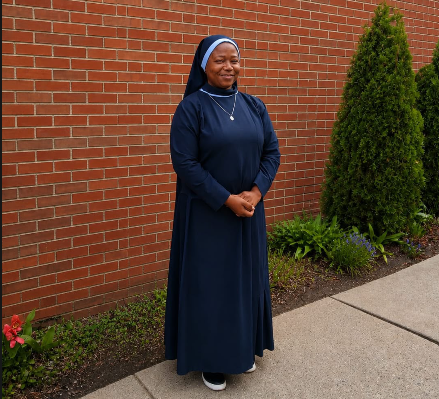
For Anthonia Uchenna Nwachukwu, whose background combines mathematical training with practical experience in health-facility records and clinic operations, the connection between routine health records and broader public health planning has shaped her path into public health analytics. That experience also informs her interest in how data can support disease preparedness, intervention planning, and better public health decision-making.
She obtained a Bachelor of Science degree in Mathematics from Imo State University and later earned a Master of Science degree in Applied Mathematics from the University of Nigeria, Nsukka, a foundation that shaped her transition into health data analysis and disease modeling.
Her career path also includes years in teaching and educational roles, where she developed communication skills that would later prove valuable in translating complex health data into information that policymakers and healthcare workers can understand and use.
According to Nwachukwu, effective public health interventions depend not only on collecting data but also on ensuring that the information is clearly interpreted and communicated to those responsible for making critical decisions.
She later worked in health service environments where she managed records, clinic statistics, stock control, workflow coordination and client services, gaining firsthand experience of the challenges involved in collecting and managing healthcare information.
That exposure, she noted, revealed that health records are often fragmented and difficult to organize, making it harder for health institutions to respond quickly and effectively to emerging health threats.
Her interest in understanding the relationship between data and public health outcomes became particularly significant during the COVID-19 pandemic, when healthcare systems across the world relied heavily on information to guide disease-control measures and public safety interventions.
In 2022, Nwachukwu conducted a study on the acceptability of non-pharmaceutical COVID-19 preventive measures in Abuja. The research examined how residents responded to public health directives and the factors that influenced compliance with recommendations designed to limit the spread of the virus.
Speaking on the findings, she said, “Disease control is not simply a technical exercise. A policy may be supported by scientific evidence, but it still depends on human behavior. Communities may misunderstand risk communication, resist restrictions, or fail to comply with preventive measures.”
She added that statistical analysis can help health authorities understand not only disease patterns but also the social conditions that influence whether public health interventions succeed or fail.
The researcher further explained that the growing volume of information generated from patient records, respiratory illness reports, environmental conditions and community behavior presents an opportunity for health institutions to improve disease surveillance and response systems.
“A model that produces an unexplained risk score may have limited value. Health workers and policymakers need to understand why a population is considered at risk and what factors contributed to that conclusion,” Nwachukwu stated.
She noted that respiratory illnesses such as influenza, pneumonia and other infections remain important areas where health analytics can support treatment planning, preventive outreach and broader public health strategies.
Nwachukwu said the future of disease preparedness would increasingly depend on professionals who can bridge the gap between data, healthcare institutions and communities, adding that public health interventions are most effective when they combine technical evidence with a clear understanding of human behaviour.
Her work, which spans mathematics, teaching, clinic operations and public health research, reflects a growing shift towards practical and interpretable health analytics aimed at supporting more informed and responsible public health decisions.

Join BusinessDay whatsapp Channel, to stay up to date
Open In Whatsapp