Inadequate and timely agricultural data is hampering Nigeria’s agricultural productivity and food security quest.
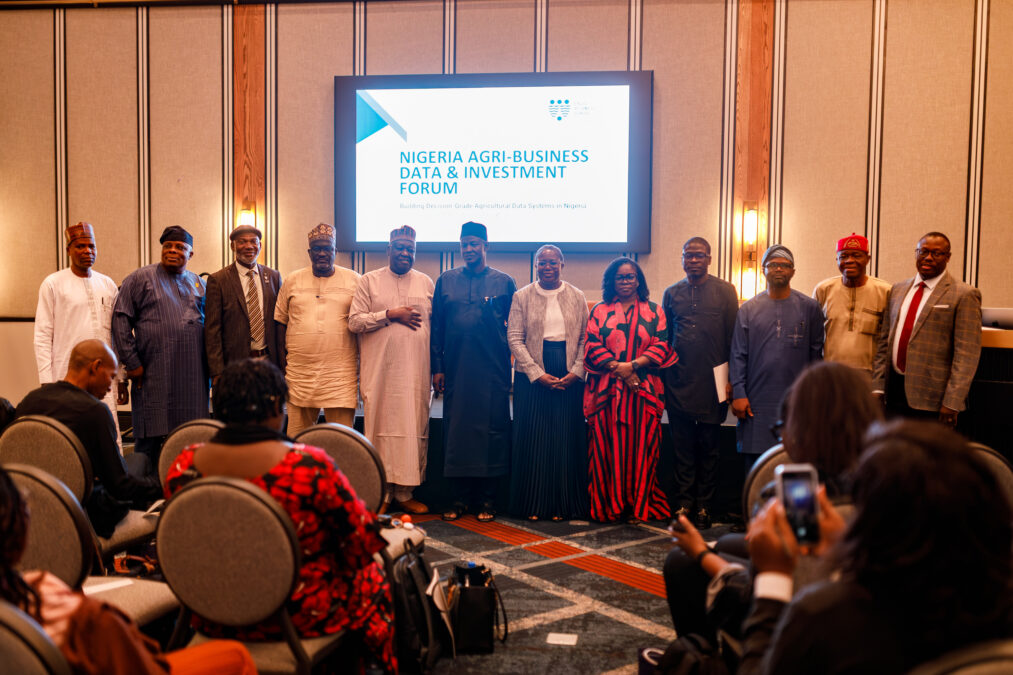
Experts who spoke at the ‘Nigeria Agri-Business Data & Investment Forum,’ organised by the Nigeria Agri-Business Data & Investment Hub (NADIH) and the Lagos Business School, described data as a key factor in addressing development, investment, and food security issues.
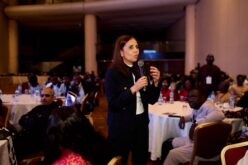
Abisola Olusanya, Lagos State commissioner for Agriculture and Food Systems, said incomplete data forces assumptions across the food system.
“When farmers lack reliable information on market demand and pricing, production becomes an educated guess. When investors lack credible data, capital becomes cautious, and opportunities remain underfunded,” she said.
Olusanya said the impact lands on consumers because “risk is disproportionately borne by those with the least visibility” and “inefficiencies accumulate across the value chain and eventually find their way into the prices consumers pay.”
According to her, when the government cannot see clearly enough into the workings of the food system, interventions become more difficult to target, and outcomes become harder to predict.
She noted that the outcome is a cycle of uncertainty that limits productivity, discourages investment, contributes to waste, reduces incomes and undermines the efficiency of the entire ecosystem.
For Lagos’ 24 million residents, she added, food security now depends as much on coordination and information as on production.
In her opening remarks, Olayinka David-West, dean of Lagos Business School, said investors can’t answer basic questions such as where to plant cassava because Nigeria lacks nationally representative data with enough coverage and quality for the sector.
“Even when data exists, it’s often inadequate for decisions today,” she said.
She noted that the gaps hit smallholder farmers hardest, limiting market access and keeping rural areas in multidimensional poverty.
Speaking on the essence of the event, she stated that LBS is providing a platform for the coordination and aggregation of existing data, rather than recreating it, thereby improving quality and incentivizing sharing through commercial models and policy.
Baba Bukar, statistician general of Kaduna State, shared results from Kaduna’s 2025 survey of 9,179 households: agriculture contributes 39 percent of the state’s GDP, yet 92 percent of farmers are rain-fed and only 3.7 percent have ever met an extension agent.
He said data from Kaduna’s 2025 agricultural survey proved sub-national statistics are “not a luxury” but a necessity for targeting interventions and measuring impact.
The survey identified food security crises in Giwa, Udan and Kauranga, allowing the state to direct resources “not where politics demands, but where data reveals the greatest need,” he said.
Bukar made three calls: invest in state-level data systems, bridge the gap between data and policy so statistics drive budgets and fertiliser delivery, and embrace technology and partnerships from satellite imagery to mobile collection.
“None of these insights came from guesswork. They came from rigorous evidence-based statistical work,” he said.
In a presentation, Femi Williamson-Taylor, project lead, NADIH, urged Nigeria to learn from India, Brazil and South Africa in building agricultural data systems.
He noted that building Nigeria’s intelligence infrastructure requires collective action from all stakeholders across the ecosystem.
In his goodwill message, Adeniyi Adedeji, director of projects coordination at the Federal Ministry of Livestock Development, said the ministry built the National Livestock Information Management System to warehouse livestock data for decision-making, but faces fragmentation and low data utilisation.

Join BusinessDay whatsapp Channel, to stay up to date
Open In Whatsapp