…Inaugurates committee to supervise, monitor UBEC special schools
The Federal Government has announced plans to phase out the separation of Junior Secondary Schools (JSS) from Senior Secondary Schools (SSS) as part of reforms aimed at tackling Nigeria’s growing out-of-school children crisis, following disclosure that more than 20 million pupils who enrolled in primary schools failed to progress to senior secondary education.
Tunji Alausa, Minister of Education, disclosed this on Tuesday in Abuja while inaugurating the Universal Basic Education Commission (UBEC) Ministerial Implementation and Monitoring Committee.
Alausa said the current education structure, which separates junior and senior secondary schools, had failed to provide a seamless transition for learners and had contributed significantly to the country’s alarming school dropout rate.
According to the minister, government findings showed that while Nigeria has about 80,000 public primary schools, there are only about 15,000 junior secondary schools, creating a major gap that prevents millions of pupils from continuing their education after primary school.
“About 24 million children enrol in our primary schools, but only about four million of them complete senior secondary. We have over 20 million children dropping out between primary school and junior secondary school. Where are those students?” he asked.
He said the policy separating JSS from SSS had led to overcrowded junior secondary schools while many senior secondary schools remained underutilised.
“We have overflowing junior secondary schools and empty senior secondary schools. I can objectively report today that this disarticulation policy has failed. We will phase it out. We cannot continue creating administrative positions while damaging our education system. It is about doing what is best for every Nigerian child,” Alausa said.
The minister acknowledged that previous administrations had not adequately addressed the challenge but assured that the current administration was committed to expanding access to education.
“The previous governments may have failed in this regard, but this government will not fail. We are fixing this. We need to create more opportunities for children to move seamlessly through the education system,” he stated.
He added that the proposal to abolish the policy would be presented at the next meeting of the National Council on Education for consideration and possible adoption.
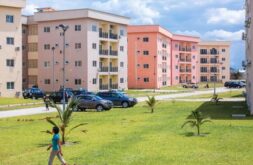
As part of broader efforts to strengthen basic education, Alausa inaugurated a high-powered committee chaired by Rashid Aderinoye, education expert, to accelerate the completion, handover and operationalisation of Smart Schools, Bilingual Schools and Alternative Schools established by UBEC across the country.
The minister expressed concern that despite substantial public investment, many of the schools remained abandoned, while several completed projects had not been handed over to state governments or opened for academic activities.
Describing the situation as a waste of scarce public resources, he said the facilities must begin serving the purpose for which they were established.
“The purpose of these schools is to educate children, not to remain locked up after completion,” he said
He directed the committee to eliminate implementation bottlenecks and ensure the projects become operational.
Alausa also inaugurated a 14-member UBEC Ministerial Implementation and Monitoring Committee to oversee special school projects targeted at addressing the needs of out-of-school children.
He said the Smart Schools were designed to equip learners with digital skills needed for the modern economy, while the Bilingual Schools would promote linguistic inclusion and national integration.
The Alternative Schools, he added, were established to provide quality education for vulnerable groups, particularly girls, out-of-school children and other underserved populations.
Despite these investments, the minister lamented that many of the facilities were not fulfilling their intended objectives.
“Our responsibility, therefore, extends beyond building classrooms. Our responsibility is to ensure that every educational investment made by the government translates into meaningful learning opportunities for Nigerian children,” he said.
Also speaking at the event, Aisha Garba, Executive Secretary, UBEC, said the Federal Government had recorded significant progress in expanding access to quality basic education through the Smart Schools, Bilingual Schools and Alternative Schools programmes.
She disclosed that 37 Smart Schools had been established nationwide, with 24 already in operation, while the remaining schools were at various stages of completion, furnishing and readiness for academic activities.
Garba added that under the UBEC-Islamic Development Bank Bilingual Education Programme, 30 schools had been established across nine states, with three boarding schools already commissioned and four others substantially completed and awaiting inauguration.
She also noted that the Alternative Schools Programme was expanding access to education for vulnerable and out-of-school children through flexible and inclusive learning models.
According to her, the newly inaugurated implementation committee will oversee project execution, ensure the timely completion and handover of schools, resolve implementation challenges and guarantee that government investments translate into fully functional learning centres.

Join BusinessDay whatsapp Channel, to stay up to date
Open In Whatsapp