As preparations for the 2027 general elections enter a critical phase, anxiety has gripped Nigeria’s political opposition over the delay by the Independent National Electoral Commission (INEC) in releasing the access codes required for political parties to upload the names of their nominated candidates.
Despite expectations that the electoral umpire would issue the portal access details to clear the path for the statutory submission of candidates, several major opposition platforms are battling technical difficulties that could screen them out of the race, triggering fears of a deliberate administrative squeeze on the opposition space. Barely two weeks ago, a Federal High Court sitting in Abuja, ordered INEC to deregister African Democratic Congress (ADC) and four other political parties over their alleged failure to meet constitutional requirements for continued existence.
The affected parties included the Action Peoples Party (APP), Action Alliance (AA), Accord Party (AP) and Zenith Labour Party (ZLP).
While the ADC and four other parties were navigating the murky waters of the case in the Appeal court, the newly formed Nigeria Democratic Congress (NDC) was not left out of this sudden judicial bombshell.
Last week, a Federal High Court in Lokoja, Kogi State, dramatically set aside its earlier judgment that directed INEC to register the party, plunging its political future into fresh controversy.
The ruling has ignited fierce debate within the legal fraternity, with senior lawyers sharply divided over whether the decision represents a legitimate exercise of judicial authority or a troubling precedent capable of undermining Nigeria’s multi-party democracy ahead of the polls.
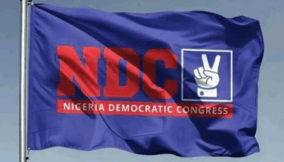
Justice Dashen, on Friday, vacated the court’s December 10, 2025, judgment compelling INEC to register the NDC. The judge ruled that the earlier decision affected the rights of the Peace Movement Party (PMP), which claimed ownership of the logo relied upon by the NDC but was not joined as a party in the original suit.
The ruling followed an application by the PMP, which argued that the NDC’s proposed logo was substantially similar to its own emblem and that it was denied the opportunity to defend its interest before the court granted the registration order.
Read also: “Democracy weakens when opposition is treated as the enemy” – Bode George
This development has reopened debates over the extent of a trial court’s powers to revisit its own judgments, the legal rights of third parties, and the implications of the decision for political pluralism.
Despite the hurdles, Senator Seriake Dickson, the National Leader of the NDC, has urged the party’s candidates and supporters to remain calm, insisting there is no cause for panic. Speaking on Channels Television’s Sunday Politics, Dickson revealed that the party had already activated legal measures to challenge the ruling, maintaining that its participation in the 2027 general election remains intact.
“I want to thank all Nigerians for their support, solidarity, and prayers. As a matter of fact, since Friday, thousands of Nigerians have been flocking to our website to register. They now know more about our party, they sympathise with our party and our candidates, and they are buying into our vision,” he said.
Dickson stressed that the court’s decision did not amount to the deregistration of the NDC and had no effect on the validity of candidates already produced through duly conducted primaries.
“To be clear, the NDC has not been deregistered. The NDC validly nominated candidates for all elective offices through primaries monitored nationwide by INEC—from the State Houses of Assembly to the House of Representatives, the Senate, governorship positions, and our presidential candidate, who has also nominated a running mate. I am equally a senatorial candidate of the party,” he stated.
According to him, all the party’s nominations were conducted within the timetable prescribed by INEC and in full compliance with the Electoral Act.
“Under Nigerian law, candidates emerge through party primaries; submission of their names to INEC is merely an administrative process. The NDC remains a political party. Even the court did not order its deregistration, and no legal step has been taken to that effect,” Dickson added.
Read also: Court’s reversal of NDC registration stirs anxiety ahead 2027 elections
Peter Obi, the NDC presidential candidate, described the judgment as a temporary legal setback that would not derail the party’s election preparations. Maintaining that the ruling was subject to appeal, Obi expressed confidence that the judiciary would ultimately uphold justice and assured supporters that the leadership was already taking the necessary legal steps to challenge the judgment.
Similarly, Rabiu Musa Kwankwaso, the vice-presidential candidate of the NDC, held a strategic meeting with Dickson at the former Bayelsa State governor’s residence in Abuja on Sunday.
In a post on his verified X account, Kwankwaso noted that the meeting centered on consolidating the party’s structures and reinforcing its readiness for the elections.
“As true democrats, we remain committed to the rule of law and have absolute confidence in the judicial process. No temporary setback can weaken the spirit of a movement built on hope, justice, equity, and the collective aspirations of the Nigerian people. I urge all party members, supporters, and well-meaning Nigerians to stay calm, resolute, and focused on our shared mission,” Kwankwaso wrote.
Legal practitioners divided
Moses Ebute, former Chairman of the Nigerian Bar Association (NBA), Abuja Branch, and a member of the legal team defending the PMP’s application, argued that the court acted within established legal principles.
According to him, Nigerian law recognizes limited circumstances under which a court may set aside its own judgment, including a lack of jurisdiction, fraud, suppression of material facts, or the denial of a fair hearing.
“The complaint before the court concerns ownership of the logo. If another political association establishes that the logo belongs to it, then the court is entitled to hear every affected party before making a binding decision,” Ebute said, dismissing suggestions that the judgment was part of a broader attempt to weaken opposition parties. “If a political association adopts a logo that another party claims belongs to it, that raises a legal dispute. It should not automatically be interpreted as an assault on democracy.”
Conversely, Realwan Okpanachi, a legal practitioner and member of the ADC legal team, insisted that the decision raises fundamental questions about the finality of court judgments.
He pointed out that the original proceedings were strictly between the NDC promoters and INEC.
“In our jurisprudence, once a court delivers judgment, it becomes functus officio. A person who was not a party to the proceedings ordinarily cannot return to the same court asking it to set aside its own judgment,” Okpanachi argued, suggesting that the proper legal remedy available to the PMP was to seek leave to appeal as an interested party rather than asking the trial court to reopen the matter.
He warned that frequent judicial reversals, particularly outside the narrow exceptions of fraud or lack of jurisdiction, could severely weaken public confidence in the justice system. “At a time when opposition parties are already battling internal crises, the judiciary must be seen as strengthening democracy rather than becoming another source of anxiety.”
Solomon Apenja, an Abuja-based legal practitioner, described the dispute as a difficult legal contest with constitutional implications that extend far beyond the immediate parties.
While acknowledging that courts possess exceptional powers to set aside judgments under specific conditions, Apenja questioned whether allegations over logo similarities were grave enough to justify reopening a concluded proceeding.
“When legal disputes begin to determine whether political parties can even exist, rather than merely resolving internal disagreements, Nigerians are naturally concerned about the robustness of democratic competition,” Apenja observed. “If confidence in the courts diminishes, the consequences will extend beyond the legal profession and could weaken faith in the democratic process itself.”

Join BusinessDay whatsapp Channel, to stay up to date
Open In Whatsapp