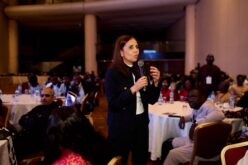
Olaedo Osoka is the co-founder of Sunray Carbon. In this interview with Josephine Okojie-Okeiyi, she spoke about how solar-powered farm machinery and cold chains are delivering a real income shift for smallholder farmers.
You spent close to a decade building one of West Africa’s most recognised commercial and industrial solar businesses, expanding it across five countries before its acquisition by Shell. Looking back, what did that journey teach you about what it actually takes to build energy infrastructure in Africa?
Building infrastructure in Africa – whether solar plants or carbon projects – is not an engineering problem. It is a trust problem. You are asking communities, regulators, investors, and local partners to bet on something new, often in markets where the last person to come up with a good idea left a broken promise behind.
What I learned is that the only way through is to be genuinely present in the market, to understand its specific logic, and to design for the conditions that actually exist rather than the conditions your investors wish existed.
You cannot copy and paste a global solution and expect it to land. Whether you are dealing with a manufacturing client in Lagos or a smallholder in the Middle Belt, the principle is the same: design for the conditions, not for the brochure.
What works is modular, locally embedded, and built around the actual reliability and affordability needs of the people on the ground – not the assumptions in a pitch deck put together ten thousand miles away.
That is the experience we built Sunray Carbon on. We did not start from a model. We started from a decade of operating clean energy projects in these markets – a different starting point that produces a different quality of work.
Sunray Carbon takes that operating experience and turns it into carbon finance: we help project owners develop carbon credits and environmental certificates from e-mobility, clean cooking and renewable energy projects across Africa, and connect them to global buyers.
Across the continent, productive use of energy- solar-powered cold storage, processing equipment, irrigation, milling- is starting to deliver real income shifts for smallholder farmers, particularly women. Where do you see this model gaining traction, and what does it need to take it to the next level?
The productive use of energy (PUE) model is starting to work – that would have been an overstatement five years ago, so it matters that it is true now. Solar cold storage, solar milling, and solar irrigation are transforming income generation for women, who are the main actors at the trading and processing end of the value chain, across parts of East Africa and the agricultural belts of West Africa, particularly where horticulture and dairy dominate.
These technologies reduce post-harvest losses, extend shelf life, and lift yield. A woman who was losing 30 percent of her harvest to spoilage every week is now running a cold chain business. That is a structural change in how she participates in the economy.
What I find equally interesting – and largely underdiscussed – is that every one of these clean energy assets is sitting on an untapped revenue stream. The carbon credits that productive-use solar projects generate are real, internationally tradeable, and largely unclaimed by African developers.
That gap is what programmes like Energising Women and Youth in Agri-Food Systems (EWAS) are starting to close from the ground up.
EWAS is a unique program implemented by the Global Energy Alliance for People and the Planet in partnership with the Mastercard Foundation to enable 17,000 jobs, with a focus on young women in Nigeria and Ethiopia, by expanding access to clean energy, technology, training, and finance in the Agrifood sector.
What the PUE model needs to reach the next level is the ecosystem around the equipment. Financing structures that match how farmers actually earn, in seasonal cycles rather than monthly salaries, and training that goes beyond installation, into how to actually run a business off the back of the equipment.
The EWAS program is trying to build this ecosystem, and it is where the next phase of growth in this sector will come from. There are already some positive examples; for instance, through the Global Energy Alliance’s Productive Use Financing Facility (PUFF) in partnership with CLASP, companies like SokoFresh in Kenya allow farmers to pay for cold storage space rather than buying a $30,000 unit outright.
What sits above it – still largely absent – is the carbon finance layer: the mechanism by which global climate capital pays African women operators for the emissions reductions their businesses generate. That is what changes the economics permanently, and it is the piece that has to sit alongside programmes like EWAS for productive use to scale.
What role do you see energy storage technologies playing in maximising the efficiency and reliability of renewable energy systems in Africa?
Energy storage is the answer to the most persistent criticism of renewable energy in Africa: that it only works when the sun shines. That criticism is technically obsolete. Hybrid solar solutions integrated with storage close the reliability gap on decentralised grids by delivering consistent power across the day, not just when the sun is overhead.
For instance, at the Zawaciki mini-grid in Kano, hybrid storage has enabled around 16 hours of supply a day and a roughly 15-fold increase in average consumer demand.
For productive use specifically, storage is essential. Solar refrigerators and cold rooms only work if they consistently stay cold. It also, from a carbon project perspective, makes solar assets more bankable.
A solar asset that delivers consistent, measurable output also generates consistent, verifiable emissions reductions. That predictability is what global carbon buyers pay a premium for.
Nigerian agriculture employs the majority of the workforce but lags far behind other sectors in electrification, with most activity still running on diesel, generators, or no power at all. From your sector vantage point, what does it actually take to electrify Nigerian agriculture, and what makes it different from the commercial and industrial electrification you’ve worked on directly?
Electrifying Nigerian agriculture is nothing like the commercial and industrial (C&I) electrification I spent most of my career on. And I say that having done both. C&I users often have concentrated demand, predictable operating hours, cash flow, and the ability to sign a long-term power purchase agreement. Agriculture has the opposite.
Dispersed users, seasonal income, low per-site demand, and a deep institutional memory of broken promises from input providers and government programmes alike. That history matters. You cannot sell reliable solar power to a farmer whose last three generators were all repaired by the same man. You have to earn trust before you can sell kilowatts.
What works is blended finance – philanthropic capital taking the first loss, crowding in commercial money – combined with results-based subsidies and flexible repayment built around harvest cycles rather than calendar months, and local partners that deliver installation, training, and after-sales service that build trust.
When that combination works, electricity stops being a service the farmer pays for and becomes a productive input that earns her money.
The Federal Ministry of Agriculture and Food Security just validated its Revised National Gender Policy on Agrifood Systems Transformation (NGPAST), promising more equitable access to agricultural resources, financing and decision-making for women. For a policy like this to translate into on-the-ground change, it needs delivery mechanisms. Where do you see programmes like the Energizing Women and Youth in Agri-food System (EWAS) complementing what the government is now trying to do at the policy level?
The policy is the framework. Programmes are how the framework reaches a woman in Enugu or Ekiti. The NGPAST is important. The test – the only test that matters – is whether it generates a budget line, an implementing structure, a measurement system and real outcomes for the farmers on the ground. If it does, it changes things. If it does not, it joins the shelved policy documents.
Programmes like EWAS are particularly exciting because they are working to address that delivery gap between policy and real outcomes. Its Productive Use Financing Facility (PUFF) addresses the specific credit access barriers women face – no collateral, no formal credit history – through results-based subsidies and flexible repayment.
Implementing partners like Koolboks and Coldbox Store are putting solar freezers and refrigerated aggregation centres into the hands of women fish traders in the South-West and women horticulture farmers in the South-East. So far in Nigeria, the programme has deployed more than 1,500 productive-use appliances, and the early reports suggest post-harvest losses are dropping by 30 to 40 percent in those value chains.
The broader point is that no single programme delivers a policy; policy requires a coordinated ecosystem of financing facilities, technology suppliers, and agricultural partners that share the same goal. The NGPAST creates the demand for that ecosystem.
2026 has been declared the International Year of the Woman Farmer by the United Nations and FAO. In Nigeria, smallholder women produce a significant share of the country’s food but own less than 13 percent of the farmland. What does the gap between what women contribute and what they own actually cost the Nigerian economy?
The gap costs Nigeria money in quantifiable, recurring losses. The World Bank’s 2022 gender diagnostic puts the forgone earnings from the gender gap in Nigerian agricultural productivity at $2.3 billion a year, around 0.6 percent of GDP.
The same report finds that closing the gap could add up to $8.1 billion annually, roughly two percent of the country’s GDP. The cause of this is not mysterious.
Women farmers use less fertiliser and fewer high-value inputs because they cannot afford them. They grow lower-value crops because they cannot access the credit to invest in anything better. They have less access to the machinery, energy and storage that would lift productivity in the work they are already doing.
The International Year of the Woman Farmer is a useful moment to name this clearly. But recognition is not enough. What is needed is investment, financing reform, and policies that move from validation into implementation. That is the difference between a year of symbols and a year of progress.
When you look at women farmers and women-owned agri-businesses across Nigeria today, what stories or examples have struck you most as evidence of what’s possible when investment finally meets capability?
What strikes me most is how quickly the picture changes once the right tools are in place. In the South-West, a deployment of solar chest freezers to women fish traders, run by Koolboks, has reached around 3,785 young women.
As co-chair of the Forum for Women in Energy and an Ambassador for the EWAS programme, you see the gender gap in African energy from both ends, at the structural level and at the level of training and equipment reaching women on the ground. What’s actually shifting the needle?
What is genuinely shifting the needle is the recognition that energy access alone does not change anything. What changes outcomes is pairing energy with PUE, combined with financing that women can actually afford and training that lets them run the business.
At the structural level, that means moving towards blended financing models that mobilise commercial capital. It means designing financial products around the cash flows women actually have, not the credit histories they do not.
It means working through partners who already have the trust of the communities they serve, rather than building from scratch. At the on-the-ground level, it means equipment designed for her use case, financing built around her business, and networks of operators who look like her.
The gap between policy and delivery is narrowing, but the piece still missing is the carbon revenue mechanism that connects the global climate economy to the African women whose businesses are generating real, verifiable emissions reductions. Building that mechanism is the work I now do at Sunray Carbon, the company I co-founded to make sure that gap closes.
Why do you believe a programme like EWAS is critical for Nigeria’s economic growth? What do you think it could unlock for Nigeria’s economic growth if it scales?
Programmes like EWAS are critical because they tackle a systemic paradox at the heart of Nigeria’s economy: agriculture employs roughly half of the national workforce but consumes only two percent of the country’s electricity.
EWAS bridges this gap by shifting the focus from simple household electrification to PUE, translating power access directly into income, dignified jobs, and productivity gains for the people who actually feed the country.
Currently, Nigeria loses an estimated 40 of its annual food production to post-harvest losses, largely due to poor storage practices and a lack of reliable, electrified refrigeration. That is not just food left to spoil; it is billions of Naira in earned wealth permanently lost.
By equipping young women with solar-powered cold rooms and freezers, EWAS tackles this crisis head-on. If this intervention scales, the economic implications are massive: the projected market size for cold storage infrastructure in Nigeria alone is expected to reach $5.9 billion by 2030.

Join BusinessDay whatsapp Channel, to stay up to date
Open In Whatsapp