This past weekend, the world observed Micro, Small and Medium Enterprises (MSME) Day, the international observance designated by the United Nations General Assembly through Resolution A/RES/71/279 to recognise the contribution of small businesses to sustainable, inclusive and resilient growth. The 2026 observance arrives at a moment when artificial intelligence is rapidly reshaping production, finance and labour, reframing what is possible for the women founders, youth entrepreneurs and family enterprises who will define the next chapter of our economy.
Today, I am in FCT Abuja, accompanying Mrs. Yetunde Oni, the Managing Director/ Chief Executive Officer of Union Bank, to the HerAfCFTA Regional Conference convened by the United Nations Development Programme – a gathering devoted to the place of women within Africa’s single market. It is a fitting vantage from which to mark the occasion because the themes it draws together – women, enterprise, youth, and trade across the continent – sit at the very heart of the work I now lead.
I have spent the better part of my career in Nigerian banking, across operations, retail, commercial and now small and medium enterprise business. From that vantage, one observation has hardened into conviction: the businesses we casually describe as small are anything but small in their consequence for this country. They are, by every credible measure, the load bearing wall of the Nigerian economy. How we choose to bank them in this decade will shape what Nigeria looks like in the next.
The scale we too often understate
The most recent National Bureau of Statistics and SMEDAN collaborative survey put the number of micro, small and medium enterprises in Nigeria at approximately 39.6 million. According to that same data, MSMEs account for 96.9 per cent of businesses, 87.9 per cent of employment and 46.32 per cent of gross domestic product. The International Labour Organisation has placed the GDP contribution slightly higher, at 48 per cent as of 2022. Whichever figure one prefers, the conclusion is the same. Nearly half of what Nigeria produces, and the overwhelming majority of what Nigerians do for a living, runs through the small business sector.
These are not abstractions; they are the agro processor in Kaduna who employs eleven people from her community. The logistics operator in Aba whose fleet of three vans services a textile cluster of nearly fifty traders. The fashion atelier in Lagos exporting to two diaspora markets through a single Instagram account. Each of them, multiplied across thirty six states and the Federal Capital Territory, is the reason consumer spending holds, the reason rents are paid, and the reason apprenticeships continue.
Yet, when one sets the contribution beside the credit, the asymmetry is impossible to ignore.
A financing gap of national proportions
In its launch of the Nigeria Development Update earlier this year, the Central Bank of Nigeria acknowledged what practitioners have long known. Nigeria’s existing development finance institutions collectively hold assets of just over eight trillion naira, significantly below the estimated one hundred and thirty trillion naira required to adequately fund MSMEs. The World Bank, in approving its five hundred million dollar Fostering Inclusive Finance for MSMEs in Nigeria, known as FINCLUDE, in December 2025, put the picture more bluntly: fewer than one in twenty MSMEs in Nigeria have access to bank credit, loans are often short term and costly, and collateral requirements exclude many viable firms.
This is a structural failure, not a moral one. It is the cumulative result of a macroeconomic environment in which the Monetary Policy Rate has stood at 26.50 per cent, in which inflation has compressed margins, and in which the cost of credit assessment for a small ticket loan has often outstripped the economics of granting it. The FINCLUDE programme, which is expected to mobilise approximately 1.89 billion dollars in private capital and extend debt financing to about 250,000 MSMEs, at least 150,000 of which are to be women led businesses and 100,000 agribusinesses, is a meaningful intervention. But the mathematics of external intervention, however generously structured, cannot close a gap of that magnitude on its own. The bulk of the work must be done by Nigerian commercial banks, in partnership with regulators, development finance institutions and the businesses themselves.
The women dimension we cannot afford to ignore
There is a particular contour of this problem that deserves separate attention. Mastercard’s 2025 Empowerment for All report finds that 83 per cent of Nigerian women consider themselves entrepreneurs, well above the 51 per cent average across Eastern Europe, the Middle East and Africa. Yet only about 23 per cent of women owned businesses in Nigeria have access to formal MSME credit, and women entrepreneurs across Africa face a combined financing gap of approximately 42 billion dollars, according to the African Development Bank Group. In Nigeria specifically, women face an estimated 2.9 trillion naira credit gap despite leading 72 per cent of the country’s 39.6 million MSMEs.
The arithmetic is sobering. A majority of our small businesses are run by women. A small minority of those women can access formal credit. The cost of that single misalignment, compounded year on year, is a national productivity tax that we all pay.
I served as a former President of weHub, the Union Bank Women Empowerment Network, and the conviction I carried into that role, I carry now into my brief at SME Business. Closing the gender finance gap is not philanthropy. It is one of the highest return on investments available to a Nigerian bank. The institutions that design properly for women entrepreneurs, in product, in risk methodology, in distribution and in mentorship, will not only do well; they will outperform.
What banking must now do differently
The temptation, when faced with numbers of this scale, is to retreat into the language of intervention funds and policy frameworks and yes, those matter. The Central Bank’s Micro, Small and Medium Enterprises Development Fund, established in 2013, prescribes that the commercial component, which constitutes 90 per cent of the Fund, be disbursed in the ratio of 60 per cent to women and 40 per cent to others. It is a thoughtful design, but intervention funds alone will not move the needle. The deeper work sits with commercial banks, and it is fourfold.
First, we must rebuild our credit underwriting for the realities of the MSME sector. Cash flow based lending, alternative data, behavioural scoring drawn from transaction history, payments analytics, supply chain visibility: these tools exist, and the banks that deploy them will originate quality risk where others see only opacity.
Second, we must price for the actual risk, not the imagined one. Much of what is classified as MSME risk is in truth information risk. When we close the information gap, the pricing follows.
Third, we must build non-financial scaffolding around the credit. Business advisory, market linkage, capacity building, mentorship and digital onboarding are not garnish. They are the difference between a loan repaid and a loan recovered.
Fourth, and most importantly, we must design intentionally for women. Targeted products, performance based incentives, female relationship managers where appropriate, and a deliberate posture of trust where the sector has too often signalled suspicion.
Union Bank’s posture
Union Bank of Nigeria has been part of the Nigerian enterprise story for one hundred and nine years, since 1917. Across that history, through every cycle of the Nigerian economy, the constant has been a relationship with the businesses and communities that built this country. The small business sector is not a new frontier for this institution, but a part of who we have always been.
That commitment continues to be recognised. In April 2026, Union Bank received the Best SME Growth Banking Initiatives Award for 2025 from the Association of Small Business Owners of Nigeria, in recognition of its work to advance the growth and resilience of small and medium enterprises. I regard such recognition not as a destination, but as a charge to do more.
Hence, my task, as I take on responsibility for the SME Business, is to bring that heritage forward with urgency and imagination. We are reviewing our product architecture, our digital onboarding, our turnaround times and our partnership network with a single test in mind: does this make it easier, faster and fairer for a Nigerian small business owner to access the capital and capability they need to grow?
The road from here
The future of Nigerian banking is not in the size of the ticket, but in the quality of the relationship. The institutions that understand this will be the ones who, ten years from now, can point to a generation of Nigerian businesses they helped build, and a generation of women entrepreneurs they helped finance into scale.
To every small business owner reading this, on this first working morning after MSME Day, I want to say something simple:
“Your work is the quiet engine of this country. We see it. We owe you better than the credit environment you have known, and the work of building that better environment is the work we have come to do”
About the Author:
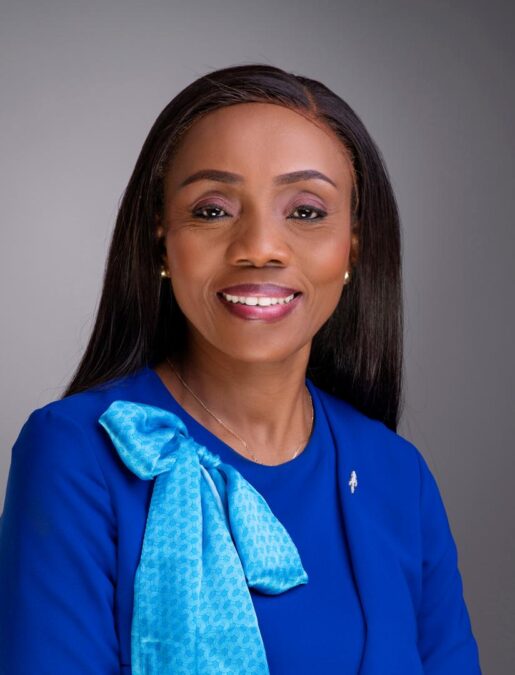
Gloria Omereonye is the Head of SME Business at Union Bank of Nigeria.
She is a Senior Executive with over two and a half decades in Nigerian banking across operations, retail, commercial and business banking, with a track record in balance sheet growth, segment and product development, and the turnaround of underperforming portfolios.
She pioneered Union Accelerate in the Commercial Banking directorate and was closely involved in the consolidation of Union Bank’s Marina mega branches into its current Head Office Branch at the Stallion Plaza.
She is the immediate past President of weHub, the Union Bank Women’s Network, and an Honorary Senior Member of the Chartered Institute of Bankers of Nigeria (HCIB).

Join BusinessDay whatsapp Channel, to stay up to date
Open In Whatsapp