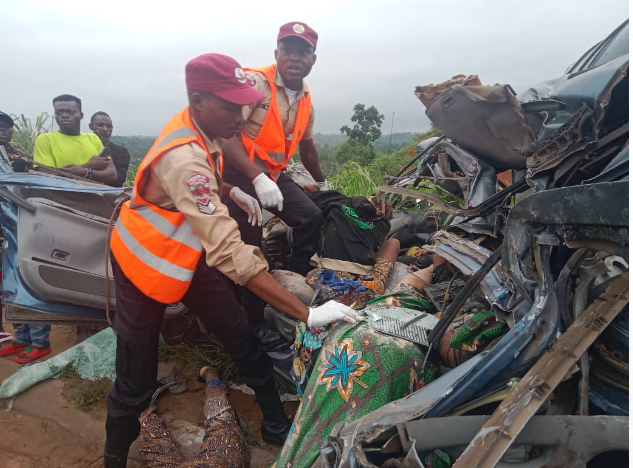
Nigeria’s roads became slightly less deadly in 2025, but not because fewer crashes occurred. In fact, more people were involved in road crashes, more people were injured, and more traffic offences were recorded than in the previous year. The only encouraging statistic was a modest drop in deaths, a reduction the Federal Road Safety Corps (FRSC) attributes to better post-crash response.
Yet even that improvement failed to meet the agency’s expectations.
“While this reduction confirms that post-crash response interventions are working, it fell short of the corps’ strategic target of a 10 per cent fatality reduction and confirms that the challenge before us is no longer response alone, but prevention, compliance and deterrence,” Shehu Mohammed, corps marshal, said while presenting the 2025 road traffic report in Abuja recently.
The figures explain why. According to the FRSC, total road crashes rose by 9.2 per cent, increasing from 9,570 in 2024 to 10,446 in 2025.
“Total crashes across the country increased by 9.2 per cent, from 9,570 in 2024 to 10,446 in 2025,” Mohammed said.
Serious crashes climbed from 6,131 to 6,772, while minor crashes increased from 907 to 1,066. The number of injured persons also rose from 31,154 in 2024 to 33,400 in 2025, a 7.2 per cent increase.
Despite the growing number of crashes, fatalities declined from 5,421 to 5,289.
The figures suggest that more crash victims are surviving because they are being rescued and treated more effectively. But they also expose a troubling reality: Nigeria continues to produce more road crashes than its emergency response system can sustainably manage.
The cost of risky driving
The FRSC says human behaviour remains the biggest obstacle to safer roads.
During the year, arrests for traffic offences jumped from 453,304 to 581,332, while recorded offences increased from 496,799 to 648,918.
“This upward trend reflects intensified patrol operations, improved surveillance, and a more robust enforcement strategy aimed at promoting road discipline and enhancing overall safety on Nigerian roads,” Mohammed explained.
Road use also expanded considerably. Passenger traffic increased from 45.16 million to 47.47 million, vehicle movement rose to 3.74 million, and commercial transport operators recorded more trips and longer travel distances.
For the FRSC, increased mobility partly explains the rise in crashes, but not their causes.
A dangerous holiday season
The Christmas and New Year travel period reinforced the challenge. Between December 15, 2025, and January 15, 2026, crashes increased from 665 to 687. Fatalities rose from 571 to 597, while injuries increased to 2,522.
However, more people were rescued without injury than the previous festive season.
“These figures demonstrate that while interventions saved lives, risky road user behaviour continues to undermine safety during peak travel periods,” Mohammed said.
Among the worst-affected routes were Jos–Bauchi–Gombe–Darazo–Potiskum, which recorded 49 deaths, Zuba–Kaduna–Zaria with 39 deaths, and Abuja–Lokoja with 28.
“These largely avoidable crashes were primarily caused by speeding, dangerous overtaking, loss of control, tyre burst and brake failure, clear indicators of reckless driving and poor vehicle condition,” the Corps Marshal said.
The data points overwhelmingly to one factor. “Causation analysis remains unequivocal. Speed limit violations accounted for 41 per cent of all identified causes of road traffic crashes in December 2025.
“Speed remains the single greatest threat to life on Nigerian roads. The data is clear: speed kills, indiscipline sustains crashes, and disciplined enforcement saves lives.”
From rescue to prevention
The FRSC now believes reducing deaths requires preventing crashes before they happen.
For 2026, the corps plans to replace routine patrols with intelligence-led enforcement, aggressively target the “Big Five” traffic offences linked to fatal crashes, strengthen speed management, and shift public education from awareness campaigns to behaviour-change communication.
“The corps will implement the following policy directions as standing operational orders: First, all Commands shall transition from routine patrols to intelligence-led, risk-based enforcement.
“The corps will enforce zero tolerance on the ‘Big Five’ offences responsible for over 70 per cent of fatal and serious crashes: speed violation, dangerous driving, drunk or drug-impaired driving, wrong-way driving, and overloading.”
The 2025 report delivers a clear message. Better emergency response is saving lives after crashes occur. But unless speeding, dangerous driving and poor compliance are addressed, Nigeria will continue to rescue more victims from a growing number of preventable crashes.

Join BusinessDay whatsapp Channel, to stay up to date
Open In Whatsapp