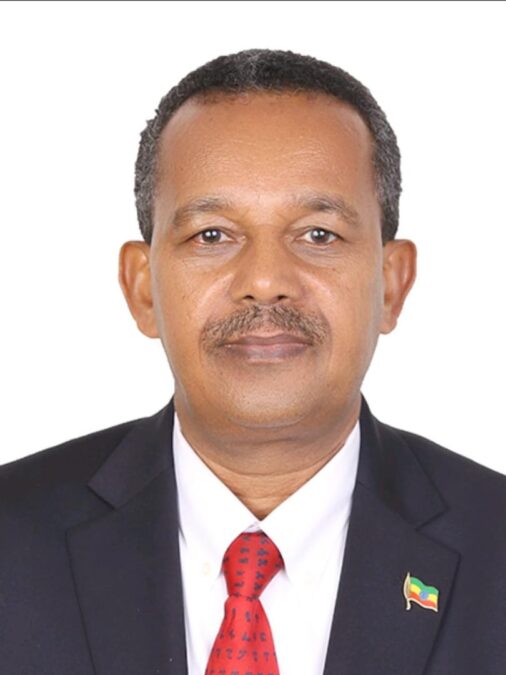
Legesse Haile, Ethiopian Ambassador to Nigeria, has called on African leaders to deepen democratic governance by strengthening institutions, promoting inclusive electoral processes, and creating greater opportunities for citizens to participate in shaping the future of their countries.
The ambassador made the call during an interactive session with the News Agency of Nigeria (NAN) in Abuja while reflecting on the lessons from Ethiopia’s Seventh National Election, held on June 1, 2026.
Haile described the election as a landmark event in Ethiopia’s democratic journey and a significant contribution to Africa’s democratic evolution.
According to him, the poll demonstrated the resolve of millions of Ethiopians to determine their country’s future through peaceful, constitutional, and democratic means despite prevailing political and socio-economic challenges.
He noted that Ethiopia, with a population of more than 130 million people, occupies a unique position in Africa’s political history as one of the continent’s oldest independent nations and the host of the headquarters of the African Union.
“As a founding member and host of the African Union headquarters, and a long-standing symbol of African independence, Ethiopia carries immense regional and continental significance,” he said.
The envoy explained that the country’s commitment to democratic governance has remained steadfast despite complex political, economic, and social realities, adding that sustained institutional reforms have continued to strengthen its democratic system.
Haile also highlighted the impact of Ethiopia’s Homegrown Economic Reform Programme, saying the initiative has begun delivering tangible results by stimulating urban development, expanding critical infrastructure, boosting agricultural productivity, and encouraging strategic investments capable of creating employment and improving the livelihoods of citizens.
According to him, elections should not merely be viewed as exercises for choosing political leaders but as opportunities for citizens to evaluate governance, influence national development, and reinforce democratic accountability.
He attributed the success of Ethiopia’s recent election to increased voter participation, improved electoral administration, stronger legal frameworks, and the deployment of modern technology to enhance transparency and efficiency.
One of the most notable innovations introduced during the exercise, he explained, was “Mirchaye” (My Choice), a locally developed digital voter registration platform that transformed the country’s electoral process.
The ambassador disclosed that more than five million eligible voters registered electronically using their national identity cards, while over 49 million others completed registration manually through a hybrid system designed to maximise access across the country.
He added that, for the first time in Ethiopia’s electoral history, political parties and candidates also registered digitally, while over 7,000 polling centres were mapped using Geographic Information System (GIS) technology to improve logistics, transparency, and election planning.
Haile said approximately 195,000 officials of the National Election Board of Ethiopia (NEBE), were deployed to nearly 52,000 polling units spread across 501 constituencies to conduct the nationwide exercise.
He further revealed that the election attracted extensive domestic and international observation, underscoring confidence in the country’s democratic process.
According to him, the African Union Election Observation Mission was led by
Uhuru Kenyatta, former Kenyan President, while the Intergovernmental Authority on Development Election Observation Mission was headed by Speciosa Wandira-Kazibwe, former Ugandan Vice President.
Haile disclosed that the election recorded an impressive 54,057,871 registered voters, reflecting a high level of public confidence and engagement in the democratic process.
He said the poll was highly competitive, featuring 42 registered political parties alongside several coalition groups.
In total, 10,438 candidates sponsored by political parties and an additional 80 independent candidates contested seats in Ethiopia’s House of Peoples’ Representatives as well as Regional State and City Administration Councils.
The ambassador stressed that Africa’s democratic future depends largely on building credible institutions capable of inspiring public confidence and ensuring elections become instruments for dialogue, accountability, and national cohesion.
He argued that ballot boxes should serve not only as mechanisms for electing leaders but also as platforms that encourage national conversation, public responsibility, and collective participation in governance.
Haile acknowledged that, like many democracies around the world, Ethiopia’s electoral process faced certain challenges.
He noted that security concerns affected voting in some constituencies, while election observers also identified the need to strengthen the participation of women in political leadership and electoral administration.
Rather than viewing such issues as setbacks, he said they should be regarded as opportunities for further institutional reforms and democratic consolidation.
The Ethiopian envoy maintained that his country’s experience demonstrates that African citizens remain committed to constitutional governance, accountability, and peaceful democratic participation.
He urged governments across the continent to continue investing in stronger democratic institutions capable of delivering credible elections and sustainable development.

Join BusinessDay whatsapp Channel, to stay up to date
Open In Whatsapp