rCI0h-electricity-gas-air-conditioning-steam-vat-in-5-years-n-bn-.png
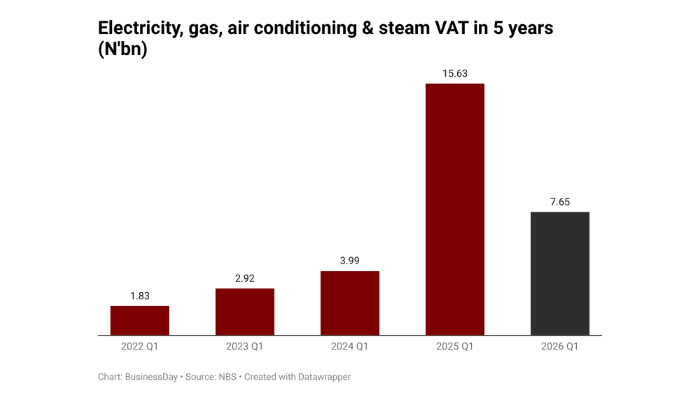
The amount of value-added tax remitted by electricity and gas consumers in Nigeria collapsed by more than half in the first quarter of 2026, as a sweeping rewrite of the country’s tax code stripped a major chunk of the power sector out of the standard VAT net.
Receipts from electricity, gas, steam and air conditioning supply fell to N7.56 billion between January and March, down 51 percent from N15.63 billion collected in the same period a year earlier, according to sectoral VAT data published by the National Bureau of Statistics. The figure also came in seven percent below the fourth quarter of 2025, making the energy sector one of the weakest non-oil tax contributors in the economy during the period.
The plunge is steep enough to invite alarm, but industry experts say the headline number obscures what is, at its core, a policy decision rather than a sector in distress.
“The 51 percent year-on-year contraction in electricity VAT in the first quarter of 2026 looks alarming on its face, but the largest single cause is a deliberate change in the law rather than a collapse in the power sector,” said Ayodele Oni, energy lawyer and partner at Bloomfield Law Practice.
The change Oni refers to is the Nigeria Tax Act 2025, which took effect on January 1 and reclassified electricity supplied to the national grid, along with generation and transmission service, as zero-rated for VAT. Previously, those activities attracted the standard 7.5 percent rate.
“Zero-rating removes a substantial block of output VAT from the electricity line at the very start of the quarter, which is why the fall is so sharp and so cleanly timed,” Oni said in a telephone interview.
Under the new framework, electricity generated by generation companies and sold to the Nigerian Bulk Electricity Trading Company, as well as power transmitted by the Transmission Company of Nigeria to distribution companies, now carry a zero VAT rate. The reform was designed to ease the tax burden across the power value chain, lower operating costs for electricity companies, and make electricity more affordable for end users.
Professional services firm KPMG noted in a recent report that the measure holds significant implications specifically for distribution companies.
“This should have been exciting news for Discos, as only them, under the existing tax framework, make taxable supplies out of the players involved in the national grid,” the firm wrote. It added a caveat, however, noting that the zero-rated classification does not extend to bilateral contracts between generation companies and distribution companies, though it said this may not have a lasting effect on costs since VAT is ultimately borne by the final consumer.
Nigeria’s power sector has long been hobbled by liquidity problems rooted in low tariffs, high collection losses and accumulating debt owed to generation companies. Analysts say stripping out VAT from upstream electricity transactions could improve cash flow within the industry, though the immediate trade-off is a narrowing of government revenue.
The VAT decline unfolds against a broader transformation of Nigeria’s electricity governance. Since President Bola Tinubu signed the Electricity Act in 2023, state governments have assumed greater authority to regulate electricity markets within their own borders, while efforts to expand transmission infrastructure and draw in private capital have intensified. Yet the NBS data suggests it is tax policy, not operational performance, that is currently moving the needle on what government collects from the sector.
The wider VAT picture offers some relief for fiscal authorities. Overall collections across the economy held up during the first quarter, with growth in other sectors absorbing much of the shortfall from electricity and gas.
Analysts caution that the pass-through to electricity tariffs is likely to be slow, given that structural constraints, debt overhangs, metering gaps and transmission bottlenecks continue to press on the sector.


Join BusinessDay whatsapp Channel, to stay up to date
Open In Whatsapp