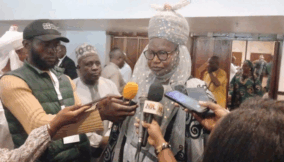
When Bayo Onanuga, presidential spokesman, said recently that he did not see “the level of hunger Nigerians are complaining about,” his words landed like a spark in a country already weighed down by hardship.
Within hours, social media erupted. Thousands of Nigerians pushed back, accusing the presidential aide of being disconnected from the realities confronting millions of households. For many families, survival has become a daily calculation, whether to buy food or pay transport fares, whether to settle school fees or purchase medicines.
The controversy once again exposed the widening gulf between official optimism and public frustration. But beyond the emotions, the debate raises a more important question: How poor are Nigerians today?
The answer lies not in political rhetoric but in the numbers.
Three years after President Bola Ahmed Tinubu assumed office and introduced what economists have described as bold but necessary economic reforms, Nigeria presents two sharply contrasting realities.
On one hand, the government has plenty to celebrate. The removal of fuel subsidy and the liberalisation of the foreign exchange market have helped stabilise public finances. Foreign reserves have climbed above $51 billion, the highest level in nearly two decades. Economic growth accelerated to about 3.87 percent in 2025, while international credit rating agencies have acknowledged improvements in Nigeria’s fiscal outlook. Government officials insist that painful reforms are beginning to yield results and that the economy is finally turning the corner.
Yet for millions of Nigerians, those gains remain largely invisible. The country’s macroeconomic indicators may be improving, but the welfare of ordinary households tells a completely different story.
Figures from the International Monetary Fund paint a troubling picture. The proportion of Nigerians living below the national poverty line has risen steadily, from 56 percent in 2023 to 61 percent in 2024 before reaching 63 percent in 2025.
The IMF’s 2026 Article IV Consultation also estimates that about 27 million Nigerians faced severe food insecurity, driven by persistently high transport costs, rising food prices and disruptions to agricultural supply chains.
Behind every percentage lies a human story. It means millions of families now skip meals more frequently than they did three years ago. It means parents increasingly struggle to keep their children in school, workers spend a larger share of their salaries just getting to work, and many households have abandoned nutritious diets for cheaper alternatives simply to survive.
Independent estimates based on World Bank data reveal an equally disturbing trend.
“The number of Nigerians living below the national poverty line increased from about 125 million in 2023 to an estimated 143 million in 2026,” Oluwole Crowther, a Lagos-based economist, said referring to the World Bank report.
“In practical terms,” he said, “approximately 18 million additional Nigerians have fallen into poverty within three years.”
That increase is roughly equivalent to adding the entire population of several Nigerian states to the poverty register. Much of this deterioration has been fuelled by inflation.
Following the removal of petrol subsidy and the floating of the naira, transportation costs surged, feeding directly into food prices and the cost of virtually every essential commodity. While inflation has begun to moderate, prices remain significantly higher than they were before the reforms.
For households whose incomes have remained largely stagnant, every trip to the market now buys less than it did only a few years ago.
Crowther notes that Nigeria’s experience mirrors what several countries faced after implementing similar reforms.
“Experience from several countries shows that fuel subsidy reforms often impose significant short-term costs on households, particularly low-income groups,” he explained.
Countries such as Ghana, Egypt and Iran experienced sharp inflation after subsidy removal. However, many complemented the reforms with robust social protection programmes, targeted cash transfers and expanded public transportation to cushion the impact on vulnerable citizens.
Nigeria introduced interventions including conditional cash transfers, student loans and compressed natural gas initiatives.
However, according to Crowther, “available evidence suggests that these interventions have not fully offset the impact of higher living costs on many households.”
This explains why government officials and ordinary Nigerians often appear to be describing two different economies.
“The apparent disconnect between official statements and public sentiment stems from the difference between macroeconomic indicators and welfare indicators,” Crowther said.
“Macroeconomic indicators assess the health and stability of the economy, while welfare indicators measure how households are actually living.”
Indeed, both realities can exist simultaneously. An economy may become more stable while millions of citizens continue to struggle. Rising foreign reserves do not automatically lower food prices. A stronger fiscal position does not immediately restore lost purchasing power. Improved investor confidence does not instantly translate into fuller dining tables.
That is the paradox confronting Nigeria today. The reforms have corrected some long-standing distortions in the economy and placed public finances on a stronger footing. But they have also imposed enormous costs on households already living on the margins.
The challenge now is ensuring that macroeconomic gains begin to translate into improvements in people’s daily lives.
For Crowther, that is the real measure of success. “Both narratives contain elements of truth,” he observed.
“The government can point to improving macroeconomic fundamentals, but indicators relating to poverty, food affordability, real wages and household welfare suggest that many Nigerians continue to face significant economic hardship.”
He argues that the ultimate test of the reforms will not be stronger reserves or better credit ratings alone, but whether economic growth becomes inclusive enough to reduce poverty, improve real incomes and restore purchasing power.
Until that happens, statistics on GDP growth may continue to improve, yet millions of Nigerians will judge the economy by a far simpler measure: whether they can afford three meals a day, pay their rent, send their children to school and meet basic needs without sinking deeper into poverty.
That, perhaps, is where the true state of Nigeria’s economy is measured, not in official reports or political arguments, but on the dining tables of ordinary families.

Join BusinessDay whatsapp Channel, to stay up to date
Open In Whatsapp