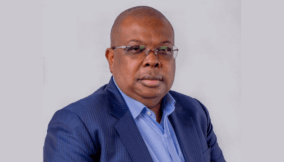
Schneider Electric the French energy management and automation conglomerate, is doubling down on workforce investment across Sub-Saharan Africa at a moment when most multinationals are pulling back, a calculated wager that human-centred strategy will outlast the region’s deepening economic turbulence.
The company secured Top Employer certification across the continent, ranking first among Schneider Electric’s African operations, with scores at or above global benchmarks across five of six evaluation pillars. Four categories — business strategy, career development, ethics and integrity, and sustainability — each returned perfect marks.
“Achieving Top Employer status in a time marked by economic uncertainty, political shifts, and global disruption is no small feat,” said Yewande Ayowole-Oso, the company’s talent leader for Sub-Saharan Africa. “It signals that our people strategy is not reactive — it’s resilient.”
The announcement lands against a complicated regional backdrop. The International Monetary Fund projects Sub-Saharan African GDP growth of roughly 4% in 2025, with a slight pickup the following year, but structural headwinds remain stubborn — debt overhangs, commodity volatility, and the dampening effect of global trade friction continue to erode competitiveness.
In Nigeria, the picture is sharper still. The country’s labour market is caught in a persistent skills mismatch, with university graduates entering a workforce that has little use for their purely theoretical training. The International Labour Organization has flagged the gap repeatedly, placing the burden of practical skills development squarely on employers. Youth unemployment, meanwhile, sits at levels that have become a political flashpoint.
For Schneider Electric, those conditions are shaping rather than slowing its talent agenda. The company is pressing forward with leadership development pipelines, early-career acceleration programmes, and inclusion and wellbeing initiatives — even as it undergoes the kind of internal reorganisation that has swept through most large industrials navigating post-pandemic demand shifts.
The approach challenges a widely held assumption in corporate restructuring: that a company can either cut costs or invest in people, but not both simultaneously. Ayowole-Oso pushed back on that framing. Organisations that transparently acknowledge adversity, protect their employees through transitions, and keep iterating on their people strategies, she argued, are the ones that set the standard — not the ones that post unbroken growth numbers.
Succession planning, or the absence of it, is a particular vulnerability across the continent. Formal leadership pipelines remain the exception in most Nigerian and African organisations, leaving companies exposed when senior talent exits. Schneider Electric’s certification scores suggest it is an outlier on that measure.
The certification process itself is data-driven, not perception-based — a point the company emphasised to distinguish the recognition from conventional employer branding. Performance management, organisational change management, diversity and inclusion, and employee wellbeing each scored in the 93 to 94 percent range.
Whether the model travels beyond Schneider Electric’s own walls is the broader question. In a region where employer investment in human capital is still treated as a discretionary line item rather than a strategic imperative, the company’s bet is that the calculus is about to change.

Join BusinessDay whatsapp Channel, to stay up to date
Open In Whatsapp