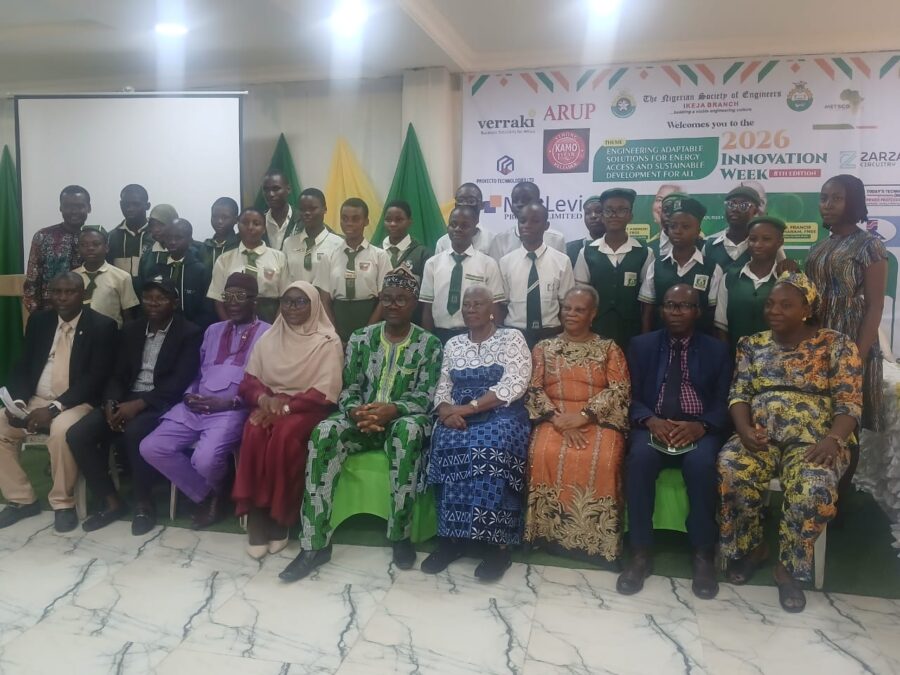
The Nigerian Society of Engineers (NSE) has challenged young engineers to develop practical innovations that can help solve Nigeria’s persistent energy access problems, saying the country’s economic growth and sustainable development will increasingly depend on locally developed engineering solutions.
Speaking at the opening of the eighth edition of the NSE Ikeja Branch Innovation Week 2026 in Lagos, Ali Rabiu, the president and chairman-in-council of the NSE, said the global energy landscape was changing rapidly, creating fresh opportunities for engineers to shape the future.
Represented by NSE fellow Ibrahim Aledu, Rabiu said rising energy costs were affecting households, businesses and economies across the world, making innovation more important than ever.
Read also: Building the invisible foundations of national development
“The world will increasingly depend on your ideas, creativity and expertise to solve some of its most pressing energy challenges,” he told participants at the event, themed “Engineering Adaptable Solution for Energy Access and Sustainable Development for All.”
His remarks come as Nigeria continues to grapple with unreliable electricity supply, rising energy demand and the need to expand access to cleaner and more sustainable sources of power. Industry experts say engineers will play a critical role in helping the country balance conventional energy with renewable alternatives while improving energy efficiency.
Rabiu said the ongoing global debate on the future of energy underscored the need for engineers to develop adaptable solutions capable of supporting both economic growth and environmental sustainability.
Nimot Muili, the chairman of the NSE Ikeja Branch, said the three-day Innovation Week was designed to equip students and early-career engineers with practical skills that could prepare them for emerging challenges in the engineering profession.
According to her, the programme combines hands-on training in Science, Technology, Engineering, Arts and Mathematics (STEAM) with project-based learning, demonstrations and interactive sessions aimed at building problem-solving and innovation skills.
Muili said engineering remained central to solving some of society’s biggest challenges, particularly in expanding energy access, building resilient infrastructure and deploying technologies that improve people’s quality of life.
“Together, we can engineer adaptable solutions that will expand energy access, strengthen communities and build a more sustainable future for all,” she said.
Oyetayo Ige, managing director of Proyecto Technologies Limited urged young engineers not to allow limited funding to discourage innovation.
He said successful engineering ideas often begin with identifying local problems and designing simple but scalable solutions.
“Innovation does not require a lot of money; it begins with curiosity. Every problem presents an opportunity, and engineering is about developing practical solutions,” Ige said.
He added that collaboration, mentorship and continuous learning remained essential for transforming ideas into commercially viable products capable of creating jobs and supporting industrial development.
Also speaking, Chinyere Igwegbe, president of the Association of Professional Women Engineers of Nigeria (APWEN), said engineers would play a decisive role in improving energy access across Africa.
She encouraged young Nigerians to channel their creativity and entrepreneurial abilities into innovations that support national development and economic transformation.
Kazeem Raji, the director-general of the National Board for Technology Incubation, said the agency was helping innovators convert ideas into successful businesses through incubation programmes that provide technical support, mentorship and access to production facilities.
Represented by Jummai Balogun, nanager of the Technology Incubation Centre, Raji said the incubation process helps innovators refine prototypes, reduce start-up risks and develop market-ready products capable of competing globally.
“We incubate businesses, nurture innovative ideas and help entrepreneurs grow into successful manufacturers of made-in-Nigeria products that can compete globally,” he said.
He added that the initiative is designed to improve the survival rate of start-ups while supporting job creation and local manufacturing.
Read also: Moniepoint bets on talent as Africa’s engineering gap threatens fintech growth
Tomide Akinnawo, chairman of the Innovation Week Planning Committee, said the annual programme demonstrated the branch’s commitment to promoting professionalism, excellence and sustainable engineering development.
Beyond speeches, this year’s Innovation Week places significant emphasis on practical learning through the Francis Oguamanam Inno-Creativ Fair (FOIF) and the Mrs. Idiat Amusu Project Skills Initiative (IAAPSI), both established to encourage creativity, innovation and technical skills among young engineers.
The programme will provide hands-on training for 60 National Youth Service Corps members, 100 students, 20 early-career professionals and 10 teachers.
The focus on practical skills reflects a growing recognition within Nigeria’s engineering community that addressing the country’s energy deficit will require more than policy reforms. It will also depend on developing a new generation of engineers capable of designing affordable, locally relevant technologies that can improve electricity access, support industrial growth and strengthen Nigeria’s transition towards a more sustainable energy future.


Join BusinessDay whatsapp Channel, to stay up to date
Open In Whatsapp