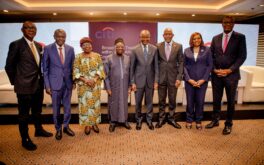
The Nigeria Centre for Disease Control and Prevention (NCDC) has opposed a bill seeking to establish a National Institute for Public Health and Infectious Diseases in Zaria, warning that the proposal would duplicate existing functions, create institutional conflicts and weaken the country’s ability to respond effectively to disease outbreaks.
Speaking at a public hearing on the National Institute for Public Health and Infectious Diseases, Zaria (Establishment) Bill, 2025 (HB 2629), organised by the House of Representatives Committee on Infectious Diseases, Jide Idris, Director-General of the NCDC, argued that Nigeria already has a legally established national public health institute and creating another body with similar responsibilities would result in waste of scarce public resources.
“The proposed National Institute for Public Health and Infectious Diseases seeks to perform functions that are already vested in the NCDC by law,” he said.
Idris warned that public health emergencies require a single, clearly recognised national authority and that establishing another federal institution with overlapping responsibilities could generate uncertainty over leadership and accountability during outbreaks.
“Questions will inevitably arise regarding which institution leads surveillance, coordinates response activities, manages laboratory networks or serves as Nigeria’s official public health authority,” he said.
A major concern raised by the agency relates to provisions in the bill that designate the proposed institute as Nigeria’s national focal point for the International Health Regulations, a role currently assigned to the NCDC under existing law and recognised by the World Health Organisation.
Similarly, the agency pointed to provisions empowering the proposed institute to lead and coordinate national responses to infectious disease outbreaks, arguing that this responsibility is already assigned to the NCDC under its establishing law.
Idris warned that such overlaps could create confusion among state governments, development partners and international organisations that currently engage with Nigeria through established public health structures.
The NCDC Boss further raised concerns over the financial implications of establishing the proposed institute, noting that the bill envisages a headquarters, zonal structures, state offices, governing bodies and extensive staffing arrangements.
Idris argued that at a time of competing national priorities, available resources should be directed towards strengthening existing institutions rather than creating new bureaucracies.
It further opposed proposals to allocate a portion of the Basic Health Care Provision Fund to the institute, warning that such a move would place additional pressure on an already constrained funding mechanism and could reduce resources available for existing health programmes.
The NCDC, in its position, urged lawmakers to strengthen existing structures instead of creating a new institution with overlapping responsibilities.
Earlier, Tajudeen Abbas, Speaker of the House of Representatives, described the proposed institute as a strategic investment in Nigeria’s health security and preparedness against future disease outbreaks.
Represented by Bashir Zubair, the Speaker argued that Nigeria’s experiences with Ebola, COVID-19, Lassa fever and other infectious disease outbreaks exposed significant vulnerabilities within the country’s health system and demonstrated the urgent need for stronger institutions capable of anticipating, preventing and responding effectively to emerging public health threats.
According to Abbas, argued that the objective of the legislation was not simply to establish another government institution but that the proposed institute would provide a comprehensive framework for integrating disease prevention, surveillance, diagnosis, research, control and management within a coordinated national system while empowering Nigerian scientists to develop home-grown solutions to infectious diseases.
In his welcome address, Amobi Ogah, Chairman of the House Committee on Infectious Diseases, represented by Mark Esset, recalled that during an oversight visit to the National Tuberculosis and Leprosy Training Centre in Saye, Zaria, in October 2025, members of the Committee discovered enormous but underutilised human and infrastructural capacity at the facility.
He said the visit inspired the Committee’s recommendation to upgrade the centre into a national public health institute and also informed the decision to broaden the Committee’s mandate by changing its name from the House Committee on HIV/AIDS, Tuberculosis and Malaria Control to the House Committee on Infectious Diseases.
The lawmaker disclosed that the Presidency had already approved the upgrade of the Zaria training centre into a public institute and expressed optimism that the proposed legislation would significantly strengthen Nigeria’s capacity to prevent, diagnose, treat and manage infectious diseases.

Join BusinessDay whatsapp Channel, to stay up to date
Open In Whatsapp