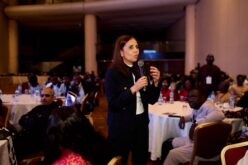
A business strategy and project development professional, Oluwatobi Alebiosu, has urged African startups to prioritise profitability and sustainable business models over aggressive expansion, warning that the pursuit of rapid growth without a clear path to financial sustainability has contributed to the struggles of many startups across the continent.
Alebiosu said while growth remains important for young businesses, founders must pay greater attention to building resilient companies capable of generating long-term value rather than focusing solely on scaling operations and acquiring customers.
According to her, the current business environment requires startups to become more disciplined in how they deploy capital, manage costs and respond to changing market conditions.
She added, “Growth is important, but growth alone does not guarantee sustainability. Startups need clear pathways to profitability and strong operational foundations if they want to survive economic uncertainty and remain competitive over the long term.”
Her comments come at a time when several African startups are facing increased pressure from investors to demonstrate stronger financial performance amid tighter funding conditions and growing concerns about the sustainability of venture-backed growth models.
Alebiosu who currently resides in the United States, noted that many startups often focus heavily on customer acquisition and market expansion while paying insufficient attention to operational efficiency and financial discipline.
She maintained, “Many founders build their strategies around growth targets, but sustainable businesses are built on a balance between growth, profitability and value creation. Investors increasingly want to see businesses that can scale responsibly while maintaining healthy economics.”
She explained that one of the common mistakes startups make is assuming that access to funding automatically translates to long-term success.
She stressed, “Capital can accelerate growth, but capital alone cannot solve fundamental business challenges. Companies must understand their customers, manage resources effectively and build systems that support sustainable performance.
“Whether you are developing infrastructure projects or building a technology company, the principles are similar. You need strong planning, clear execution, sound governance and a deep understanding of risk.”
Alebiosu said startups that prioritise understanding customer needs and creating sustainable value are more likely to withstand economic shocks and changing market conditions.
According to her, businesses that become overly focused on headline growth metrics often overlook the underlying factors that determine long-term success.
She added that technology and innovation remain important drivers of growth across Africa, but warned that founders must ensure their business models are capable of generating sustainable returns.
“The goal should not simply be to grow fast. The goal should be to build businesses that can create lasting impact, generate value for customers and remain viable for years to come – the relationship between cost and revenue must stay healthy” she said.
As African entrepreneurs continue to build solutions across sectors ranging from financial technology to healthcare and logistics, Alebiosu maintained that the next generation of successful startups will be those that combine innovation with operational discipline and financial sustainability.
“The startups that will define Africa’s future are not necessarily those that grow the fastest. They are the ones that build sustainable businesses capable of delivering value consistently over time,” she added.
Alebiosu recently graduated with an MBA in Northwestern’s Kellogg School of Management with a major in Strategy, but her career has spanned multiple industries including law, consulting, technology and infrastructure. Prior to her current role, she worked with global consulting firm Boston Consulting Group, where she contributed to strategic initiatives designed to improve organisational performance, cost efficiency and business outcomes for a major retail corporation.
During her time at the consulting firm, she was involved in projects focused on governance, operational improvement and cost optimisation, experiences she said reinforced the importance of efficiency in business growth.
Before transitioning into strategy and consulting, Alebiosu built a successful legal career advising on major commercial and infrastructure transactions in Nigeria, gaining experience in project finance, risk management and commercial structuring.
She said those experiences provided valuable lessons that remain relevant to startup founders.

Join BusinessDay whatsapp Channel, to stay up to date
Open In Whatsapp