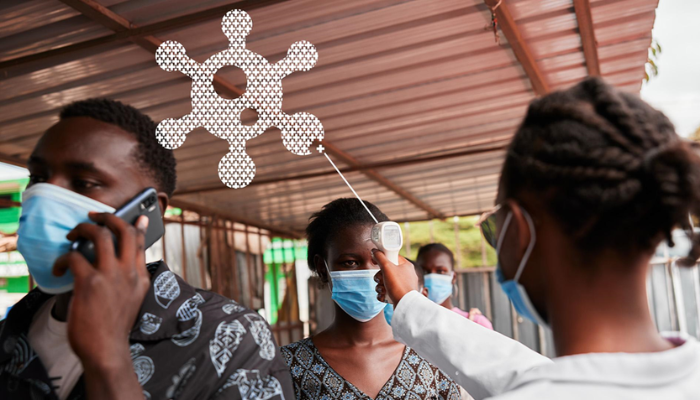
The federal government’s approval of the State Outbreak Investigation and Response Fund (S-OIRF) comes at an important moment for Nigeria’s health system. Amid renewed concerns about Ebola Virus Disease (EVD) and a growing range of public health threats, the decision to provide preparedness financing to states reflects both foresight and an increasingly important policy shift: health security can no longer be treated as a temporary emergency response.
Equally significant is the directive issued by the Coordinating Minister of Health and Social Welfare, Prof. Muhammad Ali Pate, requiring beneficiary states to retire both current and previously disbursed outbreak response funds within six months. The message is clear. Preparedness and accountability must advance together. Resources matter, but stewardship matters even more.
The announcement should therefore be viewed not simply as an emergency funding measure but as an opportunity to strengthen Nigeria’s long-term health security architecture.
The country’s recent experiences have demonstrated why this matters. COVID-19, recurrent Lassa fever outbreaks, cholera, mpox, and other emerging threats have shown that outbreaks are no longer exceptional events. They have become recurring features of an increasingly complex risk environment shaped by emerging infectious diseases, antimicrobial resistance, climate pressures, urbanisation, and growing population mobility.
The lesson from these experiences is straightforward: preparedness cannot begin when an outbreak starts, because by the time the first case is confirmed, the most important determinants of success have already been established.
Preparedness is a system investment
Preparedness is not an emergency activity. It is a continuous investment in systems. The strength of surveillance, laboratory and infection prevention capacities, and institutional coordination will largely determine whether outbreaks are rapidly contained or allowed to escalate.
This is precisely why the S-OIRF presents such an important opportunity. If strategically deployed, these resources can help states move beyond reactive emergency responses toward building institutional capabilities that endure long after immediate concerns have subsided. However, achieving this goal requires recognising a critical reality: health security cannot be delivered by the government alone.
Nigeria’s healthcare system is highly pluralistic, with private providers delivering a substantial proportion of healthcare services across the country. Millions of Nigerians receive care every day through private hospitals, clinics, pharmacies, proprietary medicine vendors, laboratories, diagnostic centres, and other healthcare providers. In many communities, these facilities represent the first, and sometimes only, point of contact with the health system.
This reality has profound implications for preparedness. The first patient, warning sign, or diagnostic sample may emerge within the private health sector. Any preparedness strategy that does not fully integrate private providers inevitably leaves significant blind spots in the national health security architecture.
Fortunately, Nigeria already has a strong foundation upon which to build. Recent collaboration between the Nigeria Centre for Disease Control and Prevention (NCDC), the Healthcare Federation of Nigeria (HFN), PharmAccess, and Society For Family Health demonstrated the growing recognition of preparedness as a shared responsibility. Through a national webinar showcasing the SafeCare4Outbreaks tool, about 300 healthcare providers across the country were introduced to practical approaches for assessing and strengthening outbreak preparedness at the facility level.
The discussions reinforced an important principle: preparedness starts long before emergencies occur. SafeCare4Outbreaks supports healthcare facilities in evaluating their readiness across critical domains, including infection prevention and control, emergency response planning, workforce preparedness, communication systems, patient flow management, and coordination with public health authorities. By helping facilities identify gaps before an outbreak occurs, such quality improvement frameworks strengthen organisational resilience and build the operational discipline that effective outbreak response demands.
The private sector can contribute meaningfully to that scale in several ways. First, private providers can strengthen surveillance and diagnostic capacity. Ensuring that private hospitals, pharmacies, and laboratories are fully connected to state and national reporting systems can significantly improve the speed with which unusual disease patterns are identified, investigated, and contained.
Second, the private sector can strengthen operational readiness. Continuous workforce training, simulation exercises, quality improvement programmes, and adherence to infection prevention standards all improve the capacity of frontline providers to identify and safely manage public health threats.
Third, private-sector innovation and infrastructure can accelerate preparedness. Digital reporting platforms, interoperable data systems, predictive analytics, supply-chain capabilities, local manufacturing, and risk communication tools can all strengthen outbreak response and improve resilience.
Beyond service delivery, the private sector can also contribute financing, innovation, manufacturing capacity, communications capabilities, and professional networks that strengthen health system resilience.
Nigeria also has practical examples of what effective public-private collaboration can achieve during health emergencies. During the COVID-19 pandemic, the Healthcare Federation of Nigeria (HFN) worked with the Lagos State Government and, subsequently, with the Nigeria Centre for Disease Control and Prevention (NCDC) to facilitate the participation of private healthcare facilities in expanding testing capacity and response coordination.
The experience demonstrated how organised private-sector engagement can rapidly augment national response capabilities and improve the scale and reach of critical interventions. As states operationalise the S-OIRF, structured engagement with private-sector stakeholders, including those convened through HFN, can help mobilise expertise, infrastructure, and implementation capabilities that strengthen preparedness outcomes.
The emphasis on accountability contained in the minister’s directive is especially important because health security is an ecosystem challenge that demands coordinated action across sectors. Funding must not only be disbursed; it must produce measurable preparedness outcomes.
States should routinely monitor and publicly report indicators such as surveillance coverage, reporting timeliness, laboratory readiness, workforce training levels, simulation exercise performance, infection prevention compliance, and the integration of private providers into preparedness plans.
Beyond financial retirement reports, states should consider publishing preparedness scorecards that enable citizens and stakeholders to assess not only how funds were spent but also what readiness improvements were achieved.
Success should be measured not simply by how much money is spent, but by how much capacity is created.
This is particularly important as Nigeria seeks to strengthen domestic ownership of health security investments in an era of shifting global health financing. As donor resources become more constrained, countries must increasingly rely on sustainable, locally driven solutions. Public-private collaboration offers one of the most effective pathways for maximising available resources while building resilient systems.
There is also a broader strategic implication. Health security and Universal Health Coverage (UHC) are not separate agendas.
A health system capable of responding effectively to outbreaks is also one capable of delivering quality healthcare every day. Investments in primary healthcare, laboratory networks, digital health infrastructure, workforce development, health information systems, and healthcare quality simultaneously strengthen preparedness and accelerate progress toward UHC.
The COVID-19 pandemic revealed that outbreaks are not only health crises; they are also economic and social crises that disrupt livelihoods, education, productivity, and public finances. Investing in preparedness is therefore essential for both health security and economic stability.
The federal government’s approval of the S-OIRF is therefore much more than a response to concerns about Ebola. It is an opportunity to accelerate the development of a more resilient, coordinated, and inclusive health system.
Nigeria has taken an important first step by making resources available. The next phase must focus on building the partnerships, capacities, and accountability mechanisms required to transform those resources into lasting preparedness gains.
If properly implemented, the S-OIRF can help make preparedness a permanent feature of Nigeria’s health architecture rather than a response mobilised only when outbreaks emerge. In doing so, it can strengthen not only Nigeria’s ability to confront the next public health emergency, but also the resilience, quality, and inclusiveness of the health system that serves its citizens every day.
This article is a partnership between the Healthcare Federation of Nigeria (HFN) and BusinessDay to highlight policies and programmes to promote the rebuilding of Nigeria’s health sector. As a private sector-led coalition, HFN advocates for policies and partnerships to strengthen healthcare delivery.
This article was developed with input from members of the HFN Editorial Committee, including: Njide Ndili (President, HFN and Country Director, PharmAccess), Dr Ibironke Dada (Director, SafeCare, PharmAccess), Dr Benson Ayodele-Cole (Fire Vice President, HFN).

Join BusinessDay whatsapp Channel, to stay up to date
Open In Whatsapp