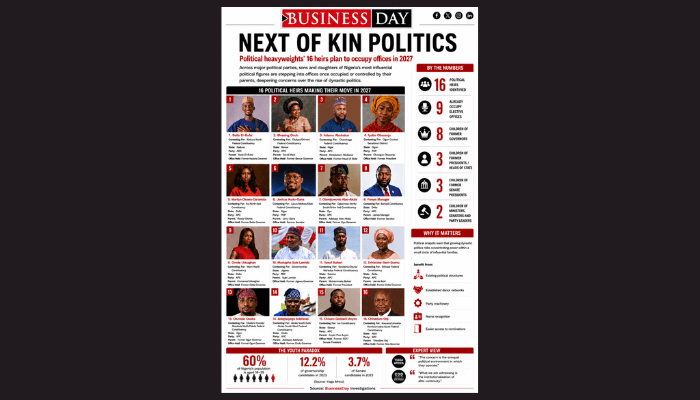
Across major political parties, sons and daughters of some of Nigeria’s most influential political figures are stepping into offices once occupied or controlled by their parents, deepening concerns over the rise of elite continuity in political positions and an unequal political environment. YOUSUPH ADEBAYO writes.
As political parties wrap up primaries ahead of the 2027 elections, Olumide Osoba, son of former Ogun State governor, Olusegun Osoba, stepped once again into the abyss of power when he secured the All Progressives Congress, APC, ticket to represent the Abeokuta North/Obafemi-Owode/Odeda Federal Constituency for the fourth time.
For the younger Osoba, the moment was more than another primary victory. It was the continuation of a political journey deeply rooted in one of Ogun State’s most enduring political legacies. Already a three-term member of the House of Representatives, his latest emergence as the ruling party’s candidate now places him on the path to a possible fourth term in the National Assembly.
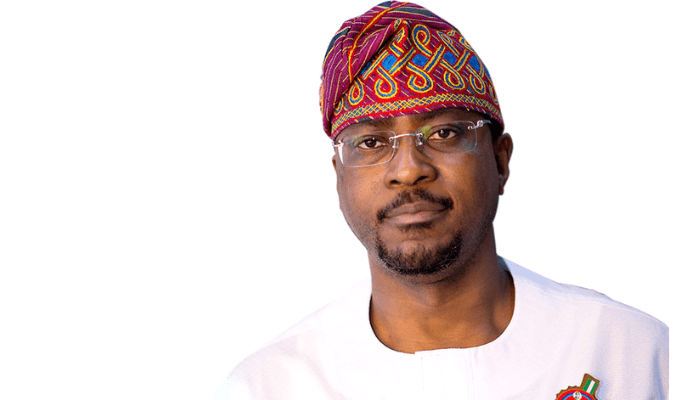
Inside the APC’s political structure in Ogun, the Osoba surname still carries weight decades after Olusegun Osoba first rose to prominence as a journalist, who eventually served for two terms.
But political inheritance is not only playing out in Ogun.
Far from Ogun State, in Jigawa State, Mustapha Sule Lamido, son of former governor and ex-Foreign Affairs Minister Sule Lamido, is mounting another bid for the state’s highest office.
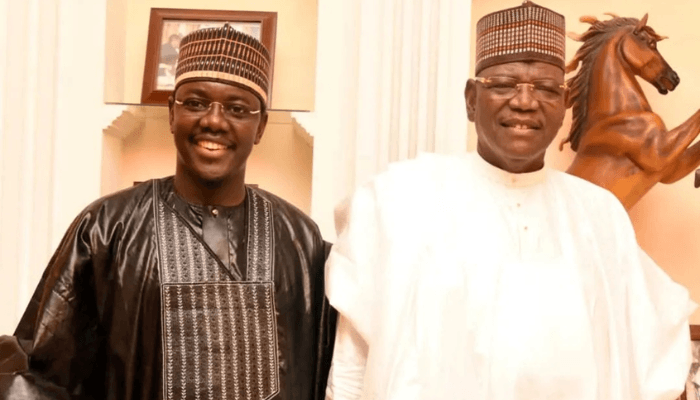
After emerging as the Peoples Democratic Party’s governorship candidate ahead of the 2027 election, Mustapha is seeking to succeed where he fell short in 2023, relying in part on a political structure built over decades by his father, one of the PDP’s most influential northern figures.
His political journey has not been without controversy. Mustapha and his father have both faced corruption charges linked to an alleged N1.35 billion fraud case, with the Supreme Court ordering in January that their trial continue after overturning an earlier appellate court decision that had terminated the proceedings.
Despite the legal issues, Mustapha’s emergence as a leading gubernatorial contender revealed a reality in Nigerian politics that powerful political structures often outlive controversies and are being transferred across generations.
Like Osoba, his rise reflects how established family networks, party machinery, and political influence are shaping a new wave of second-generation politicians ahead of the 2027 elections.
Rise of second-generation politicians
Findings by BusinessDay showed that across the country, more children of former political heavyweights are stepping into the political structures once controlled by their fathers.
An analysis of confirmed candidates, elected office holders seeking re-election, and politically positioned heirs by BusinessDay identified at least 16 children of former political heavyweights who are actively participating as candidates in the 2027 elections.
The list cuts across party lines and geopolitical zones, including children of former presidents, governors, Senate Presidents, ministers, and long-serving lawmakers. It was observed that while some secured party tickets for the first time, others are seeking re-election or are widely considered frontrunners within political structures established by their families.
The largest share of this group came from families of former governors. Eight of the identified political heirs, including Bello El-Rufai, Olumide Osoba, Erhiatake Ibori-Suenu, Adegboyega Adefarati, Olamijuwonlo Alao-Akala, Marilyn Okowa-Daramola, Orode Uduaghan, and Chinedum Orji, are products of political structures built from state government houses. Findings by BusinessDay showed that Marilyn Okowa-Daramola secured the APC House of Representatives ticket despite her father, Ifeanyi Okowa, having already secured the party’s Senate ticket in the same state.
It was observed that their emergence showed how governorship seats have become platforms whose influence extends beyond a single political career.
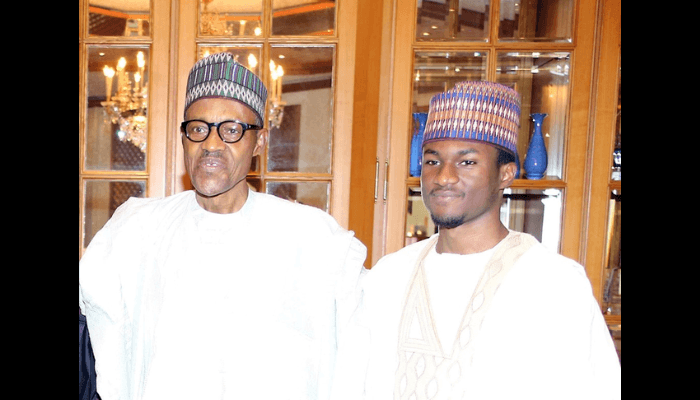
At the presidential level, the children of several former Nigerian leaders are seeking elective office. They include Iyabo Obasanjo, daughter of former President Olusegun Obasanjo; Adamu Abubakar, son of former Head of State Abdulsalami Abubakar; and Yusuf Buhari, son of the late former President Muhammadu Buhari. While Iyabo Obasanjo is contesting for the Ogun Central Senatorial District seat on the platform of PDP, Adamu Abubakar and Yusuf Buhari are running for seats in the House of Representatives under APC.
The pattern is equally visible within Nigeria’s legislative elite. Blessing Onuh, daughter of former Senate President David Mark, and Chisom Godswill Anyim, linked to former Senate President Anyim Pius Anyim, represent a new generation benefiting from networks forged within the country’s highest political circles.
Beyond governors and Senate Presidents, another group of aspirants traced their roots to influential ministers, party leaders, and long-serving lawmakers. Among them are Funyei Manager, son of former senator James Manager; Joshua Audu-Gana, son of elder statesman Jerry Gana; Mustapha Sule Lamido, son of former governor and minister Sule Lamido; and Adaeze Oreh, daughter of former minister George Oreh.
Following the family path
This paper observed that the influence of political dynasties is not confined to any single party.
However, a majority of the identified second-generation politicians are currently operating within the ruling party, APC, including Yusuf Buhari, Olumide Osoba, Olamijuwonlo Alao-Akala, and Adegboyega Adefarati.
PDP also retains a significant share of political heirs, particularly in states such as Delta, Jigawa, and parts of the South-East, where long-established political families continue to wield considerable influence.
It was also discovered that many of these heirs are not political newcomers. BusinessDay’s findings showed that at least nine currently occupy elective positions, ranging from seats in the House of Representatives and state assemblies to the Senate.
The House of Representatives appears to be the most common launching pad. Several of the identified political heirs either currently serve in the green chamber or have used it as a stepping stone to higher political ambitions, reinforcing its growing role as an entry point for a new generation of politicians emerging from established political families.
Average Nigerians at financial disadvantage
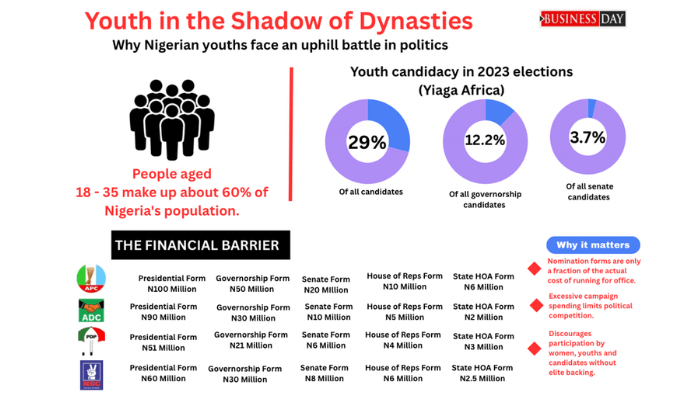
Nigeria is one of the world’s youngest countries, with people aged 18 to 35 making up about 60 percent of the population. However, BusinessDay found that this numerical strength is not reflected in political representation. Yiaga Africa’s analysis of the 2023 elections showed that while youths accounted for nearly 29 percent of all candidates, their participation declined sharply in higher offices, with only 12.2 percent of governorship candidates and 3.7 percent of Senate candidates falling within the youth age bracket.
Despite the Not Too Young To Run Act lowering age requirements for elective offices, young Nigerians remain largely underrepresented in government, with many of those who break through coming from wealthy or politically connected families.
Findings by BusinessDay showed that the high cost of contesting elections favours candidates with deep pockets and strong political connections.
Ahead of the 2027 elections, rising nomination fees have renewed concerns that elective offices are becoming the preserve of wealthy elites and politically connected families, shutting out ordinary Nigerians.
The APC pegged its presidential forms at N100 million, while the PDP fixed its own at N50 million, with millions more required for governorship, Senate and House of Representatives contests.
Findings by BusinessDay showed that nomination forms are only a fraction of the actual cost of running for office, as aspirants must also fund consultations, delegate mobilisation, campaigns, media engagements and grassroots operations.
Several studies have identified the rising cost of politics as one of the biggest barriers to political participation in Nigeria.
A report by the Westminster Foundation for Democracy Nigeria on the cost of politics found that excessive campaign spending, expensive nomination processes and the influence of money within party structures limit political competition and discourage participation by women, youths and candidates without access to elite networks.
Research by the International Foundation for Electoral Systems (IFES) on political inclusion in Nigeria has also highlighted how the financial demands associated with elections disproportionately affect young people, women, and candidates outside established political structures, narrowing the pool of individuals able to compete effectively for public office.
For political heirs, many barriers to office are reduced as they often inherit established networks, donor support and name recognition built by their parents.
Samson Toromade, a political analyst, said this combination of inherited political capital and rising campaign costs helps explain the dominance of familiar surnames and could further entrench politics within a small circle of influential families.
The analyst said the financial burden of nomination forms creates a structural advantage for political heirs and elite-backed aspirants who already possess donor networks, wealthy political sponsors, access to party leadership, and inherited political structures, while effectively raising the entry barrier for ordinary Nigerians.
Toromade noted that candidates from political dynasties are often better positioned to absorb these costs because they operate within established networks built by former governors, ministers, senators, and presidents.
Creates unequal political environment – YIAGA
Toluwani Eniola, a governance expert at YIAGA Africa, warned that the growing normalisation of dynastic politics could deepen public distrust in Nigeria’s democratic process.
“The issue is not whether children of politicians have the right to contest elections. They absolutely do. The concern is the unequal political environment in which they operate. Many of these individuals enter politics with ready-made structures, donor networks, media access, and party backing already in place,” she noted.
According to Eniola, the concentration of political influence within a small number of families risks creating the perception that political power in Nigeria is becoming exclusive rather than competitive.
“When citizens repeatedly see the same families dominate tickets, appointments, and elective offices across generations, it can weaken public confidence in the openness of the democratic system.
Over time, democracy begins to look less like broad representation and more like elite succession,” she added.
Institutionalisation of elite continuity – CDD
Meanwhile, Isaiah Williams, a programs director at the Centre for Democracy and Development, said the growing presence of second-generation politicians ahead of the 2027 elections reflects deeper structural weaknesses within Nigeria’s democratic system rather than isolated family ambitions.
“What we are witnessing is the institutionalisation of elite continuity. Political office in Nigeria increasingly creates networks that can be inherited. Once a family captures political relevance, it becomes easier for the next generation to enter the system with advantages unavailable to ordinary aspirants,” Williams noted.
“In theory, democracy is supposed to widen political participation. But when candidacy becomes dependent on surnames, elite networks, and inherited structures, the political space gradually narrows for outsiders, young people without connections, and grassroots actors,” he said.

Join BusinessDay whatsapp Channel, to stay up to date
Open In Whatsapp