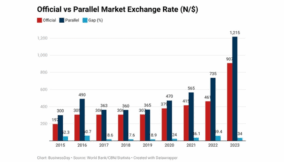
Costs and money for a project need to be carefully managed to ensure early completion. Through inflation and other costs of obtaining money, such as interest and exchange rates, the cost of a project grows over time. To avoid such instances, cost/funds planning and management should be given the proper attention it deserves, most especially the process of coming up with the cost baseline and eventually the budget.
Procurement management
Procurement plays a huge part in the management of all what is needed in terms of the resources used to complete a project. Most of what is required to start and complete a project are either contracted, sub-contracted or procured, purchased outright or leased. For projects to run smoothly, contracts, agreements, equipment and materials must be in place to avoid work disruptions and stoppages. The earlier these inputs are made available for use, the better for the earlier completion of the project. A situation whereby materials, equipment and other resources are not made ready in time is a huge headache for the project manager, and this is for the most part as a result of money not being made available in time as well as sloppy planning.
Risk management
Risk, as defined by the Merriam Webster Dictionary, is the possibility that something bad or unpleasant will happen. Risk management is the identification, assessment, and prioritization of risks, followed by coordinated and economical application of resources to minimize, monitor, and control the probability and/or impact of unfortunate events or to maximize the realization of opportunities, according to Wikipedia. Risk management’s objective is to ensure that uncertainties do not deflect the individual, businesses and government programmes and projects from their envisioned goals. What risk management seeks to achieve is that opportunities (positive events) are enhanced while threats (negative events) are minimised. The following factors are important when evaluating and analysing risks – the probability that an event will occur, the range of possible outcomes, time of occurrence and frequency. Every organisation has a risk appetite, forbearance, aversion and threshold levels in terms of cost, value, client fulfilment, time and other intangibles.
There are a lot of inputs into the risk management effort and thought process such as project background info, organisational process assets, enterprise environmental factors, project charter, project cost, schedule, human resource, quality, scope and procurement management plans, risk register, network diagram, work performance data and risk management plan.
Risk is a constant feature that rears its head during the planning, capital budgeting process, scheduling and the execution of a project. If the project risk assessment is not done properly, the probability that things can go awry quickly is very high. If and when things go bad and there is schedule slippage, more time and money will be needed to correct the situation. The Time Value of Money is also affected when project quality management is not handled properly. Re-works mean more money and time.
Funding sources and decisions
Funding is the provision of financial resources or other things of value to complete a project undertaken by MDAs, businesses and organisations usually to meet strategic and developmental requirements. There are various sources of funding a project and they include taxes, grants and loans for government projects, equity, reserves and credit for big businesses. For most projects to be completed, one or more of these types of funding are needed. Without it there will be no project.
Funding decisions in respect of how to finance project resources could be either outright purchase or obtaining a lease. In most cases funding is always a function of existing organizational culture and systems and based on what the projects are to achieve.
Conclusion
As stated at the beginning of this article, the concept of the Time Value of Money is the idea that a certain sum of money is worth more now than the same amount at a distant date. Mostly due to inflation, money at hand today will usually have more buying power than in the future.
When making project capital budgeting decisions, discount rates, converting values and methods (NPV or IRR) are very indispensable considerations in the Time Value of Money theory. Discount rates are the rates businesses use to convert future funds into today’s monetary value. These rates depend on a lot of factors which include interest rates, risks to the project, inflation and the return on investment by embarking on the project. Issues of equivalence and cash flows involve the estimation of all positive and negative cash flows in and out of the project and converting all of the flows into their present value. That is how much they are worth as at today. The Net Present Value (NPV) and the Internal Rate of Return (IRR) are methods used to determine the viability of a project and decision of whether to go ahead with the project or not.
Because businesses need to know whether the projects they are about to execute are profitable to them in the long run or are even worth the upfront investment, the concept of the Time Value of Money is very important to project management of which project controls, cost engineering and capital budgeting play a very essential role.
Ayodele Akingbade

Join BusinessDay whatsapp Channel, to stay up to date
Open In Whatsapp