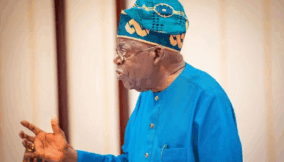
Tunji Olowolafe, the newly installed pro-chancellor of Miva Open University, says open and distance learning is a transformative tool capable of democratising access to education without compromising academic standards.
“Democratising education does not mean lowering standards,” he said during the maiden convocation ceremony of Miva Open University, held recently in Lagos.
He described the pioneer graduating class as trailblazers whose achievements would shape the future reputation of the institution.
“You are not just graduates of a university. You are the first chapter of history that has not yet been fully written. Write it well,” he said.
Olowolafe also pledged to uphold the institution’s commitment to both accessibility and excellence, insisting that quality and openness must coexist in the pursuit of educational advancement.
He called for a radical rethink of higher education delivery in Nigeria, arguing that quality education should be accessible to all regardless of geographical, economic or social barriers. “We do not have to choose between quality and openness, and we will not.”
The pro-chancellor of Miva Open University, added that the future of education lies in creating systems that adapt to students’ realities rather than forcing students to conform to outdated models.
“It means designing systems that meet students where they are, not systems that demand students rearrange their entire lives to fit a model built for a different era.”
Drawing from Nigeria’s educational history, Olowolafe reflected on the vision of the late chief Obafemi Awolowo, whose introduction of free education and educational broadcasting helped expand learning opportunities beyond traditional classrooms.
“Where the student cannot travel to the classroom, the classroom must learn to travel to the student,” he said, adding that the institution embodies a model that leverages technology to bridge educational gaps.
The academic challenged the perception of open and distance learning as an inferior alternative to conventional university education, noting that such assumptions have led to underinvestment in a system capable of expanding educational access across Africa.
“The graduates before me today did not receive a diluted education. They were held to rigorous standards. They were assessed, challenged and stretched,” Olowolafe said.

Join BusinessDay whatsapp Channel, to stay up to date
Open In Whatsapp