Why the global education conversation keeps failing the children who need it most, and what community-driven solutions show us about the path forward
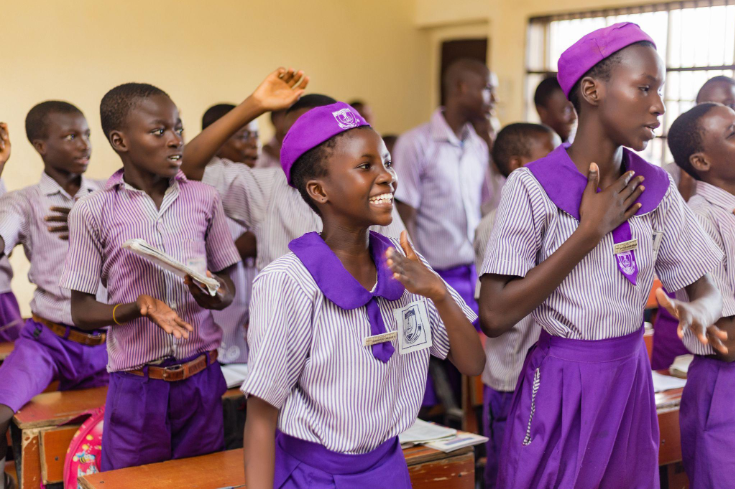
There is a child in Northern Nigeria right now who knows how to read. She is eight years old, she attends school five days a week, and she can solve basic arithmetic problems that would have been out of reach for her two years ago.
She has a uniform. She has books. She has a mentor who checks on her progress every term. She is, by almost every metric the global education sector uses, a success story.
Before she entered the Inspire Scholarship Program at The Special Foundation, she was none of those things. She was out of school — one of the roughly 20 million children in Nigeria who are not enrolled in formal education. She was also an orphan, like 80 percent of the scholars we support. She came from a community where the nearest functional school had broken windows, no toilets, and teachers who had not been paid in months. The system had not failed her in one dramatic moment. It had simply never been built with her in mind.
I tell her story because she is exactly the child that global education policy conversations tend to leave out. Not intentionally. But systemically. And that distinction matters enormously if we are serious about change.
The Gap Between the Data and the Door
The global education sector is not short on data. UNESCO, UNICEF, the World Bank, and dozens of bilateral agencies publish reams of enrollment statistics, literacy rates, and learning outcome assessments every year. Governments sign international frameworks. Donors commit billions. And yet, as of 2024, more than 250 million children worldwide remain out of school — a number that has barely moved in a decade. In Nigeria alone, we account for roughly eight percent of that global figure.
The problem is not that we lack information. The problem is what happens between the data and the door. Between the national enrollment figure and the specific child in a specific community who has no shoes for the walk to school, no money for the exam fee that comes due in March, no adult at home who can advocate for her when the teacher marks her absent. The gap between the statistic and the story is where children fall through — and it is precisely that gap that community-driven education organisations are designed to close.
At The Special Foundation, we have reached 62,623 children and young people since our founding, across 300 communities in 21 Nigerian states. Those numbers represent real children with real names. But what they cannot capture is the architecture of support that makes the difference between a child who stays in school and one who quietly disappears from the enrollment list. That architecture is not built by policy alone. It is built relationship by relationship, community by community, over years.
What the Data Misses About Why Children Leave School When a child stops attending school, the official record often shows one thing: absence. What it rarely shows is the chain of events that led there. In our work across Nigeria, the reasons are rarely simple. A father dies and the family can no longer afford the term fees. A mother falls ill and the oldest daughter stays home to care for younger siblings. The school roof collapses after the rains and classes move to an outdoor space that becomes unusable for months. A child with a physical disability cannot navigate the uneven path to the classroom building.
Poverty, infrastructure failure, family crisis, and exclusion do not operate separately. They compound. This is why interventions that target only one lever — only fees, or only infrastructure, or only teacher training — tend to produce modest results. The children most at risk of falling out of school are usually dealing with multiple simultaneous pressures. Addressing one without the others is like patching one hole in a roof during a rainstorm.
The Inspire Scholarship Program was designed with this in mind. It is not a fee waiver. It is a comprehensive support package that covers tuition, examination fees, and ongoing mentorship. It is built to remove the full set of barriers, not just the most visible one. And it is designed for the long term: 98 percent of our scholars remain under continuous support for five or more years. Because we know that a child who gets one year of support and then falls back out is not a success. Sustained presence is the goal.
The case for girls — and why it is still an argument we have to make 56 percent of The Special Foundation’s scholars are female. That number is not an accident. It is a deliberate, sustained decision that reflects a clear-eyed view of where educational exclusion is most concentrated and where investment produces the most durable community-wide returns.
The research on girls’ education is unambiguous and has been for decades.
Every year of secondary schooling a girl completes, increases her future earnings by 10 to 20 percent. Girls who complete secondary education are more
likely to delay marriage, have fewer and healthier children, reinvest a higher proportion of income in their families, and participate in civic life. The returns are not just individual. They are generational. Communities where girls are educated are more economically stable, more civically engaged, and more resilient.
And yet in Northern Nigeria, where a significant portion of our work is concentrated, female enrollment at secondary level consistently lags male enrollment by a margin that no national average fully captures. The barriers are specific: early marriage pressure, distance to school, lack of female teachers, and in some communities, active discouragement rooted in cultural norms that education policy has not managed to shift.
This is where community-driven organisations have an advantage that government programmes and international frameworks struggle to replicate.
We do not arrive with a universal model. We arrive with relationships, local knowledge, and a willingness to work through the trusted intermediaries — schools, parents, religious leaders, women’s groups, community leaders — who can create the social permission that makes a girl’s enrollment possible. Policy can mandate enrollment. Community can make it real.
What a Year-Round Commitment Actually Looks Like
One of the persistent failures of education intervention design is the assumption that school is the only place where learning either happens or breaks down. In practice, the school calendar creates a predictable vulnerability window that most programmes simply ignore: the long holiday period when children who are out of structured learning environments slip backward academically — and when some, particularly older girls and children from the most economically precarious households, do not return when the new term begins.
The Special Foundation’s Special Summer School was built to close that window. It is a free, structured learning programme during school holidays that combines academic reinforcement with digital literacy, vocational skills exposure, and creative programming. It reaches children who are currently enrolled and children who are out of school entirely — because the summer school is free, accessible, and designed to feel welcoming rather than remedial.
It is not a second-chance programme. It is an extension of a continuous circle of learning.
The third pillar of our model — School Build and Infrastructure Projects — addresses something that rarely appears in conversations about educational access: the physical environment of learning itself. We have renovated classrooms, built libraries, installed solar power in schools that had no electricity, improved sanitation facilities, and supplied basic resources to schools that were
structurally functional but practically unusable. Because a child who sits in a building with a leaking roof, no functional toilet, and no light on a cloudy day is not experiencing education. They are experiencing endurance.
These three pillars — scholarship support, holiday learning, and infrastructure — are not separate programmes. They are a single, integrated response to the full reality of what keeps children out of learning. They work together because the problem requires them to.
What Justice Requires of the Education Sector Now
We are writing this in a political moment that is testing the foundations of global commitments to educational equity. International aid budgets are under pressure in the United States and across Europe. Multilateral frameworks are being renegotiated. Programs that seemed secure are facing cuts. And in this environment, the children most at risk of losing access to education are — predictably, historically, reliably — the ones who were already most vulnerable.
This is the moment that separates organisations with genuine community roots from those that exist primarily to move money through programme frameworks. Community-driven organisations do not disappear when a funding cycle ends, because their relationships and their trust do not disappear.
Justice in education does not mean equal distribution of resources across equal circumstances. It means intentional investment in the children who face the steepest barriers — orphans, girls in communities with low female enrollment, children with disabilities, children in conflict-affected areas — with the recognition that reaching them requires more, not less, than a standard programme model. It requires presence. Consistency. Relationship. The willingness to stay.
At The Special Foundation, we talk about this as a commitment to the long arc.
We are not building towards a moment of success that we can photograph and report. We are building towards a generation of young people — especially young women — who have the education, the confidence, and the community standing to reshape the systems that failed them. That is a 20-year project, not a 2-year grant cycle. And it is only possible through organisations that are willing to operate at the speed of trust rather than the speed of funding.
The Child We Have to Keep Counting The eight-year-old girl I described at the start of this piece is real. So are the 62,623 others behind her. So is every child who did not make it into that number because their community was not yet one of the 300, we serve, or because the funding did not stretch far enough, or because the system simply moved on before it reached them.
The work of justice in education is not primarily a policy problem. It is a proximity problem. It requires organisations and leaders who are willing to be close enough to the problem to understand its texture — not just its scale. Who are willing to be accountable not to a reporting framework but to a child who is counting on you to still be there next term.
The children we are not yet counting are waiting. The only question is whether we have the patience, the presence, and the conviction to go find them.
Popoola is Strategy Lead at The Special Foundation (TSF), a privately funded social impact nonprofit dedicated to expanding access to quality education and leadership development for underserved children and youth across Nigeria. TSF has reached 62,623+ children across 300+ communities in 21 Nigerian states through the Inspire Scholarship Program, Special Summer School, and School Build Projects. TSF is a two-time Anthem Awards winner in Education, Art and Culture. Website: www.thespecialfoundation.org | Email: [email protected]

Join BusinessDay whatsapp Channel, to stay up to date
Open In Whatsapp