A few years ago, the idea would have sounded absurd. A software engineer in Lagos opens his laptop one morning and discovers that one of the world’s most powerful artificial intelligence systems is no longer available to him. Not because he lacks the money to pay for it. Not because the technology itself has failed. But because of where he lives and the passport he carries.
For most of the digital age, such a scenario belonged to the realm of fantasy. Technologies could be expensive. They could be unevenly distributed. Yet the underlying assumption remained remarkably stable: once a technology entered the market, it would eventually become available to everyone.
That assumption is beginning to crack. The immediate controversy centres on Anthropic, one of the world’s leading artificial intelligence companies, and growing efforts within the
United States government to restrict foreign access to certain frontier AI capabilities, on national-security grounds. The specifics of the regulatory dispute remain the subject of debate, but the significance of the episode extends far beyond any single company or technology.
For the first time since the birth of the internet era, a profound question is emerging at the centre of global politics: What if intelligence itself becomes subject to export controls?
That question now sounds inevitable. And if it becomes reality, the consequences will reach far beyond Silicon Valley. They will affect economies, governments, universities, corporations and entire nations. What appears at first glance to be a dispute over artificial intelligence may eventually be remembered as something far more consequential: the moment the world began to reconsider one of the foundational assumptions of globalisation itself.
For decades, the modern world operated on a remarkably simple promise. Knowledge would become increasingly democratic. Information would become progressively borderless.
Innovation might be concentrated in certain places, but access would gradually become universal. The internet embodied this promise. A student in Kano could access educational materials created at Harvard. A programmer in Enugu could deploy software built in California. Geography still mattered, but less than before.
The digital revolution was, above all, a revolution of diffusion. The personal computer followed this pattern. The internet followed this pattern. Cloud computing followed this pattern. Social media followed this pattern. The expectation seemed obvious. New technologies emerged. Markets expanded. Costs declined.
Access widened. The cycle repeated.
But increasingly, artificial intelligence appears determined to break that pattern. The reason lies in a simple but often overlooked reality.
Artificial intelligence is not merely another technology. It is a technology that amplifies every other technology. It is not simply a tool. It is a capability that enhances capabilities.
Whilst a better machine might improve manufacturing, artificial intelligence improves thinking itself. It accelerates research. It enhances analysis. It generates solutions. Tasks that previously required hours can be completed in minutes. Problems that once demanded teams of specialists can increasingly be addressed by individuals equipped with sufficiently capable systems.
The implications are difficult to overstate.
Artificial intelligence does not belong to a single sector. It touches all sectors. It can improve healthcare diagnostics, optimise logistics networks, enhance military planning and increase financial efficiency. Its applications are effectively universal.
This universality is precisely what has attracted the attention of governments. For years, discussions about artificial intelligence revolved largely around productivity, innovation, ethics, and employment. The dominant question was how AI would transform society. Increasingly, a different question is emerging. Who controls it?
This distinction is critical because history teaches a consistent lesson. Once a technology becomes sufficiently important to national power, governments begin to treat it as a strategic asset.
There have been countless examples. Nuclear technology was never allowed to diffuse freely.
Advanced weapons systems remain tightly controlled. Sensitive aerospace technologies face extensive restrictions. Semiconductor manufacturing equipment has become the subject of geopolitical contestation. The logic behind such restrictions is straightforward.
States seek to protect technologies that provide military, economic, or strategic advantage.
The question now confronting policymakers is whether artificial intelligence belongs in the same category. Increasingly, the answer appears to be yes.
This is where the significance of the Anthropic episode truly resides. The debate is not ultimately about one company. It is about a broader shift in how governments perceive intelligence itself. Artificial intelligence is gradually moving into the category of strategic infrastructure. That transition may prove to be one of the defining developments of our age.
Throughout history, societies have competed over access to resources that conferred power. Agricultural land created kingdoms. Precious metals financed empires. Coal fuelled industrialisation. Oil reshaped geopolitics. Each era possessed a resource whose control determined economic and political influence.
The emerging century may be defined by Intelligence. Not merely human intelligence, but machine intelligence.
This possibility introduces a profound new dimension into international relations.
Tomorrow’s strategic concern may be access to cognition itself.
The phrase sounds strange because humanity has never encountered anything quite like it.
Intelligence has traditionally been embodied within individuals. It could be educated, trained, or cultivated, but it could not be manufactured at scale. Artificial intelligence changes that equation. For the first time, societies are developing systems capable of generating cognitive capacity on demand.
This development is transformative. A nation equipped with abundant intelligence can accelerate innovation. It can analyse complexity more effectively. It can improve productivity across multiple sectors simultaneously. In effect, intelligence becomes a multiplier of national capability.
Once viewed through this lens, the growing geopolitical interest becomes easier to understand. The competition between the United States and China is frequently described as a contest over technology. That description is incomplete. It is increasingly a contest over intelligence infrastructure. Semiconductors matter because they power artificial intelligence.
Data matters because it trains artificial intelligence. Computing capacity matters because it enables artificial intelligence.
The underlying struggle concerns the future architecture of cognition itself. This is why recent developments should not be viewed as isolated events. They are part of a broader transition toward what might be called intelligence nationalism.
Under this emerging doctrine, access to advanced intelligence systems is no longer assumed to be universal. Instead, it becomes strategic. Conditional. Potentially political. The implications are staggering.
For decades, globalisation reduced the importance of geography. Digital technologies allowed ideas to travel across borders with unprecedented speed. A researcher in Accra could access many of the same resources as a researcher in London. The resulting convergence was imperfect but real. Artificial intelligence threatens to disrupt that trajectory.
If access to frontier systems becomes increasingly shaped by nationality, geopolitical considerations, or strategic calculations, then the world may begin to fragment into distinct intelligence zones. Such fragmentation would extend far beyond technology.
Educational outcomes could increasingly depend upon access to advanced cognitive tools.
Productivity gaps could widen dramatically.
Businesses operating within intelligence-rich ecosystems would enjoy advantages unavailable elsewhere. Entire national economies could find themselves competing under fundamentally different conditions.
Indeed, the future may not be divided primarily between developed and developing countries. It may increasingly be divided between societies possessing sovereign access to advanced intelligence and societies dependent upon external providers. This distinction is crucial because dependence creates vulnerability.
Recently, governments have become concerned about dependence on foreign semiconductor supply chains. Artificial intelligence introduces an even deeper form of dependence. A society dependent upon externally controlled intelligence systems may find critical aspects of its economic future shaped by decisions made elsewhere.
This possibility is already prompting responses around the world.
Europe speaks increasingly of digital sovereignty. China continues its pursuit of technological self-sufficiency. Across multiple continents, governments are beginning to recognise that intelligence may become as strategically important as transportation networks, energy systems, or telecommunications infrastructure.
The implications extend beyond economics.
Artificial intelligence is not merely a source of productivity. It is becoming a source of power. It shapes how decisions are made, how knowledge is generated, how innovation occurs, and how institutions function. In this sense, the debate surrounding AI access is ultimately a debate about the future organisation of society itself.
The most important geopolitical question of the coming decades may therefore not be who controls territory, resources, or even data. It may be who controls access to intelligence.
And that question carries profound consequences because intelligence differs from every strategic resource that preceded it.
Artificial intelligence powers decisions and fuels cognition. Electricity transformed industrial civilisation. Artificial intelligence may transform civilisation itself.
The world spent decades assuming that knowledge would become progressively more open, more accessible, and more universal. That assumption helped define the age of globalisation. Today, there are signs that the opposite may occur.
The emerging question is no longer whether intelligence can be created. It is who will be allowed to use it.
And if that question continues to move into the realm of policy, historians may one day look back on episodes such as the Anthropic controversy and conclude that they were indeed witnessing the first visible cracks in the architecture of open technological globalisation.
The first era of globalisation was built upon the movement of goods. The second was built upon the movement of information. The next may be defined by the struggle over the movement of intelligence.
And in that emerging world, access to cognition itself may become the most important passport of all.
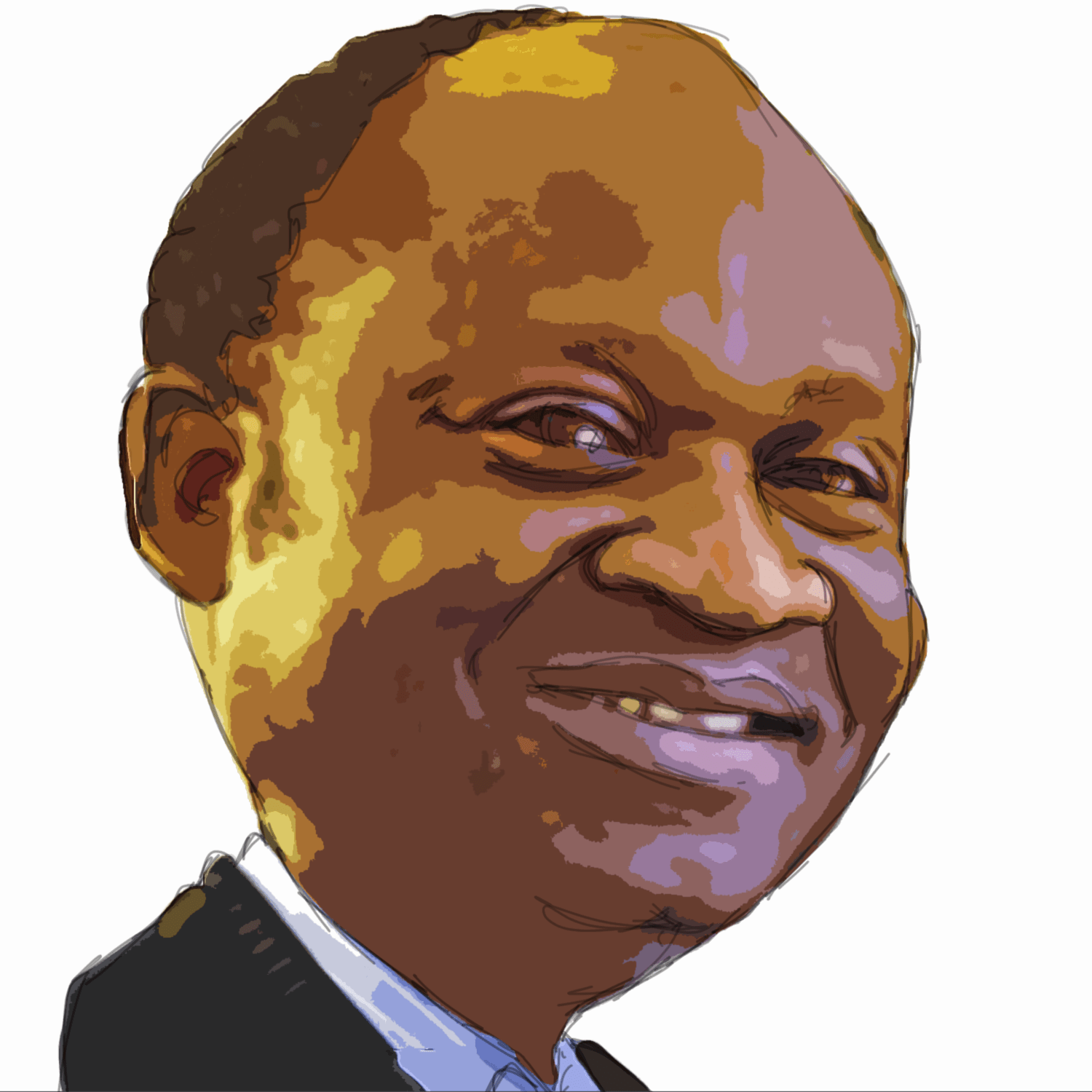
Dr Hani Okoroafor is a global informatics expert advising corporate boards across Europe, Africa, North America and the Middle East. He serves on the Editorial Advisory Board of BusinessDay. Reactions welcome at [email protected]

Join BusinessDay whatsapp Channel, to stay up to date
Open In Whatsapp