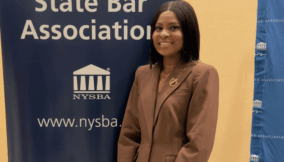
The controversy surrounding the suspension of Kogi Central Senator Natasha Akpoti-Uduaghan appeared settled after her reinstatement back to the Senate.
Yet, months after the dispute, the issue has returned to the spotlight, not because of Natasha herself, but because of comments by Adams Oshiomhole, the senator representing Edo North.
In recent weeks, Oshiomhole has emerged as one of the most outspoken critics of developments within the Senate, frequently questioning decisions and procedures associated with the leadership of Senate President Godswill Akpabio.
The former governor of Edo State and former national chairman of the All Progressives Congress (APC) has increasingly positioned himself as a dissenting voice within the upper chamber.
His comments have generated debate both inside and outside the Senate, particularly as they touch on one of the institution’s most controversial decisions, the six-month suspension of Akpoti-Uduaghan.
For many observers, Oshiomhole’s interventions are significant not only because of his political stature but because they have reopened conversations about how decisions are taken in the Senate and whether internal processes are sufficiently transparent.
The latest controversy began after Ireti Kingibe, who represents the Federal Capital Territory, disclosed that she never saw the report that formed the basis for Natasha’s suspension.
Speaking during an interview on Arise Television’s Prime Time, Kingibe said she was absent when the committee report was finalised because she had attended a tax reform retreat, which she considered more important to her constituents.
“I never saw the report that led to Natasha’s suspension,” she said.
According to her, she had attended the Senate Committee on Ethics, Privileges and Public Petitions, signed the attendance register and later departed for another legislative engagement.
“I even complained to other Senators, specifically to Senator Enyinnaya Abaribe.
“I complained to him very bitterly that I had not seen that report. I didn’t see it then. I have not seen it till now,” she stated.
Kingibe’s comments drew attention because her name reportedly appeared among members associated with the committee proceedings that recommended Natasha’s suspension.
The issue gained greater prominence when Oshiomhole weighed in during an interview on Africa Independent Television (AIT).
Responding to comments reportedly made by Senate Leader Opeyemi Bamidele, who had described Natasha’s suspension as one of the lowest moments of the 10th Senate, Oshiomhole questioned aspects of the committee process.
“The committee does a hearing; members are expected to sign the report to endorse it. If you don’t agree, you can abstain. But some said they didn’t sign, yet their names were published,” Oshiomhole said.
He specifically referenced Kingibe’s complaint.
“People like Senator Ireti Kingibe. She told me, ‘But I didn’t sign that report. But my name was published.”
The remarks immediately triggered reactions within the Senate, with some interpreting them as an allegation that signatures may have been improperly used in producing the report.
Senate spokesperson Yemi Adaramodu swiftly dismissed any such suggestion.
“That is not true. Signatures forged, over what?” Adaramodu asked.
The Ekiti South senator insisted that no member of the Senate had complained that his or her signature was forged or manipulated.
“If Senator Kingibe had anything against any procedure, she would report it on the floor of the Senate, not to an individual,” he said.
Adaramodu further argued that the proceedings leading to Natasha’s suspension were conducted openly and debated extensively during plenary.
“It was debated on the floor of the Senate openly at the plenary in the full glare of every Nigerian and even the international audience,” he said.
The Senate spokesperson also suggested that the chamber would review Oshiomhole’s comments and determine whether any formal action was necessary.
The growing controversy prompted Oshiomhole to issue a statement clarifying his position.
In the statement titled “I Did Not Alleged That Signatures of Senators Were Forged,” the Edo North senator sought to distance himself from claims that he accused anyone of forgery.
“The insinuation that I said signatures of Senators were forged is a complete misrepresentation of what I actually said,” he stated.
Oshiomhole explicitly agreed with Adaramodu’s position that no senator had complained about forged signatures.
“I agree absolutely with the spokesperson of the Senate, Distinguished Senator Yemi Adaramodu, that no signature of Senators was forged in Natasha Akpoti’s suspension,” he said.
According to him, the issue was not forgery but the possibility that attendance records may have been attached to the final committee report.
“The only comment I made is that one Senator, who is a member of the Committee, claimed that the signatures of attendance of some Senators were attached to the final report,” he explained.
He maintained that no senator informed him that his or her signature had been forged.
The clarification appeared to narrow the dispute. Nevertheless, it left unanswered questions about whether attendance records were indeed attached to the committee report and whether such a procedure, if it occurred, complied with Senate practices.
Beyond the specifics of Natasha’s suspension, the episode has highlighted Oshiomhole’s increasingly assertive role within the Senate.
The former labour leader has become more vocal in challenging prevailing positions within the chamber, particularly since the Senate adopted amendments that significantly narrowed eligibility for presiding and principal offices ahead of the anticipated leadership contest in the 11th National Assembly.
The rule changes, which favour ranking and returning lawmakers, have generated discussions about succession politics within the Senate and the future balance of power among influential legislators.
Although Oshiomhole has not directly linked his recent criticisms to those amendments, his increasingly public disagreements with Senate leadership have fuelled speculation about broader political undercurrents.
The Natasha suspension controversy, therefore, serves as more than a dispute about committee procedures.
It has become a window into larger debates about accountability, transparency and internal democracy within the Senate.
For supporters of the Senate leadership, the matter is straightforward: Natasha was suspended following established procedures, the decision was debated publicly, and the institution has since moved on.
For critics, however, the questions raised by Kingibe and amplified by Oshiomhole suggest that important procedural concerns remain unresolved.
What is clear is that a matter many believed had been closed has once again become a source of debate within the upper chamber.
As the Senate navigates the second half of its tenure and attention gradually shifts toward future leadership contests, the exchanges between Oshiomhole and the Senate leadership may offer an early glimpse into emerging fault lines within the institution.
Whether those disagreements evolve into a broader political contest remains to be seen. But for now, Oshiomhole’s interventions have ensured that Natasha Akpoti-Uduaghan’s suspension continues to cast a long shadow over the 10th Senate.

Join BusinessDay whatsapp Channel, to stay up to date
Open In Whatsapp