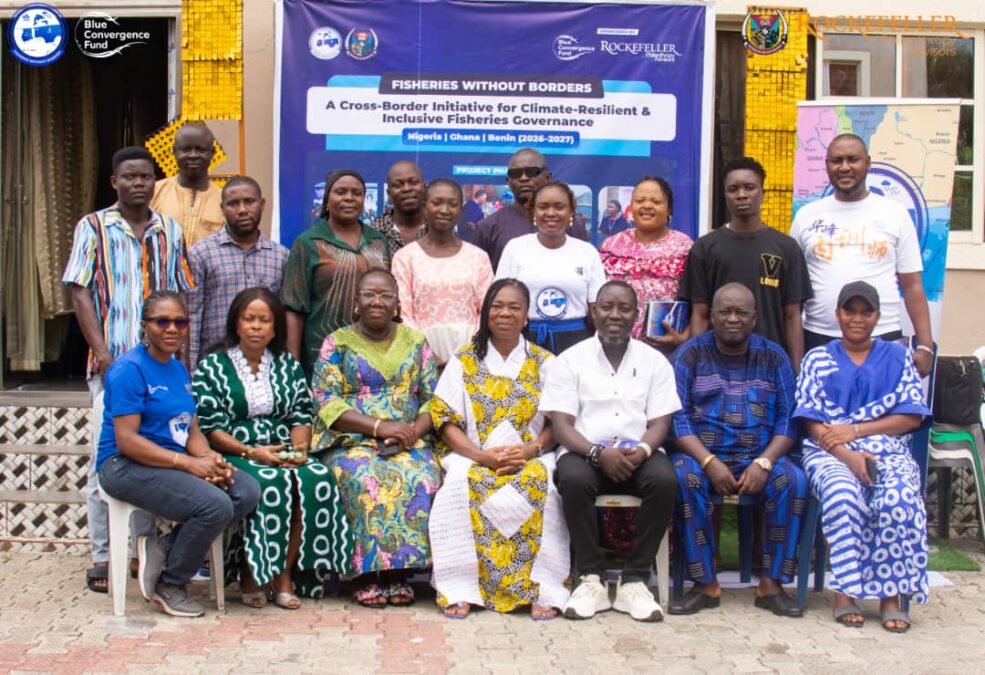
Stakeholders in fisheries management have been called upon to remain committed towards building stronger partnerships and implementing practical solutions that will safeguard marine resources, improve livelihoods, and ensure a more resilient future for fisheries-dependent communities across West Africa.
Toyosi Igejongbo, a stakeholder within the fisheries management, who spoke at an engagement, which comprises the four communities in Ilaje Local Government Area of Ondo State; Aheri, Ugbon, Mahin and Etikan, to discuss cross-border fisheries governance, capacity strengthening, inclusive growth, and equity for marginalised coastal communities, encouraged the fishing communities to collaborate with the government and adhere to regulations.
Igejongbo, lead project, Fisheries Without Borders (FWB) under the Federal University of Technology Akure (FUTA), emphasised the need for stronger regional coordination, improved cold storage and fish processing infrastructure, increased representation of women in decision-making processes, and the integration of traditional ecological knowledge into fisheries management
frameworks.
According to her, “the project aimed to fortify climate resilience, inclusive fishing governance across Nigeria, Ghana and Benin. The core objectives of the dialogue were to build capacity for marginalised growth, to ignite traditional ecological knowledge, and to promote national and regional policies.
“The Fisheries Without Borders (FWB) Project has facilitated a series of policy dialogues and stakeholder engagements across Nigeria, Ghana, and Benin, bringing together fishers, fishmongers, researchers, government agencies, civil society organisations, women, youth groups, and community leaders to strengthen climate resilience and promote sustainable fisheries governance.
“The objectives were to jointly identify the main challenges facing fishing communities; to inventory and promote local knowledge and practices related to fishing and to better understand the sources of conflict within the sector.
“The project is expected to engage over 300 stakeholders and empower more than 400 leaders across Nigeria, Ghana, and Benin. The initiative represents a significant milestone in advancing regional cooperation, inclusive participation, and sustainable development within coastal and fishing communities.”
She also said that the project will tackle challenges in the Gulf of Guinea, where unpredictable weather, declining fish stocks, environmental degradation, and cross-border conflict could jeopardise millions of livelihoods and food security.

Join BusinessDay whatsapp Channel, to stay up to date
Open In Whatsapp