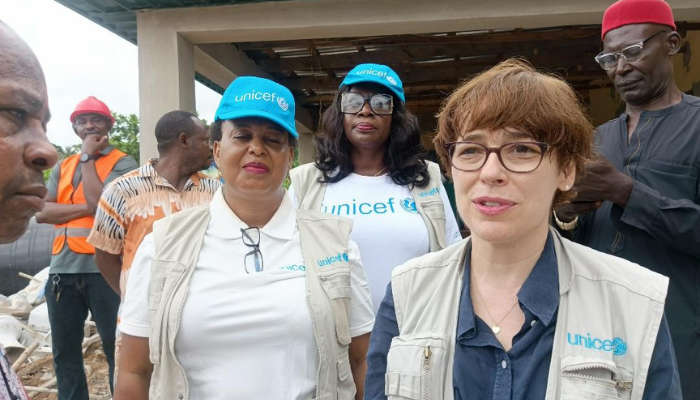
In a quiet rural community in Ezeagu, Ishielu council area of Ebonyi State, where residents have long struggled with inadequate healthcare services and a shortage of medical personnel, hope is beginning to emerge.
Through a major intervention supported by the Global Fund, UNICEF is revitalising a rural health centre that many residents believe could transform healthcare delivery and improve the lives of women, children and families in the area.
The facility is among hundred and fifty (150) primary healthcare centres across Nigeria being rehabilitated under a UNICEF-led programme aimed at strengthening access to quality healthcare services in underserved communities.
For years, the community’s health centre operated with limited infrastructure and insufficient health workers, forcing many residents to travel long distances in search of medical care. Pregnant women, nursing mothers and children were often the most affected.
Today, construction workers, engineers and health officials are working to change that narrative.
Read also: IHS, UNICEF train principals, teachers on digital literacy in Kano
During an inspection visit to Onunweke model primary health center the project site on Thursday, Charles Lotion, UNICEF Deputy Representative in Nigeria, said the intervention is designed to provide a modern, state-of-the-art healthcare facility capable of meeting the health needs of the community.
“Our role is to provide a state-of-the-art infrastructure. We want this community to be proud of what is being built here and to protect it after completion,” he said.
Lotion urged contractors to maintain the highest standards while calling on residents to take ownership of the facility by safeguarding the infrastructure and equipment from vandalism.
For community members, the project represents more than a renovated building. It is seen as a pathway to improved healthcare services and better health outcomes.
Judith Leveillee, UNICEF Chief of Field Operations and Emergency, said the upgraded facility would be equipped with solar power, safe water and improved sanitation facilities to ensure quality service delivery.
“The hope is to make sure the rehabilitation is completed quickly so that services can be fully restored,” she said.
She noted that the intervention reflects UNICEF’s commitment to ensuring that rural communities have access to quality healthcare services comparable to those available in urban areas.
Ovuba Chukwuemeka, the Executive Secretary of the Ebonyi State Primary Healthcare Development Agency, described the project as a critical healthcare intervention implemented through UNICEF with support from the Global Fund.
According to him, only four primary healthcare centres in Ebonyi State were selected for the revitalization programme, making the beneficiary community one of the few enjoying the intervention.
While residents expressed appreciation for the ongoing rehabilitation, they also raised concerns about the shortage of healthcare personnel, particularly doctors.
Uhuo Celine, Ward Development Committee Women Leader, said the absence of doctors has remained one of the community’s biggest healthcare challenges.
“The major thing we need is doctors,” she said, noting that many residents require access to proper diagnosis and treatment close to home.
Despite the concerns, optimism remains high that the revitalized facility will significantly improve healthcare access and contribute to reducing maternal and child mortality in the area.
Women from the community who came out to welcome UNICEF team emphasized that as work continues on the health center, they are looking forward to the day the facility will reopen as a modern healthcare centre capable of serving present and future generations.
They pointed that UNICEF’s intervention is more than a construction project it is a renewed promise of accessible, quality healthcare and a healthier future.

Join BusinessDay whatsapp Channel, to stay up to date
Open In Whatsapp