Recently, Spiro, a leading African electric vehicles (EV) platform, raised $USD215 million in equity to scale electric mobility and energy infrastructure across Africa.
The landmark investment round backed by major institutional investors including; Impact Fund Denmark, and Equitane is expected to accelerate the expansion of Spiro’s battery-swapping network, industrial footprint and next-generation EV infrastructure across high-growth African markets.
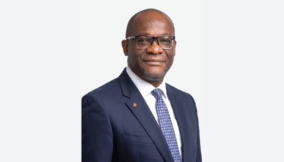
In this interview, KAUSHIK BURMAN, CEO, Mobility, Spiro, shares with OBINNA EMELIKE, product portfolio, feats already achieved, need to achieve more, why the $USD215 million investment matters, impact of EV on Africa’s energy cost and consumption, EV growth markets and new ones across Africa, among other related issues. Excerpt.
Congratulations on securing $215M investment from major institutional investors. How were you able to secure such a landmark investment considering that investors are usually skeptical on venturing into Africa, which they often consider a big business risk?
As you know, Spiro has always been committed to enabling the setting up of a virtuous industrial and energy ecosystem. Our approach was to remove the risk before asking anyone else to take it. We chose to put in significant capital first and proved the model commercially – across seven countries we have deployed more than 100,000 vehicles, built 2,500 swap stations and completed over 30 million swaps. So, when we went to market, investors were not backing a concept; they were backing a business that already works at scale. The other part is how the assets themselves are understood: we treat batteries as infrastructure. Our model was thus able to attract long-term, infrastructure-minded institutional capital, which enabled us to pursue our fleet expansion and very dynamic growth.
Why are your major institutional investors (Impact Fund Denmark, and Equitane) foreign investors? Are there no Africa investors that can help with such investments?
This round drew capital from both Europe and Africa. One of the latest investors, Impact Fund Denmark, is Danish (one of the most recognised DFI on the continent). But our project is backed by several African institutions such as FEDA and the Africa Go Green Fund. Equitane itself is a long-term investment platform engaged in economic development in Africa. We believe this mix of international and African capital backing an African business is the right equation to further support Spiro’s scaling journey.
What projects are you going to deploy the investments into and why?
This additional capital scales what we have proven. It will be directed into expanding the battery-swapping network in existing markets, growing local manufacturing capacity, and entering new markets – plus engineering and new product lines, following our acquisition of the design firm Coexlion and the launch of our first African R&D centre in Kenya. Africa is a vehicle market worth over USD 30 billion a year and EV just accounts for 1 percent of it. So, the opportunities are immense.
Which countries in Africa have you been very successful in?
Kenya, Uganda and Rwanda are our three strongest markets – that is where we have built out the most network. Rwanda is the clearest example: electric motorbikes now represent over 90 percent of new bikes sold there (90 percent of them are Spiro’s). We are still building out the network in Benin, Togo, Nigeria and Cameroon, our newest markets.
Do you think an enabling environment, right policies, government support and size of the economy are playing big roles in your success in these countries?
Policy and government support are decisive. In Rwanda, the ban on registering new petrol bikes in Kigali since January 2025 is what accelerated the shift towards electric mobility. Kenya is moving the same way, with the Finance Bill 2023 and the National E-mobility policy of February 2026 setting out fiscal incentives, charging infrastructure and the localisation of manufacturing. Where governments back the switch, adoption accelerates sharply. Where governments are only starting to realise this should be a priority policy – given external shocks and the continent’s massive dependency to fuel – the growth is exponential.
As African economies push to reduce dependence on fuel import, cut energy cost and ensure stable electricity supply, do you think boosting EV infrastructure is the way out and why?
It is, and the economics make the case. Africa spends over USD 150 billion a year on fuel, much of it imported, which drains foreign exchange and forces heavy subsidies; Kenya alone spends over USD 5 billion. Every rider who switches cuts directly into that bill. On the energy side, where the grid is unreliable, we power our swap stations with our own solar and store it in the batteries, so they operate independently of the grid rather than adding load to it. EV infrastructure tackles fuel dependence, energy cost and grid pressure at the same time and represents one of the successful ways to develop Africa’s sustainable energy ecosystem.
Can the EV ecosystems support energy security, industrialisation and economic resilience in Africa?
It is all a virtuous circle: industrialisation cannot accelerate without enough energy available whereas EV’s growth depends on local energy capacity. Our model – building domestic clean-energy networks rather, aiming towards +80 percent of vehicle value added in Africa through local manufacturing – directly builds the continent’s economic resilience by reducing dependencies.
Why are investors increasingly backing Africa’s energy and mobility transition?
Because the fundamentals have lined up. African economies are actively working to cut dependence on imported fuel, strengthen energy and industrial sovereignty, and modernise urban transport – and EV and battery-swapping ecosystems are emerging as one of the continent’s most promising infrastructure and energy opportunities. Rising fuel prices, growing demand for affordable transport and stronger public support for clean energy all reinforce that.
In your view, does the US$215 million investment signal investors’ confidence in Africa’s infrastructure and industrial growth story?
It does. When institutional infrastructure capital commits at this scale, it is saying that infrastructure-based business models in African markets are investable – that you can build energy and industrial assets here and attract serious, long-term funding. For us specifically, investors backing batteries as infrastructure assets and believing in our industrial footprint is a strong signal of confidence in Africa’s ability to build and scale complex products and tech.
Where do you think the next growth opportunities lie for Africa’s mobility and energy transition?
First, geography – we are expanding towards around 20 African markets, with Ethiopia, Malawi, Mali and the DRC next and MENA under strong consideration among others. Second, products – we will be introducing electric three-wheelers for both passengers and cargo and will unveil other major innovations by the end of the year. Third, energy – moving beyond transport into decentralised clean energy and second-life battery storage with many interesting uses associated. The EV market itself is projected to grow from under a billion dollars to around USD 4.2 billion by 2030.
Are there markets in Africa that are shaping the continent’s industrial future?
All countries have the potential to industrialise and capitalise on the existing local demand for EV. The opportunity grows alongside Africa’s pool of riders switching to EV. The markets where we are already building industrial capacity illustrate this approach. We have turned our bet into a winning industrial strategy by capitalising on each country’s strengths. Kenya has become a powerful case study for youth and women training and will host our first African R&D centre. Rwanda is ramping up fast whereas Nigeria is a major industrial opportunity for Spiro to push to the next level local sourcing and production.
What is the place of local manufacturing, technology innovation and battery-swapping infrastructure in Africa’s growth story?
Battery-swapping is what removes range anxiety and makes going electric practical – it is the energy backbone. Local manufacturing enables tailoring of the right product at an affordable price, while keeping added value on the continent and boosting skills enablement through programmes such as Spiro Academy. And technology innovation – our IoT platform, 30-plus patents, and now an African R&D capability – ties energy and vehicles into a single system. Together they turn electric mobility from an imported product into an African-built industry.
Finally, what is next for Spiro as it scales its mobility and energy infrastructure footprint across Africa?
The next chapter is responding to the growing enthusiasm of local riders. We will further ramp up production while opening additional swapping stations. Our journey as the leading energy and technology platform across the continent has just started!

Join BusinessDay whatsapp Channel, to stay up to date
Open In Whatsapp