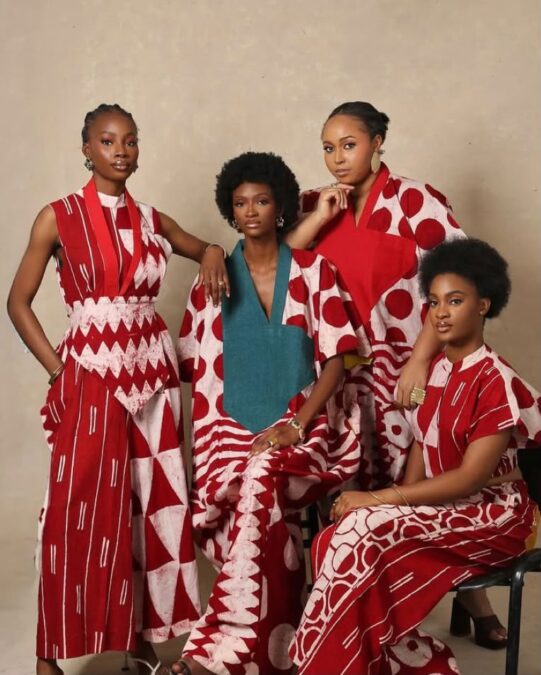
Adire is a significant fashion fabric from the southwestern Yoruba culture in Nigeria , an indigo dyed cloth with creative patterns worn for style, and heritage has now evolved into a modern fashion statement,to appearing on city streets, social media feeds and modern wardrobes.
From its inception, the indigo cloth has moved between everyday life to special moments, shaped in deep blue tones and patterned designs that reflect the skill of its makers.
Across places like Abeokuta, Osogbo, and Ile-Ife, dyers have worked with indigo for generations, building a craft that has stayed alive through the time making adiire now a significant part of the African and global fashion industry.
The name “Adire,” comes from the Yoruba phrase Adi + Re, which means to tie and dye. This beautiful handcraft dates back to the nineteenth century common among the Egba people of Ogun State.
It became popular when local women began using natural indigo dye and simple techniques to form patterns on cloth, classic patterns like Olokun (goddess of the sea) and Ibadadun (Ibadan is sweet) reflecting Yoruba culture, historical events,representations of plants, animals, tools, and conceptual themes and local proverbs.
Over the years, Adire has moved beyond its birthplaces and is now part of global high-fashion conversations.Adire is now being adapted into new fabric combinations, contemporary designs, and fashion collections shown on international platforms.
Designers are reworking Adire into modern clothing styles such as tailored suits, dresses, streetwear sets, jackets, and casual everyday outfits.
Instead of the traditional loose wrapper styles, they now cut and shape the fabric into contemporary silhouettes, often adding customized text, logos, or design details to give each piece a more personal and modern identity.Its visibility has grown through fashion houses and independent brands that reinterpret Adire.
Nollywood has also played a key role in reshaping how Adire is seen today. From their film productions through costume styling and storytelling in film. In some recent productions, Adire has been prominently featured as part of character wardrobes, showcasing the fabric in both traditional and modern contexts, movies like Adeoluwa Owu Adire(2023), kunle Afolyan Aníkúlápó (Film & Series).
By placing it within contemporary scenes rather than limiting it to cultural settings, these films help reinforce Adire as a stylish and relevant fabric and exposing to global audiences.
This on-screen presence, combined with the influence of social media creators and fashion influencers, and the rise of Afro beats stars rooted in their culture like Adeline Gold and the rest continues to strengthen its place in modern fashion culture.
Major institutional events have created sustainable economic pathways to commercialize the craft internationally. Platforms like the annual Adire Lagos Experience hosted by Ecobank and the Adire Market Week in Ogun State connect local craft clusters directly with premium buyers, upscale boutiques, and international designers. This keeps production active, premium, and integrated into modern supply chains.
Nigerian professionals in the diaspora, such as Dr Toyosi Craig, as well as renowned artisans like Nike Davies-Okundaye, who continue to inspire younger designers including Amaka Osakwe of Maki-Oh. The fabric has also appeared in global fashion spaces, worn by celebrities such as Michelle Obama and Lupita Nyong’o in Adire-inspired designs.
Adire did not become modern because it changed.It became modern because people stopped seeing tradition as something distant from style. Even with this expansion and modern reinterpretation, it still keeps its identity rooted in handmade craftsmanship and traditional processes.

Join BusinessDay whatsapp Channel, to stay up to date
Open In Whatsapp