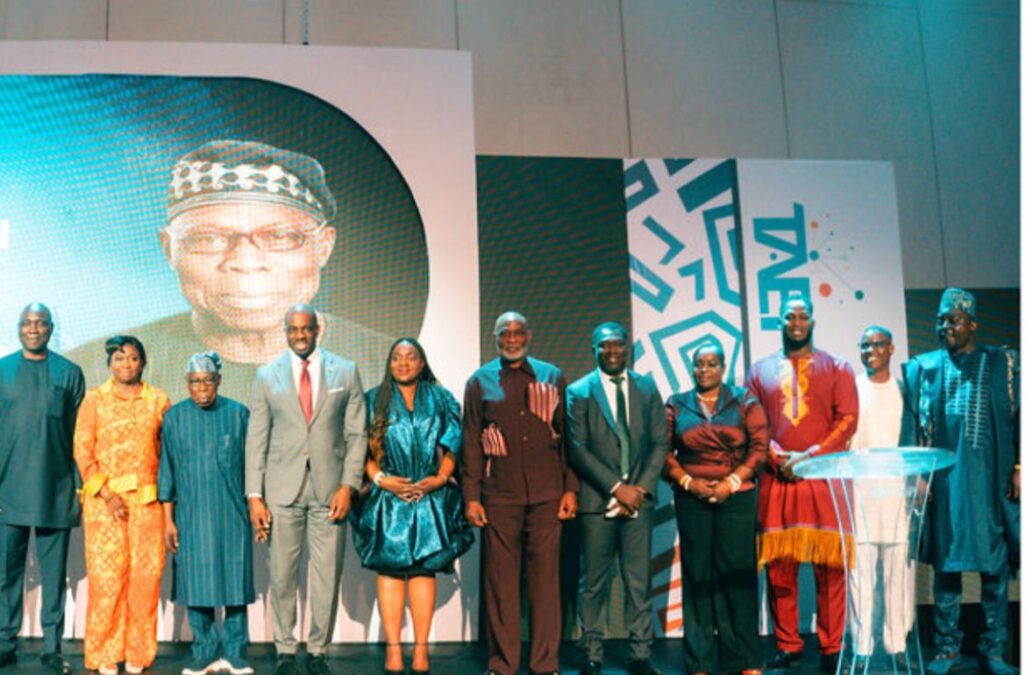
The inaugural Afretrade Entrepreneur’s Festival (TAEF 2026) recently held at the Eko Hotel & Suites, drawing a gathering of global entrepreneurs, diaspora investors, corporate titans, and senior policymakers.
Organised by Afretrade Inc., a California-based pan-African trade and investment platform, the three-day summit running from June 17–19, 2026, is intentionally curated under the theme ‘Africa’s Economic Renaissance.’ The maiden edition marks a definitive structural shift aimed at moving the continent’s economic narrative away from high-level rhetoric and directly into cross-border execution.
The high-octane gathering served as the formal launchpad for two landmark economic initiatives: the Afretrade Africa Economic Renaissance Movement—a synchronized global framework designed to position the African diaspora as a primary driver of institutional investment—and the Lagos–California Sister State Economic Corridor, which establishes a direct trade and technological bridge between two of the world’s most vibrant commercial landscapes.
In his welcome address, Lekan Salaam, Founder and CEO of Afretrade, outlined the dual nature of the initiative as both a scalable digital marketplace and an activating global festival designed to empower the job creators driving the continent’s macro-economy.
“Afretrade is an infrastructure that promotes trade, talent, and training,” Salaam stated. “We believe in collaboration without subordination. Entrepreneurs need to create more sustainable domestic jobs to effectively mitigate the talent drain of ‘Japa.’ Africa is ready for business, and this movement is strictly about immediate, measurable action. Nobody will build Africa for us; we must do it ourselves.”
Stressing the operational architecture of the digital framework, Jubril Gbajabiamila, CPO, Afretrade, demonstrated how the verified platform functions as a one-stop virtual shop capable of integrating Africa’s highly fragmented MSME sector into global retail lines.
“Nigeria has over 40 million registered SMEs. If we can onboard just 10 percent of this demographic onto a verified, structurally real digital ecosystem, the numbers will take care of themselves,” Gbajabiamila noted.
“Our verification takes place directly in the United States to ensure global compliance. If we onboard 100 million African businesses and each employs just five people, we solve the employment deficit. The real, micro-level impact is driving that extra $100 per month in transactional volume for the everyday local trader.”
Expanding on this capacity pipeline, Charly Lemassi, COO of Afretrade and Festival Director, re-emphasized the urgent need to equip youth and women with globally competitive technical skills. “TAEF 2026 is not a conference; it is a movement,” Lemassi affirmed.
“We are bringing the full weight of the global diaspora into one room with a single mandate: to build a sustainable ecosystem with capital, intention, and real urgency.”
Delivering an analytical breakdown of domestic policy shifts, Abimbola Olashore, President of Council of the Nigerian-British Chamber of Commerce (NBCC), mapped out how current macroeconomic re-alignments contrast with historical reform cycles—including the 1986 Structural Adjustment Programme (SAP) and the debt-elimination era of 2003–2007.
“The bold and painful macroeconomic recalibrations of the current administration teach us one constant truth: reform itself only creates the necessary conditions; it does not create economic outcomes. Outcomes are built strictly by institutions and the leaders who run them,” Olashore argued.
Olashore further revealed how the NBCC capitalised on post-Brexit trade disruptions by deepening ties with the UK Foreign, Commonwealth & Development Office (FCDO) and the Department for Business and Trade to translate state-signed MoUs into private-sector contracts.
Turning his attention to the newly minted West Coast alliance, Olashore demystified the Lagos-California Partnership:
“Silicon Lagoon is not a marketing phrase. It is a description of a genuine, marketable tech ecosystem thriving across Yaba, Lekki, and Victoria Island. The companies being built in Lagos today are not imitating Silicon Valley. Silicon Valley exports technology; Lagos exports unique, hyper-localized solutions for financial inclusion and last-mile logistics that Silicon Valley cannot even conceptualize. We are building the bridge for bilateral learning, and global capital from the likes of Google and Sequoia is already validated by moving along these corridors.”
Representing the sub-national governance structure of the United States, Toks Omishakin, the California Secretary of Transportation, delivered a data-driven address highlighting the stark infrastructural contrast between the two economic territories. Pointing out California’s position as the world’s 4th largest economy, Omishakin tied infrastructure directly to human capital survival.
“In Africa, life expectancy rates remain lower than in other parts of the globe, and a primary driver of this disparity is the lack of quality-of-life infrastructure—specifically water, stable power, and advanced highways,” Omishakin stated.
“The more we aggressively engineer and construct state infrastructure, the faster we elevate life expectancy. We must move immediately past the vanity of signing MoUs and transition directly into the rigorous phase of implementation. Do not wait for the iron to get hot to strike; strike to make the iron hot.”
Abike Dabiri-Erewa, Chairman/CEO of the Nigerians in Diaspora Commission (NiDCOM), issued a sharp charge to the festival’s entrepreneurs to break Africa’s centuries-old cycle of exporting raw commodities only to import expensive, processed finished goods.
“Our clear competitive advantage is our authentic African roots,” Dabiri-Erewa stated, citing successful export examples ranging from Ondo State cocoa processing into international chocolate shelves to Nollywood intellectual property and indigenous textiles.
“But moving from a domestic side-hustle to a cross-border enterprise requires strict adherence to international commercial metrics. It is no longer about quotes; it is about supply chains, export documentation, and NAFTA registration codes.”
Dabiri-Erewa concluded with a critical warning against operational isolationism within the local value chain:
“Let us collaborate or we will collapse. The local cocoa farmer inherently needs the expert packager, and the packager is completely reliant on the international logistics network. When your package successfully passes EU food safety standards and sits on a retail shelf in London or Switzerland, you are practicing the ultimate form of economic diplomacy.”
Former President Obasanjo, who delivered the keynote address titled Africa’s Economic Renaissance: The Leadership, Discipline and Private Sector Action We Need Now, identified entrepreneurship, leadership, infrastructure and diaspora engagement as the pillars required for Africa’s transformation.
“Entrepreneurship, leadership and infrastructure are essential. And more for me, the fourth is Global Africa, which includes the diaspora — Africa on the continent and Africa outside the continent,” Obasanjo said.
Following his keynote address, former President Obasanjo was honoured with an award presented on behalf of Afretrade by NiDCOM Chairman, Abike Dabiri-Erewa, in recognition of his contributions to leadership, entrepreneurship development and Africa’s economic growth.
The former president described entrepreneurs as risk-takers and innovators who create products and services while driving economic growth and sustainability.
“You are an entrepreneur because you are ready to take risk. You are an entrepreneur because you are innovative. You are an entrepreneur because you want to start something new. You are an entrepreneur because you want to market a product or a service. You are an entrepreneur because you want to make profit and sustain what you have begun,” he stated.
With deal rooms, technical masterclasses, and financial pitch stages operating simultaneously across the Eko Hotel complex, TAEF 2026 has successfully laid down the institutional infrastructure required to convert Africa’s immense social capital into highly structured, sustainable global wealth.

Join BusinessDay whatsapp Channel, to stay up to date
Open In Whatsapp