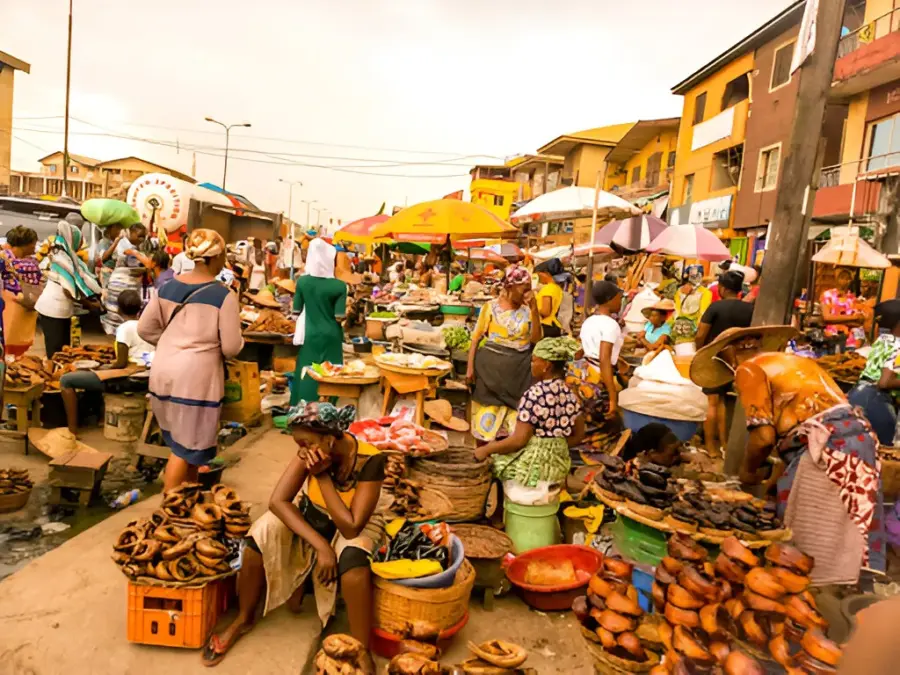
…surging rents, transport costs shrink spending power
Nigeria’s households are cutting spending again as inflation pressure returns, with soaring food, rental, and transportation costs driving the squeeze.
Mary Chukwu, a secondary school teacher in Ketu – Lagos, now spends nearly her entire monthly salary commuting to work from Adamo in Ikorodu to Ketu. Higher rental costs had pushed her to move from residing in Ketu to Adamo in February.
“There is hardly anything left of my salary after subtracting transport and feeding for the month,” Chukwu said.
“I am just surviving, and sometimes I go to bed hungry, hoping for divine intervention,” she explained, noting that she was forced to relocate to Ikorodu – a suburb in Lagos owing to a 200 percent increase in her former rental fees at Ketu.
David Adegoke, an accountant, said his family’s eating habits have drastically changed owing to the surging cost of living.
“Everything from rent to feeding just keeps rising,” he said, noting that households are cutting down on spending to survive.
“Last year, my family had to move from Irawo, a community along Ikorodu road, to Ibafo, in Ogun State, because of the surge in rent,” he explained. He noted that his rent was increased from N550,000 to N1.2 million, a 118 percent rise.
“Eating snacks in between meals is no longer allowed, and taking tea or beverages is an occasional thing in our home now,” he said.
Chukwu and Adegoke’s stories mirror that thousands of households are squeezed between wages that lag behind inflation and costs that don’t.
Thousands of families in Lagos are relocating to suburbs or Ogun State to seek cheaper rents as rentals have surged by an average of 150 percent in Lagos, Nigeria’s commercial centre.
Read also: Jollof rice cost hits N30,435 as Iran war drives food prices
Pay is failing to keep pace with inflation, with civil servants and low income earners most hit by the squeeze.
Businesses are also feeling the pinch. Mama Chichi, a frozen food seller at Ketu-Ijanikin Market, complained of declining sales owing to low purchasing power.
She explained that many families are struggling to survive amid the surging cost of living. “Customers are buying little by little as the need comes, unlike before when food prices were crashing, people were doing bulk buying.”
The food vendor explained that she no longer stocks her freezer with high-end fish such as Titus and Croker as customers now prefer buying Shawa and Kote which are cheaper and more affordable due to low purchasing power.
“My customers now prefer Shawa and Kote fish; people can no longer afford frozen Titus and Croker fish. They also prefer buying Achi and Ofor for N500 instead of their usual Egusi because they are cheaper.”
In a country where the minimum wage rate is N70,000 below $60 per month, the ballooning rental fees and transportation costs have left many Nigerians making calculated steps in spending.
Nigeria’s headline inflation rate accelerated to 15.93 percent and food inflation to 16.96 percent in May 2026. No fewer than 133 million Nigerians live in multidimensional poverty, according to the National Bureau of Statistics.
About 35 million Nigerians are projected to face acute food insecurity between June and August lean period, over worsening insecurity, economic hardship and climate shocks.
The Iran war is taking a toll on Nigeria’s economy, with oil prices skyrocketing and energy costs surging due to the closure of the Strait of Hormuz and attacks on oil and gas facilities in the Gulf region. It led to a renewed cost-of-living crisis, affecting millions of households across the country.
However, the US-Iran has reached an agreement to end the war, and the move has sent global oil prices to their lowest since March. The skyrocketing fuel prices is expected to drop, and households might see respite in food and transportation costs.

Join BusinessDay whatsapp Channel, to stay up to date
Open In Whatsapp