The Federal Government has unveiled plans to deploy seven million electricity meters across the country as part of a major reform programme aimed at ending estimated billing, improving revenue collection and restoring confidence in Nigeria’s struggling power sector.
The initiative comes as national metering coverage rises to about 57 percent, marking a significant improvement in efforts to close a metering gap that has left millions of electricity consumers exposed to disputed and estimated bills.
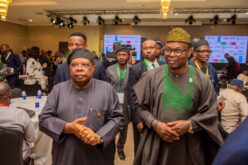
Olu Verheijen, Special Adviser to the President on Energy, disclosed the plan at a Nigerian-British Chamber of Commerce (NBCC) energy conference in Lagos, where stakeholders reviewed progress in ongoing reforms across the country’s energy sector.
According to her, the seven million-meter rollout will be implemented through a presidential metering initiative and a separate World Bank-backed programme designed to accelerate meter deployment nationwide.
“Metering protects consumers. It reduces estimated billing and it builds the commercial discipline that investment requires,” a government representative said.
The conference, themed “Energy in Nigeria: From Potential to Reality,” brought together policymakers, regulators, investors and energy companies to discuss strategies for unlocking investment and accelerating Nigeria’s energy transformation.
The metering programme is expected to strengthen transparency in electricity billing, improve collections by distribution companies and support efforts to make the power sector financially sustainable.
For years, estimated billing has remained one of the most contentious issues in Nigeria’s electricity market, generating widespread consumer complaints and eroding trust between customers and power distribution companies.
The government said the expanded metering drive forms part of broader efforts to stabilise the electricity value chain and attract fresh investment into the sector.
As part of the reform agenda, the Federal Government has approved a power sector debt reduction programme worth up to N4 trillion to settle verified obligations owed to electricity generation companies (GenCos) and gas suppliers.
Verheijen said settlement agreements valued at about N2.3 trillion have already been signed, while the first N501 billion bond issued under the programme was oversubscribed by investors. A second tranche worth N729 billion is expected to be issued shortly.
The administration described the intervention as a strategic reset intended to restore liquidity, improve investor confidence and create a more bankable electricity market.
Alongside metering reforms, authorities are implementing tariff adjustments aimed at improving cost recovery across the sector. About 45 percent of the electricity market is now operating under cost-reflective tariffs linked to service quality, while subsidy arrangements are being redesigned to protect vulnerable consumers.
She said the reforms are expected to reduce projected electricity subsidy obligations by about N1 trillion, freeing up resources for infrastructure development and social investments.

Join BusinessDay whatsapp Channel, to stay up to date
Open In Whatsapp