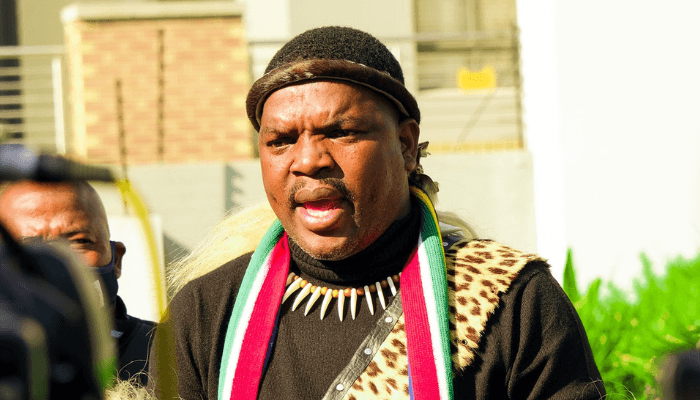
Ngizwe Mchunu has transformed himself from one of South Africa’s most recognisable radio personalities into one of the country’s most divisive political activists.
To his supporters, he is a defender of Zulu identity and a man challenging government failures on border control and crime. To his critics, he is a dangerous figure whose fiery rhetoric fuels xenophobia, intimidation, and unlawful vigilantism.
The KwaZulu Natal traditionalist first rose to national prominence as a popular presenter on Ukhozi FM, a station run by the South African Broadcasting Corporation. Known for his passionate embrace of Zulu culture and tradition, Mchunu built a loyal audience that extended far beyond radio.
Read also: Ramaphosa vows severe action against those behind xenophobia
His career at the public broadcaster came to an abrupt end in 2019 after the SABC terminated his contract over a breach of its confidentiality policies. Rather than disappear from public life, Mchunu moved online and launched Ngizwe Mchunu FM, where he continued to expand his influence among supporters.
In the years that followed, his public persona shifted from media celebrity to political mobiliser. He drew widespread attention during the July 2021 unrest in South Africa and later intensified his focus on immigration, presenting himself as a voice for citizens frustrated by unemployment, crime, and what he describes as weak border management.
“South Africans are suffering while the government fails to act,” Mchunu has repeatedly argued during public rallies and online broadcasts, calling for tougher action against undocumented foreign nationals.
Read also: South Africa’s jobless population climbs to 8.1 million amid rising xenophobia tensions
His critics, however, say his campaigns go far beyond calls for immigration reform. Human rights groups have accused him of promoting language that unfairly blames migrants, particularly those from Zimbabwe, Nigeria, Malawi, and Mozambique, for complex social and economic problems.
By 2026, Mchunu’s campaign had moved from online statements to large street demonstrations. In May, he helped organise anti immigrant marches in Durban, where protesters demanded the deportation of undocumented migrants and tighter controls on foreign owned informal businesses.
His activism also brought him into a legal battle with Economic Freedom Fighters leader Julius Malema. Mchunu publicly accused Malema of protecting undocumented migrants and claimed the opposition leader had received money from Nigerian drug networks. The allegations triggered a defamation case brought by the EFF.
Read also: Xenophobia: NLC writes South African counterparts to halt attacks
In June 2026, the High Court in Pretoria found Mchunu in contempt of court for repeating the claims despite an earlier order preventing him from doing so. A warrant for his arrest was issued, but the sentence was suspended after he publicly apologised on social media and agreed to comply with the court’s conditions.
Despite the legal setback, Mchunu remained defiant. In mid June, he was involved in a tense confrontation with Malawian nationals returning home on buses after attempting to film himself telling them to rebuild their own country. Police intervened to remove him from the scene as tensions escalated.
Days later, he took his movement to Gauteng, leading hundreds of demonstrators to the Tembisa police station in Ekurhuleni, where they demanded the removal of undocumented migrants. Organisers described the action as the beginning of a broader campaign of citizen pressure planned for the end of June.
Mchunu’s rise reflects a growing and deeply contested debate in South Africa over migration, economic hardship, crime, and the state’s ability to enforce immigration laws. As his influence grows, so too does the argument over whether he represents a frustrated public demanding action or a movement that risks deepening division and hostility toward foreign communities.

Join BusinessDay whatsapp Channel, to stay up to date
Open In Whatsapp