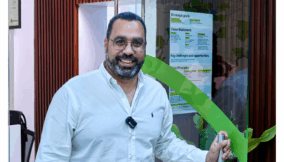
Eguarekhide Longe, managing director, NASD Plc speaks on how businesses can leverage capital market to access long-term funding for sustainable growth, noting the opportunities available to SMEs on the NASD OTC Exchange, writes Iheanyi Nwachukwu. Excerpts
How can capital market financing support innovation among SMEs?
Innovation often requires substantial investment and time before returns are realised. Through access to long-term capital, SMEs can fund research and development, adopt new technologies, digitise operations, and introduce innovative products and services. Such investments enhance efficiency, improve customer experience, and strengthen competitiveness. Capital market funding therefore enables businesses to pursue innovation without being constrained by short-term financing pressures.
How can the alternative securities market help bridge financing gaps for medium-sized enterprises and emerging businesses?
The alternative securities market plays a critical role in addressing the financing gap faced by medium-sized enterprises and emerging businesses that may not yet meet the requirements of traditional exchanges or commercial lending institutions. By providing flexible capital-raising platforms, access to a wider investor base, and tailored listing structures, alternative markets enable growth-oriented businesses to secure long-term funding while improving governance, transparency, and visibility. This ultimately supports job creation, innovation, and broader economic development.
What measures can enhance liquidity across listed and unlisted securities?
Enhancing liquidity requires a combination of market structure reforms and broader investor participation. Measures such as encouraging market-making activities, expanding institutional investor participation, improving price discovery mechanisms, introducing innovative investment products, and leveraging technology to improve market access can significantly deepen liquidity. Greater transparency, efficient settlement systems, and stronger investor education will also help attract and retain participants across both listed and unlisted securities.
How can Nigeria attract more domestic and foreign portfolio investment into its capital markets?
Attracting sustainable domestic and foreign portfolio investment requires maintaining macroeconomic stability, ensuring policy consistency, strengthening investor protection frameworks, and enhancing market transparency. Investors are attracted to markets where regulations are predictable, capital can move efficiently, and information is readily available. Continued reforms that improve ease of doing business, deepen market liquidity, and expand investment opportunities will strengthen Nigeria’s competitiveness as an investment destination.
What opportunities do digital assets, tokenisation, and blockchain technologies present for the Nigerian capital market?
Digital assets, tokenisation, and blockchain technologies have the potential to significantly expand market participation and unlock new sources of capital. Tokenisation can facilitate fractional ownership of assets, improve accessibility for retail investors, and enhance liquidity in traditionally illiquid asset classes. Blockchain can increase transparency, reduce transaction costs, improve settlement efficiency, and strengthen trust across the investment ecosystem. With appropriate regulation, these technologies could transform how capital is raised, traded, and managed.
What are the major risks and opportunities currently facing investors in Nigeria’s financial markets?
Nigeria’s financial markets present a unique combination of risks and opportunities. Key risks include macroeconomic volatility, inflationary pressures, exchange rate fluctuations, and global economic uncertainties that can influence capital flows and investor sentiment. However, significant opportunities exist in undercapitalised sectors, infrastructure financing, private capital formation, and the growing participation of technology-enabled businesses. Investors who adopt a long-term perspective and diversify across asset classes can benefit from the country’s demographic advantages, entrepreneurial capacity, and ongoing economic reforms.
What is your advice to SMEs that have never considered the capital market as a funding source?
My advice is to begin preparing today. Strengthen your governance framework, maintain reliable financial records, and seek professional guidance on available capital market opportunities. Entrepreneurs should recognise that the capital market is not only for large corporations; it is also a pathway for ambitious SMEs seeking sustainable growth. Businesses that embrace transparency and strategic planning can access funding, attract investors, and position themselves for long-term success in an increasingly competitive economy.
Can you provide some background to the NASD -LCCI stakeholders’ forum?
The NASD–LCCI Stakeholders’ Forum was organised to address the funding challenges facing small and medium-sized enterprises (SMEs) in Nigeria by creating awareness of the opportunities available in the capital market through the NASD OTC Exchange. The initiative grew out of the longstanding relationship between NASD and the Lagos Chamber of Commerce and Industry (LCCI), with both organisations seeking to help businesses access long-term growth capital beyond traditional bank loans.
The Forum brought together entrepreneurs, investors, regulators, and market operators to discuss how SMEs can become investment-ready and attract capital for expansion.
The event focused on educating SMEs about the requirements for raising funds from the capital market, including strong corporate governance, transparent financial reporting, and sustainable business models. NASD highlighted the role of its OTC Exchange as a platform that can connect growing businesses with investors and provide alternative financing options. Widely regarded as the first in a series, the Forum marked the beginning of a broader effort by NASD and LCCI to deepen SME participation in Nigeria’s capital market and support the growth of the real sector.
Why is NASD intensifying campaign for SMEs to access the OTC Exchange?
SMEs account for a significant portion of economic activity and employment in Nigeria, yet many remain underfunded because they depend largely on short-term bank facilities. NASD is intensifying awareness efforts to demonstrate that the capital market can provide a sustainable source of growth capital. By accessing the OTC Exchange, SMEs can obtain medium- to long-term funding needed for expansion, modernisation, innovation, and market penetration while reducing overreliance on debt financing.
What investment windows are available to SMEs on the NASD OTC Exchange?
SMEs can access a variety of capital-raising opportunities through the NASD OTC market. These include equity financing through the admission of shares for trading, private placements, corporate bonds, commercial papers, and other structured investment instruments. The availability of multiple financing windows allows businesses to choose funding solutions that align with their growth strategies, cash-flow profiles, and long-term objectives.
How does equity financing benefit SMEs than traditional bank loans?
Equity financing offers businesses access to capital without imposing fixed repayment obligations or immediate interest costs. This allows management to focus resources on growth initiatives rather than debt servicing. Equity financing also improves a company’s capital base, enhances financial flexibility, and creates opportunities for investors to participate in the future success of the business. For many growing enterprises, this provides a stronger foundation for sustainable expansion.
What type of SMEs can access the NASD OTC Exchange?
The Exchange is designed for ambitious and growth-oriented businesses across sectors such as manufacturing, agriculture, technology, healthcare, logistics, and services. Companies do not have to be multinational corporations to participate. What is important is a commitment to transparency, sound corporate governance, credible financial records, and a clear business strategy. SMEs with scalable business models and strong management teams are particularly attractive to investors.
How can an SME begin the process of accessing the OTC market?
The journey typically begins with engaging a licensed capital market operator, sponsoring broker, or issuing house. The company undergoes an assessment to determine its readiness, funding requirements, and appropriate financing structure. Professional advisers assist with documentation, regulatory compliance, valuation, and investor engagement. NASD works closely with market participants to ensure that businesses understand the process and are properly guided from preparation to successful admission or fundraising.
What role does NASD play in supporting SMEs through the process?
NASD serves as a platform that connects businesses seeking capital with investors looking for viable investment opportunities. Beyond providing a transparent marketplace, NASD promotes financial literacy, stakeholder engagement, and market awareness. Through collaborations with organisations such as the Lagos Chamber of Commerce and Industry, we continue to educate entrepreneurs on how capital markets can support business growth and economic development.
Beyond raising capital, what additional benefits do SMEs gain from joining the OTC Exchange?
Admission to the OTC market provides benefits that extend beyond financing. It enhances corporate visibility, strengthens brand reputation, and increases investor confidence. Companies often experience improvements in governance, financial reporting, and operational discipline. Participation in the market can also create opportunities for strategic partnerships, mergers, acquisitions, and access to a wider network of stakeholders, all of which contribute to long-term business resilience.
How does the OTC Exchange help businesses achieve long-term sustainability?
Sustainable growth requires patient capital and strategic planning. The OTC market provides businesses with access to funding that can be invested in capacity expansion, technology acquisition, product development, infrastructure, and human capital. These investments improve productivity and competitiveness. By matching long-term funding with long-term business objectives, companies are better positioned to withstand economic cycles and maintain steady growth.
Why is investor confidence important for SMEs seeking capital?
Investor confidence is a critical factor in successful capital raising. Investors are more willing to commit funds when companies demonstrate transparency, accountability, and sound governance practices. Businesses that maintain accurate financial records, disclose relevant information, and implement effective management structures are better positioned to attract investment. Strong investor confidence can also improve valuations and facilitate future fundraising activities.
What message emerged from the recent stakeholders’ forum with LCCI?
One of the strongest messages from the Forum was that access to capital should not be a barrier to business growth. Participants were encouraged to view the capital market as a practical and accessible funding alternative. The discussions highlighted the importance of preparing businesses for investment, strengthening governance standards, and leveraging market-based financing to accelerate growth, job creation, and economic transformation.

Join BusinessDay whatsapp Channel, to stay up to date
Open In Whatsapp