


For centuries, Nigerians have gathered around fire. From the suya corridors of Kano and Kaduna to the fish grills of the Niger Delta and the open-fire meat traditions of the South-West, grilling is one of the country’s oldest and most democratic culinary traditions.
It cuts across class, ethnicity, and geography. The smoky aroma of meat on charcoal is as familiar to a Lagos executive as it is to a trader in Zaria.
Yet despite its cultural significance, grilling remained largely informal for decades – a roadside business generating income but rarely attracting serious investment, professional branding, equipment manufacturing, culinary innovation, or export ambitions.
That is beginning to change. A new generation of entrepreneurs is transforming grilling from a traditional food practice into a modern economic sector that spans hospitality, tourism, steel fabrication, events management, food processing, livestock value chains, culinary education, and premium dining experiences.
In a country searching for non-oil growth sectors capable of creating jobs and retaining value locally, these grill entrepreneurs are quietly building an industry hidden in plain sight.
Miracle John: Turning Fire Into Theatre

When Miracle John announced plans to undertake a 100-hour grilling marathon in Kaduna, many viewed it as a Guinness World Record attempt. But beneath the spectacle was a deeper message.
The founder of Mina’s Kitchen has spent years proving that barbecue can be elevated beyond roadside commerce into a premium culinary experience.
Operating from Kaduna, Miracle has built a brand around Afro-BBQ, blending northern Nigerian grilling traditions with contemporary presentation and hospitality standards.
Her work represents a broader shift occurring across Nigeria’s food ecosystem. Consumers are increasingly willing to pay for experiences, not merely meals. Barbecue is becoming part entertainment, part culture, and part premium dining.
For livestock producers, spice merchants, charcoal suppliers, and hospitality workers, that evolution creates economic opportunities that extend far beyond the grill itself.
BrightGrillzz: The Man Who Made Grilling Fashionable
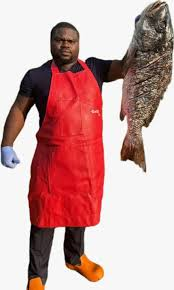
Few individuals have done more to reposition grilling as a luxury experience than Nfor Bright Bungansa, widely known as BrightGrillzz.
Across Abuja and Lagos, he has become one of the country’s most recognizable grill personalities, catering celebrity events, corporate functions, luxury weddings, and high-profile social gatherings.
What BrightGrillzz understood early was that Nigerians increasingly consume experiences through social media before they consume them physically.
His grills became performance stages. His food became content. His events became destinations. In doing so, he transformed grilling from a simple food business into a lifestyle brand.
This model mirrors developments seen in mature food markets globally, where barbecue has evolved into a high-value hospitality category supporting festivals, tourism, catering companies, culinary schools, and branded consumer products.
Nigeria’s growing middle class and expanding events industry provide fertile ground for similar growth.
Grillmakers Nigeria: Building The Infrastructure Behind The Industry
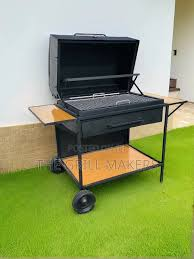
Every successful industry requires builders. In Nigeria’s grill economy, one of those builders is Grillmakers Nigeria.
Based in Lekki, Lagos, the company manufactures commercial barbecue equipment, custom grill stations, smokehouses, and heavy-duty cooking infrastructure for restaurants, lounges, resorts, and hospitality businesses.
Their importance highlights a frequently overlooked reality. Industrial development is not only about the final product consumers see. It is also about the ecosystem of suppliers that emerge around an industry.
A growing grilling sector creates demand for welders, fabricators, steel suppliers, engineers, logistics providers, and maintenance technicians.
In other words, every successful grill business generates opportunities for multiple adjacent industries.
That multiplier effect is what economists call local value creation. And it is precisely how sectors become engines of economic growth.
Chef Hook: Bringing Corporate Discipline To Culinary Fire

Tawab Ayodele Abdulrazaq, known professionally as Chef Hook, represents another dimension of Nigeria’s evolving grill industry.
Armed with formal business training from Lagos Business School and extensive culinary experience, he has combined traditional pitmaster techniques with structured business systems.
His approach reflects a broader trend occurring within Nigeria’s food sector: the professionalisation of culinary entrepreneurship.
What was once an informal trade is increasingly becoming a sophisticated enterprise involving procurement systems, food safety standards, brand development, customer analytics, and operational efficiency.
This matters because scalability depends on systems. The future of Nigeria’s food industry will not be determined solely by culinary talent. It will depend on entrepreneurs who can combine creativity with execution.
Chef Hook’s model demonstrates what that future may look like.
Philip Gloria and Barkono Grill: Local Flavours, Modern Markets
In northern Nigeria, Philip Gloria’s Barkono Grill is helping redefine how traditional barbecue and suya-inspired products reach contemporary consumers.
By blending indigenous flavours with modern presentation and business practices, Barkono Grill illustrates how local culinary heritage can become commercially competitive.
Around the world, some of the most successful food brands emerged not by abandoning tradition but by packaging it differently.
Japan commercialised sushi. Mexico globalised tacos. South Korea exported kimchi. Nigeria’s grilling traditions possess similar potential.
The challenge is not the product. The challenge is building brands, distribution networks, quality standards, and customer trust around it. Entrepreneurs like Gloria are taking early steps in that direction.
The Untapped Opportunity
The global barbecue market is worth tens of billions of dollars annually, spanning restaurants, outdoor cooking equipment, sauces, seasonings, catering services, food festivals, and tourism experiences.
Nigeria possesses many of the ingredients needed to build its own version of that ecosystem. The country has one of Africa’s largest livestock markets.
It produces spices and agricultural products essential to grilling. Its hospitality and events sectors continue to expand.
Its population is young, urbanising, and increasingly interested in food experiences. Yet much of the industry’s economic potential remains underdeveloped.
Few local grill brands operate at national scale. Dedicated barbecue supply chains remain limited. Equipment manufacturing is still emerging.
Food tourism centred around Nigerian grilling traditions remains largely untapped. These gaps represent opportunities.
More Than Food
At first glance, grilling appears to be about meat. In reality, it is about much more.
Every successful grill business creates demand for cattle, poultry, fish, spices, charcoal, packaging, logistics, hospitality, event management, equipment fabrication, marketing, and skilled labour.
It is a value chain. And value chains are how economies grow.
The entrepreneurs leading Nigeria’s grill economy may not receive the same attention as technology founders or industrial magnates.
But they are demonstrating something equally important. That local culture can become local industry. That traditional skills can become modern enterprises.
And that sometimes the path to economic transformation begins not in a boardroom or policy document – but around a fire, with smoke rising into the evening sky.

Join BusinessDay whatsapp Channel, to stay up to date
Open In Whatsapp


