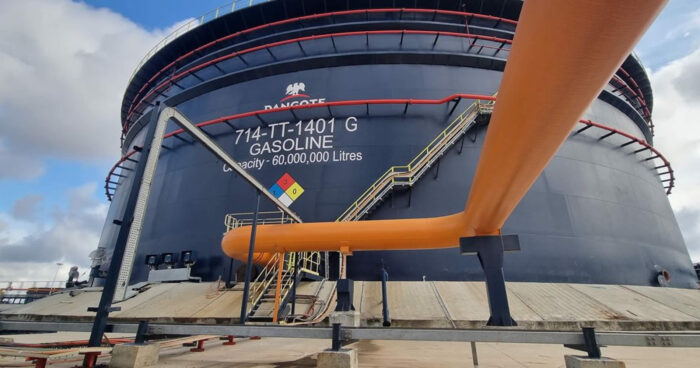
The Dangote Petroleum Refinery has reduced the gantry price of Premium Motor Spirit (PMS), popularly known as petrol, by N75 per litre following the easing of geopolitical tensions in the Middle East and a decline in global crude oil prices.
In a circular issued to fuel marketers on Monday, the refinery said the price review was prompted by the de-escalation of tensions that had driven energy prices higher over the past three months.
“Following the de-escalation of tensions in the Middle East, which has impacted energy prices, we wish to inform you that we have reviewed our premium motor spirit gantry/coastal price,” the refinery stated.
Read also: Dangote’s crude appetite props up Nigeria’s oil premium
Under the new pricing template, the ex-depot petrol price has been reduced to N1,175 per litre from N1,250 per litre, while the coastal supply price was cut from N1,595,790 to N1,495,215 per metric tonne.
The refinery said the revised prices would take effect from midnight, adding that all outstanding unloaded gantry volumes would be repriced at the new rate from June 16, 2026.
The latest reduction reinforces Dangote refinery’s position as one of the most competitively priced suppliers in the domestic market. Industry pricing platform Petroleumprice.ng reported that several marketers were selling petrol at around N1,240 per litre on Monday.
Read also: AFC approves $600m for Dangote fertiliser expansion in Nigeria and Ethiopia
The price adjustment comes amid a sharp retreat in global oil prices following reports of a peace agreement between the United States and Iran aimed at ending hostilities and reopening the Strait of Hormuz, one of the world’s most critical oil shipping routes.
Crude oil prices had surged above $120 per barrel during the three-month conflict between the two countries, pushing domestic fuel prices sharply higher.
Petrol prices in Nigeria rose from about N830 per litre before the conflict to nearly N1,300 per litre, while diesel and aviation fuel also recorded substantial increases.
With oil prices now falling, market participants expect additional reductions in domestic fuel prices if the ceasefire holds and crude markets remain stable.
Analysts said the refinery’s decision could trigger broader price adjustments across Nigeria’s downstream sector as marketers respond to lower replacement costs.
However, industry sources noted that the pace of future reductions may be influenced by existing inventories purchased at higher crude prices.
A refinery official said petrol prices could eventually fall toward N900 per litre if current market conditions persist but cautioned that the refinery still holds volumes of crude acquired at significantly higher prices during the conflict period.

Join BusinessDay whatsapp Channel, to stay up to date
Open In Whatsapp