…Atiku, Amaechi, Adeleke, others shut out of contest
…Lawyers divided as ADC rejects verdict, vows to petition NJC
Fresh uncertainty has enveloped Nigeria’s opposition camp after a Federal High Court in Abuja ordered the Independent National Electoral Commission (INEC) to deregister the African Democratic Congress (ADC) and four other political parties.
The development has upended the political calculations of several high-profile politicians ahead of the 2027 general election.
The affected parties are the ADC, Action Peoples Party (APP), Action Alliance (AA), Accord Party (A) and Zenith Labour Party (ZLP).
The judgement came less than two hours after the ADC formally unveiled former Rivers State governor and ex-Minister of Transportation, Rotimi Amaechi, as the running mate to its 2027 presidential candidate, Atiku Abubakar.
If the ruling is not overturned on appeal, it would effectively bar Atiku and Amaechi from contesting the presidential election on the ADC platform.
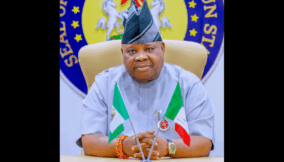
It could also derail the re-election bid of Governor Ademola Adeleke of Osun State, who is seeking a second term on the platform of the Accord Party in August this year.
Other politicians who may be affected include Action Alliance presidential candidate, Aare Adekunle Rufai Omoaje, Accord Party presidential candidate, Gbenga Olawepo-Hashim, as well as governorship, National Assembly and State Assembly candidates across the affected parties.
The opposition has repeatedly accused the ruling All Progressives Congress (APC) of orchestrating attempts to weaken rival parties ahead of the 2027 elections, an allegation the APC has consistently denied.
The ADC had on Monday announced the Atiku-Amaechi ticket, describing it as a strategic alliance designed to broaden its national appeal and strengthen the opposition coalition’s chances against the APC in the next presidential election.
In a statement signed by Bolaji Abdullahi, ADC National Publicity Secretary, the party said Amaechi’s emergence followed extensive consultations and reflected his strong showing in the party’s presidential primary, where he finished as runner-up.
However, Justice Peter Lifu, while delivering judgement in suit No. FHC/ABJ/CS/2637/2026, ordered INEC to commence the deregistration process against the five parties.
The suit was instituted by the National Forum of Former Legislators, a coalition of former federal and state lawmakers advocating electoral reforms and a reduction in the number of political parties in the country.
The plaintiffs argued that the affected parties failed to meet constitutional and electoral requirements necessary to retain their registration, including prescribed electoral performance benchmarks under Section 225A of the 1999 Constitution (as amended), the Electoral Act 2022 and relevant electoral guidelines.
They contended that the parties had consistently failed to secure at least 25% of votes in a state during presidential elections or win elective offices at the federal, state or local government levels.
Justice Lifu agreed with the arguments and directed INEC to take steps towards deregistering the parties.
Political observers say the judgement, if sustained by higher courts, could significantly alter the 2027 political landscape and narrow the presidential race to the All Progressives Congress (APC) and the Nigeria Democratic Congress (NDC), where Peter Obi, former Anambra State governor, is the presidential candidate.
‘Judgement invitation to anarchy’
Reacting to the judgment, political analyst Jackson Ojo described the ruling as dangerous and capable of triggering political instability.
“The deregistration of political parties at this stage will bring about a serious and uncontrollable crisis. Millions of Nigerians identify with these parties. Taking away their platforms amounts to denying them political participation and representation,” he told BusinessDay.
Ojo warned that any attempt to weaken opposition forces through judicial means could backfire.
Similarly, Chekwas Okorie, an elder statesman and former presidential candidate, told BusinessDay that the ruling amounted to “an invitation to anarchy.”
According to him, the judgment could deepen concerns about efforts to emasculate opposition parties and undermine confidence in the democratic process.
“I warned in an open letter that Nigeria must avoid actions capable of fuelling political tension. Using the courts to shut out opposition platforms at this critical stage of the electoral process is dangerous and could have far-reaching consequences for national stability,” Okorie said.
He expressed concern that millions of supporters of affected candidates, particularly Atiku Abubakar, could view the development as an attempt to deny them a political choice.
Also speaking, Bernard Mikko, a political scientist and former federal lawmaker, cautioned against creating precedents that could weaken democratic competition.
Mikko told BusinessDay in a telephone interview that democracy thrives when citizens are free to organise, contest elections and seek mandates through legitimate political platforms.
“Our democracy requires strong institutions, an independent judiciary and a level playing field for all political actors. Any action that narrows democratic space should concern every stakeholder committed to Nigeria’s democratic development,” he said.
Lawyers divided
Legal experts have raised concerns over the Federal High Court judgment ordering the deregistration of some political parties, arguing that the ruling may have been delivered in violation of a subsisting Court of Appeal order staying further proceedings in the matter.
Realwan Okpanachi, a legal practitioner and member of the ADC legal team, contended that the trial court lacked jurisdiction to deliver judgment because the appellate court had reportedly ordered a stay of proceedings on May 22, 2026.
He described the ruling as an “aberration” and expressed confidence that the Court of Appeal would address the issue if properly approached.
Okpanachi further argued that some of the affected parties had satisfied constitutional requirements for continued registration through electoral representation and maintained that only INEC possesses the statutory authority to deregister political parties.
However, Abdul Gobir of A.S. Gobir & Co said the judgment remains valid and binding until overturned on appeal. While acknowledging the parties’ right to challenge the ruling, he warned that it could significantly constrain political competition and force affected parties into a battle for their legal and political survival ahead of the 2027 elections.
Also, Okoi Ofem Obono-Obla, a prominent Nigerian lawyer and former Senior Special Assistant to President Muhammadu Buhari on Prosecution and chairman of the Special Presidential Investigation Panel for the Recovery of Public Property (SPIP), said the judgment has far-reaching constitutional consequences.
“By virtue of Section 225A of the 1999 Constitution (as amended), once a party is deregistered, it ceases to exist as a political entity and loses the legal capacity to sponsor candidates, conduct primaries, or participate in elections.
“Accordingly, all nominations already made by the ADC for the 2027 general elections stand constitutionally invalid, as INEC cannot recognise candidates of a deregistered party.
“While affected candidates may seek redress through appeal or explore alternative platforms, the judgment underscores INEC’s constitutional mandate to enforce performance thresholds and safeguard the integrity of Nigeria’s electoral system.
“This ruling therefore renders ADC’s 2027 nominations ineffective unless overturned on appeal, and signals a decisive step towards strengthening electoral accountability ahead of the forthcoming general elections,” he said.
ADC rejects court verdict, vows to petition NJC
But reacting, the African Democratic Congress (ADC) rejected the Federal High Court judgement ordering its deregistration, describing the ruling as a grave threat to democracy, political stability and the integrity of Nigeria’s electoral process.
The ADC accused the ruling All Progressives Congress (APC)-led government of orchestrating a judicial assault on the opposition to pave the way for President Bola Tinubu’s re-election without a credible contest in 2027.
In a statement issued by Bolaji Abdullahi, its national publicity secretary, the ADC argued that the judgment contradicted the constitution, ignored the position of the Independent National Electoral Commission (INEC) and disregarded a subsisting Court of Appeal order staying proceedings in the matter.
The party vowed to challenge the judgment through all available legal channels and announced plans to petition the National Judicial Council (NJC) over what it termed the conduct of the trial judge.
The party maintained that only INEC has the constitutional authority to register or deregister political parties and noted that the electoral commission had, in its affidavit before the court, stated that there was no legal basis for the ADC’s deregistration.
According to the ADC, the ruling raises serious concerns about judicial independence and appears aimed at weakening opposition forces ahead of the 2027 general election.
The party further alleged that individuals linked to the Presidency played a prominent role in pursuing the case, insisting that the development was part of a broader effort to shrink the democratic space and undermine political competition.
Warning against any attempt to remove it from the ballot, the ADC said disenfranchising its candidates and supporters through what it described as “judicial manoeuvring” could trigger avoidable political tension and instability.
“This is no longer merely about party registration. It is about whether Nigerians will be allowed genuine political choices in 2027 and whether democracy will be decided by voters at the ballot box or by powerful interests working through state institutions,” the party said.

Join BusinessDay whatsapp Channel, to stay up to date
Open In Whatsapp