The Federal Government, through the ministry of Agriculture, and food security has inaugurated a Technical Working Group (TWG) on Agricultural produce residue standards to address recurring export rejections of Nigerian agricultural commodities due to non-compliance with Maximum Residue Limits (MRLs) and other sanitary and phytosanitary requirements.
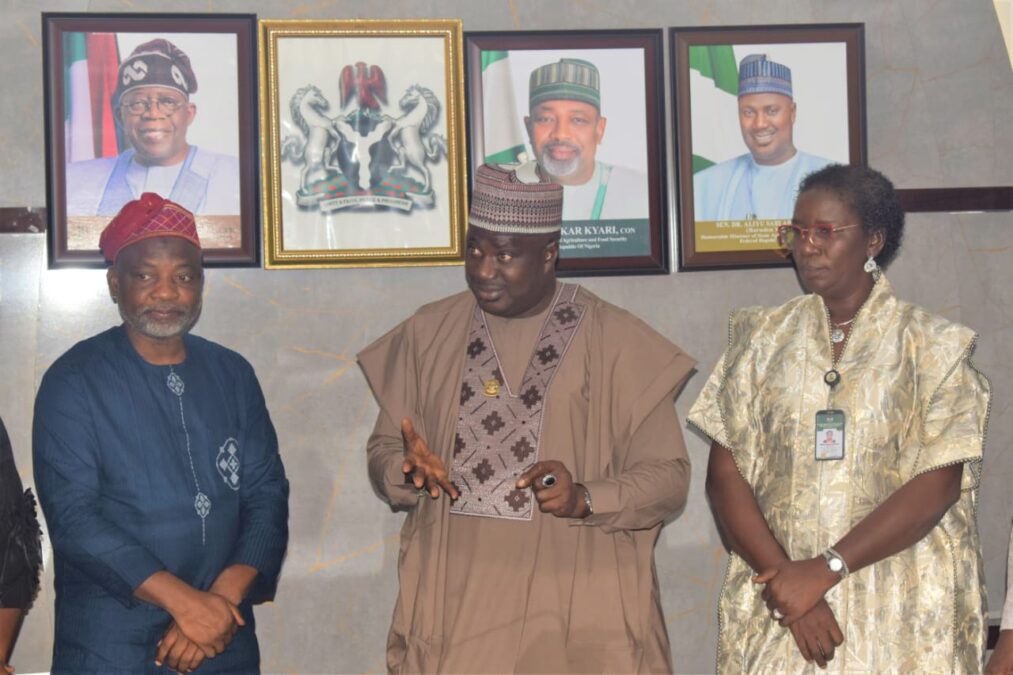
Speaking during the Inauguration ceremony in Abuja on Monday, the Minister of State for Agriculture and Food Security, Aliyu Abdullahi described the move as a significant milestone in the Federal Government’s commitment to ensuring food safety and strengthening Nigeria’s competitiveness in regional and international agricultural markets.
According to Abdullahi, the establishment of the TWG aligns with the President Tinubu’s mandate which demands that Nigerian agricultural products not only meet production targets but also comply with internationally accepted food safety and quality standards.
He noted that over the years, Nigeria has recorded several cases of export rejections of agricultural commodities due to non-compliance with Maximum Residue Limits (MRLs) and other sanitary and phytosanitary requirements.
He said, “The growing concerns over pesticide residues, contaminants, and food safety issues demand a coordinated, science-based, and multi-sectoral response. This underscores the necessity for establishing this Technical Working Group.
“The working group will serve as a strategic platform for bringing together experts from government institutions, regulatory agencies, academia, research institutions, the private sector, commodity associations, and development partners to address challenges relating to agricultural produce residue standards in Nigeria.”
Addressing the newly inaugurated members, the Minister said their selection was a recognition of their expertise, experience, and commitment to advancing Nigeria’s agricultural sector.
He charged them to develop practical, implementable, and sustainable solutions that will strengthen national food control systems, improve farmer compliance with safe pesticide use practices, and support access to premium markets for Nigerian agricultural products, adding that the recommendations should be evidence-based, inclusive, and aligned with global best practices while taking into account local realities.
Abdullahi said the work of the TWG will safeguard public health, improve the quality and safety of Nigerian agricultural produce, increase export earnings, and reduce post-harvest losses associated with market restrictions.
In his welcome address, Marcus Ogunbiyi, Permanent Secretary, who was represented by Bukar Musa, Director, Federal Department of Agriculture, noted that agriculture remains a critical pillar of Nigeria’s economy, contributing significantly to food security, employment generation, foreign exchange earnings, and rural development.
He warned that the increasing rejection of Nigerian agricultural exports due to non-compliance with international residue standards poses a serious challenge to our export aspirations and threatens the livelihoods of our farmers and agribusiness operators.
The Permanent Secretary noted the diverse expertise within the TWG, describing the inauguration as the beginning of a critical journey towards establishing a robust agricultural produce residue management framework for Nigeria.
He expressed appreciation to the Minister of State for the initiative, saying it underscores the Federal Government’s commitment to strengthening agricultural quality assurance systems, enhancing food safety, and promoting the competitiveness of Nigerian agricultural products.
Responding on behalf of the Group, Lateef Oladimeji San, stated that the inauguration marks a significant step to strengthen Nigeria’s agricultural quality assurance system and ensure produce meets acceptable residue standards in line with global best practices.
He explained that the TWG’s mandate includes reviewing existing standards, harmonizing national guidelines with international benchmarks, and strengthening laboratory capacity for monitoring and enforcement.
The TWG is expected identify relevant agencies to provide useful information for a thorough review of existing national frame works policies and guidelines relating to residue management and contaminants in the selected priority crops.
Read also: World Bank ranks Apapa, Tin Can ports among top 15 most improved for vessel time in five years
The group is also expected to develop and deploy a survey instrument to generate a detailed overview of the current state of pesticide residues and contaminants in the selected priority crops in the country.

Join BusinessDay whatsapp Channel, to stay up to date
Open In Whatsapp