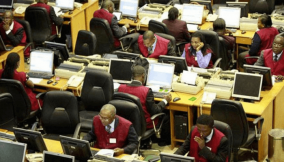
Late last month at the Nigerian Stock Exchange (NSE) Unilever Nigeria plc released its results for the third-quarter (Q3) ended September 30, 2015. he company’s Q3’15 result shows a decline of 2.1% in its turnover from N43.6 billion in September 2014 to N42.6 billion in September 2015.
Also, the company’s profit after tax (PAT) dipped by 92% from N1.8 billion in September 2014 to N141million in September 2015. Unilever cost of sales increased by 3.6% in nine-month to September 30, 2015. It rose to N27.8 billion from N26.8 billion recorded in the corresponding period in 2014 while cost of sales rose by 2.8% from N9.12 billion in Q2 2015 to N8.8 billion in Q3 2015. Net finance cost increased by 98% from N1.09billion in September 2014 to N2.16billion in September 2015.
Unilever Nigeria Plc (Unilever) is listed on the Consumer Goods sector of the NSE under the Personal/Household Products subsector. The company’s Market Cap is in excess of N140.057billion; while its shares outstanding are 3,783,296,250 units. At the close of trading on the NSE floors, Unilever shares rose to N37.02 Tuesday up by N0.64 (1.76%).
While the company sees itself as showing some resilience with the result in tackling the growing drop in the purchasing pattern of consumers amidst other extraneous factors, analysts are afraid that Unilever will experience no signs of recovery in the very near term.
“Although the persistent macroeconomic challenges are likely to keep Unilever’s performance subdued in the very near term, beyond 2017, we believe the company’s performance will normalise and we expect to see signs of improvement”, said Jumoke Okeowo led team of research analysts at FBNQuest.
“Year to date, Unilever shares have gained 1.6%. However, since the end of Q2, following the completion of the tender offer transaction by Unilever’s parent company at a price of N45, the shares have shed around 20% (ASI: 16%). Despite the recent sell-off, we still find the shares expensive. From current levels, we see downside potential of -39.4% to our N22 price target. We have maintained our Underperform rating on the stock,” the analysts noted.
“Although the company managed to curb its operating expenses year-on-year (y/y), we expected to see a more significant reduction on this line. This was the main reason for the variance in the Q3 numbers vs our estimates. Given the elevated opex, we see a 90% y/y decline in EPS in 2015E despite the fact that we have modeled flattish sales. Beyond 2015, we see modest topline growth of around 3.5% y/y for the next two years and EPS growth of 121% y/y on average over the same period, mainly due to base effects”, FBNQuest added in their report titled “Unilever Nigeria Q3 2015 results review: No signs of recovery in the very near term”.
In a statement released by the company following the Q3 result, Soromidayo George, Corporate Affairs Director, Unilever Nigeria assured shareholders of its efforts to ensure a sustained and steady growth in the company’s operations engineered to achieve better returns on their investments.
“Although Unilever Nigeria continues to operate in a tough environment, we are now beginning to see momentum behind enhanced costs and operational efficiencies. Unilever Nigeria remains focused on its short and long term growth ambitions with clear emphasis on cost and operational efficiencies, increasing market share across key categories, reinvesting behind our iconic brands and improved route-to-market.
These strategic initiatives rest on our global best practices, strong heritage as well as the professionalism of our people,” George had said.
Iheanyi Nwachukwu

Join BusinessDay whatsapp Channel, to stay up to date
Open In Whatsapp