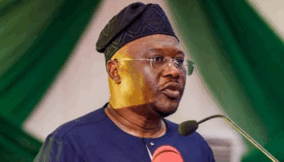
Investors seemed laid back for all the months that River State was in a state of emergency with a Sole Administrator in place. Indications are that the engines of the economy are revving again. Chamberlain Peterside, Director-General of the Rivers State Investment Promotion Agency (RSIPA), told IGNATIUS CHUKWU in this interview that investors are surging back and that Rivers is open for business again. Excerpts:
We are almost halfway through 2026. What has the investment climate been like so far? Are there any notable achievements this year that Rivers people can hold on to?
Yes, we are halfway through the year, and there is quite a lot to speak about.
First and foremost, investment proposals go through different phases and processes. What we are doing right now is working through the various stages of these proposals and projects.
As you well know, the Landmark Port Harcourt Tourist Beach is one of those projects that is beginning to come to life. If you visit the site now, you will see that the gate has been installed, and the contractor handling the project for the investor is preparing to fully mobilise to site. A project signage and banner announcing the commencement of work will also be erected any day from now.
That is one significant milestone. Another noteworthy project is the RivTaf Project, the 20,000 housing units initiative which commenced around January 2025. The project is progressing very well. It is a private sector-led joint venture, and our partner, Taf Global, is doing an excellent job. Construction is ongoing consistently and aggressively, and we are impressed with the pace of work.
Also worthy of mention is the New Port City Project located along the East-West Road corridor in Onne. This is another joint venture where the Greater Port Harcourt City Development Authority represents the Rivers State Government. It is a massive 1,000-hectare mixed-use development comprising residential, commercial, leisure, light manufacturing and agro-industrial components. It is a large-scale, multi-phased and multi-year project that is steadily progressing.
Interestingly, these three flagship projects are strategically located across the three major axes of Port Harcourt. The Landmark Beach is in the old township, the Taf Global Housing Project is along the western axis on the Obiri Ikwerre Highway, while the New Port City is situated on the eastern axis. This triangular investment model is a deliberate strategy to channel development and economic activities across the metropolis.
Beyond these, there are several other investment proposals at different stages of engagement. Some are yet to reach site deployment, but negotiations and investor engagements remain very active. As the year progresses, we expect to announce additional projects that will be beneficial to the people of Rivers State.
Can you tell us about the structures RSIPA has put in place to encourage investors?
Many ask the above question particularly regarding registration processes and engagement with government. They point to some periods in the recent past when we mentioned several initiatives. They want to know how far those initiatives have progressed.
We can quickly state that some of those initiatives have taken root, while others are still works in progress.
This office has become a clearinghouse for investment enquiries and proposals. Investors now have the opportunity to submit their ideas and proposals directly without requiring political connections or access to Government House. RSIPA serves as the official gateway for such engagements.
We are also co-located with the Securities and Exchange Commission (SEC), the Nigerian Investment Promotion Commission (NIPC), the Greater Port Harcourt City Development Authority (GPHCDA), and the Ministry of Commerce and Industry. Together, we provide investors with a One-Stop- Centre (OSC) where their questions and concerns can be addressed.
Another major focus is improving the ease of doing business.
Following the directive of His Excellency, we have engaged with the Presidential Enabling Business Environment Council (PEBEC) to organize a town hall meeting and stakeholder engagement session with the private sector. The objective is to identify practical ways of improving the business climate and operating environment in Rivers State.
The Governor has graciously approved the initiative, and PEBEC is expected to visit the state around late June or early July for a sensitisation programme and symposium involving private sector operators.
We are also working closely with the Board of Internal Revenue to start an engagement session with SMEs and business groups, particularly concerning issues of multiple taxation and harassment by unauthorized individuals posing as tax consultants.
We intend to educate business owners that legitimate tax collection is solely the responsibility of the Board of Internal Revenue and that they should disregard fraudulent letters or demands from unauthorised agents.
That is where we are presently.
Can you also throw some light on the Waste-to-Wealth Project that was announced one or two years ago?
Yes. The agreement was signed, but we experienced a period of interruption in governance, which the investor cited as a factor that slowed deployment.
Since the end of the State of Emergency in September last year (2025), we have maintained communication and engagement with the investor. However, we are not satisfied with the pace of deployment to site.
Quite frankly, the Governor has expressed his displeasure. Investors who receive such opportunities are expected to move swiftly, deploy capital and execute the agreement. It should not take an unreasonable amount of time to commence implementation.
At the moment, we have not seen the level of commitment required from that investor regarding the Waste-to-Wealth Project.
Is it likely that Rivers State will host another Economic Summit similar to the one held two years ago, any time soon?
It is certainly possible.
Unfortunately, we could not hold it this year because the proposed dates coincided with political party primaries.
Additionally, the Niger Delta Chamber of Commerce is planning an Economic and Investment Summit involving all nine NDDC states. Rivers State, being the host, is collaborating closely with them to ensure the success of that inaugural summit.
The event was initially expected to hold in May 2026 but had to be postponed due to scheduling constraints. We hope it will take place soon.
How would you rate investor confidence in Rivers State since the end of State of Emergency?
I would not say it is stronger.
The period of the State of Emergency naturally encouraged investors to adopt a wait-and-see approach. Since it ended, activities have resumed, but I cannot say they have returned to their previous pace.
Overall, however, there remains a very strong interest in investing in Rivers State.
This is not surprising because Rivers State possesses enormous natural advantages. It remains one of Nigeria’s legacy states with vast economic potential. It hosts the oil and gas sector, the largest industrial infrastructure in Africa through NLNG, and major offshore oil operations including the Bonga Field and Bonga West.
Approximately 40 percent of Nigeria’s gas reserves are located in Rivers State.
The state is also strategically positioned as a coastal state with two seaports (Onne and Port Harcourt), and serves as the terminal point of the eastern railway corridor extending from Maiduguri.
The opportunities exist, but we must do more to harness, commercialise and monetise these assets for the benefit of our people. We need more jobs, more investments, and more infrastructure.
Personally, I constantly ask myself what more can be done to unlock Rivers State’s full economic potential. The interest is there, but we are still performing below our true capacity. We are punching below our belt.
States are now allowed greater control over investments around inland waterways. Is Rivers State looking to explore those opportunities?
Absolutely. Previously, activities such as sand mining within inland waterways required approval from the National Inland Waterways Authority (NIWA). However, following the Supreme Court judgment, we now have an opportunity to rethink our approach.
Currently, responsibilities are spread across the Ministries of Transportation, Agriculture and Energy, but there is no dedicated institution overseeing the Blue Economy sector.
We believe establishing a Ministry of Blue Economy would be highly appropriate.
In fact, with the consent of His Excellency, we have begun developing a Blue Economy Investment Roadmap and Master Plan for Rivers State.
Much of our work is foundational. While some outcomes may not be immediately visible, they lay the groundwork for long-term economic growth.
Our mandate is twofold: engaging external investors while also developing internal policy initiatives that improve the investment climate and ease of doing business.
When businesses already operating here are satisfied, new investors will naturally be encouraged to come.
Finally, what is your message to investors?
My message is simple. Whenever investors think of three destinations in Africa for investment—whether countries or sub-national regions—I believe Rivers State should always rank among their top three choices.
Our strengths are undeniable: abundant natural resources, strategic geographical location, and rich human capital.
We are a coastal state with direct access to the Atlantic Ocean, home to 40percent of Nigeria’s gas reserves and significant oil and gas operations.
Although we may have lost some ground as the operational base for certain multinational oil companies, we remain determined to reclaim that position.
Most importantly, our Maritime and Blue Economy sectors remain largely untapped, presenting enormous opportunities.
We therefore, encourage serious and committed investors to consider Rivers State as one of their foremost investment destinations.

Join BusinessDay whatsapp Channel, to stay up to date
Open In Whatsapp