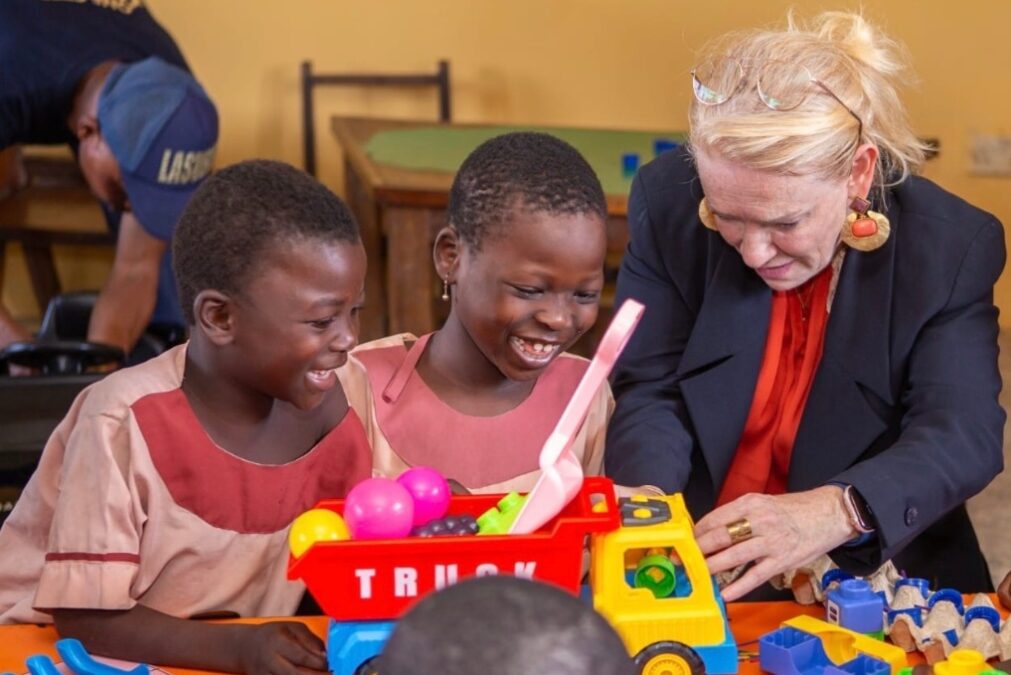
…Call for urgent action on education and play-based learning
Child development experts, education authorities, and the United Nations Children’s Fund (UNICEF) officials have raised fresh concerns over Nigeria’s growing number of out-of-school children and rising insecurity, warning that urgent collective action is needed to protect children’s right to education, safety, and play.
Speaking on the issue, a UNICEF representative, Lafoucriere, said children in Nigeria are increasingly exposed to multiple risks, including kidnappings and unsafe learning environments, stressing that society must act quickly to avoid failing the next generation.
“These two things are connected and both of them need fixing now. Our children are watching, let us not let them down,” she said.
She explained that early childhood development starts from birth and is strongly influenced by both home and school environments. According to her, children learn better when parents are actively involved, learning spaces are safe, and appropriate learning materials are available.
Read also: IHS Nigeria partners UNICEF to drive digital literacy in Lagos schools
“It takes a village to educate a child. Government is in the driving seat, but parents, education partners, communities and family members all have roles to play,” she added.
Lafoucriere also emphasized the importance of play in early learning, saying it is not just recreational but essential for brain development and communication skills.
“As soon as children are allowed to play, their brains begin to develop and their capacity to learn improves,” she noted.
She raised concern over Nigeria’s high number of out-of-school children, insisting that education must remain a basic right for every child and calling for a more inclusive approach to keep children in school.
“We must ensure children remain in school because Nigeria still has a very high number of out-of-school children,” she said.
Also speaking, Hakeem Shittu, the executive chairman of the Lagos State Universal Basic Education Board, stressed that children’s wellbeing and development must remain a top priority for both government and stakeholders.
He said children learn faster and express themselves better when they are allowed to interact freely and play in supportive environments.
“When children are happy, they learn more. When they interact, it improves their communication and mental development,” he said.
Shittu added that public schools in Lagos are designed to be inclusive, ensuring equal access for all children regardless of background or physical ability. He also noted that government continues to support pupils by providing learning materials such as books, uniforms, sandals, and bags.
Responding, UNICEF education specialist Yetunde Oluwatosi of UNICEF said the organisation is working closely with government to promote play-based learning and strengthen parental involvement in early education.
Read also: UNICEF warns health workers against diversion of supplements meant for child nutrition
“It is about engaging parents at home and linking them with what is happening in the school. Children should be able to continue learning even while at home,” she said.
She added that early childhood development requires a combined effort across sectors such as education, health, nutrition, and child protection, while also stressing the need for trained teachers who can effectively deliver play-based learning.
“Early childhood development is multisectoral. Teachers must also have the capacity to deliver play-based learning effectively,” she said.
Oluwatosi further warned that no child should be excluded from education, calling for stronger systems to ensure that every child has access to safe and quality learning opportunities.

Join BusinessDay whatsapp Channel, to stay up to date
Open In Whatsapp