

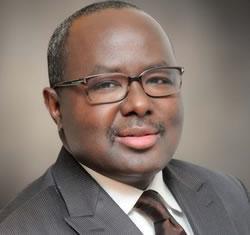
The Securities and Exchange Commission (SEC) under its new Director General, Mounir Gwarzo, is moving quickly to engender confidence in the Nigerian capital market by broadening reforms through a series of programmes set to be tomorrow.
These include the inauguration of the Capital Market Master Plan Implementation Council (CAMMIC), launching of the National Investor Protection Fund (NIPF) and inauguration of its board, as well as the unveiling of the SEC Corporate Governance Scorecard for public companies.
The new reforms being championed by the SEC should enable Nigeria’s capital markets move to the next growth phase, by engendering investor confidence as well as attracting new listings, analysts say.
Nigeria’s first Corporate Governance Scorecard for public companies (set to be launched by the SEC) is a tool for the assessment of corporate governance practices, and was developed with support from the International Finance Corporation (IFC).
The setting up of a National Investor Protection Fund (NIPF) and inauguration of the NIPF Board will mean that Nigeria is now among only a few countries with a national investor protection fund to compensate investors for pecuniary losses arising from bankruptcy, negligence or malfeasance by a non-broker/dealer capital market operator.
The NIPF will be overseen by a Board composed of seven members to be chaired by the SEC Director General.
Sources at the Commission revealed that the programmes set to be unveiled on Thursday 26th November, are all directly linked to the 10-year capital market master plan which the SEC began implementing this year.
The SEC Director General, Gwarzo, who heads the leading market regulator in Africa’s biggest economy, has consistently made it clear that his main agenda for the capital market is implementing the master plan.
The SEC under Gwarzo has been proactive in engendering confidence in capital markets since he resumed office this year.
In May the SEC suspended three subsidiary companies of the BGL Group: BGL Asset Management Limited, BGL Capital Limited and BGL Securities Limited from all Capital Market activities.
It also recently suspended Stanbic IBTC Bank’s 20.4 billion naira ($102.51 million) rights issue pending the “resolution of enquiries from certain regulatory bodies.
The SEC has also moved to enforce regulation on new minimum capital requirement for Capital Market Operators (CMOs) to protect the investing public.
“The Nigerian capital market will be Africa’s most modern, efficient and internationally competitive capital market that catalyzes Nigeria’s emergence as a top 20 global economy,” the vision of the 10 year master plan says according to the draft document.
A number of key initiatives within the master plan have received priority including E-Dividends, Dematerialization, Direct Cash Settlement, Unclaimed Dividends, Non-Interest Products, Robust Public Enlightenment, Corporate Governance Scorecard, Stronger Enforcement, Responsive Rulemaking and the National Investor Protection Fund.
Nigerian capital markets have largely recovered from a 2009 financial crisis triggered by loans given to stock speculators and fuel importers in Africa’s biggest oil producer.
The value of the bourse’s main index has almost doubled in five years from about N5 trillion in 2010 to N9.6 trillion on Friday Nov 20.
Within the last ten years, the Nigerian capital market has grown seven fold; the bond market has emerged as another veritable source of medium to long term finance and collective investment schemes (mutual funds) increased by over 400 percent.
The SEC has been leading the markets transformation by building investor confidence through world class regulation and enforcement, strengthening market institutions, promoting corporate governance, supporting innovative technology and prioritizing cooperation both domestically and internationally.
In addition the reforms have improved market liquidity, introduced alternative trading platforms and created an enabling environment supportive of new products like Securities Lending, Market making, Exchange Traded Funds (ETFs), Real Estate Investment Trusts (REITs) and Sukuk.
Challenges however remain at the macro level from the fall in crude prices to below $50 a barrel, which has put a fiscal strain on the Federal and state governments.
This led the SEC to recently oversee a loan restructuring effort in conjunction with the debt management office (DMO) that converted about N575 billion in state government loans into longer tenured debt instruments, to help free up their balance sheets.
This should then allow some states the room to raise new bonds to help bridge funding shortfalls.
The SEC plans to start separate meetings with the states this year, which will be a forum to educate the leadership “about the importance of capital market,” Gwarzo said recently.
“Once the instruments (state bonds) are good and investors are comfortable, we believe they will invest,” Gwarzo said.
The commission requires a debt-to-revenue ratio of 50 percent or less for states tapping the market.
The new reforms being championed by the SEC should enable Nigeria’s capital markets move to the next growth phase, by engendering investor confidence as well as attracting new listings, especially in the oil and gas, power and telecommunications sector to help meet the goal of reaching a market value of $1 trillion.
To be chaired by the highly distinguished Mr. Tola Mobolurin, the Capital Market Master Plan Implementation Council (CAMMIC), Council will benefit from the experience and influence of key government officials including Josheph Nnanna, Deputy Governor in charge of Financial System Stability at the Central Bank of Nigeria; Mrs. Chinelo Anohu-Amazu, the DG of PenCom; and Mr. Mounir Gwarzo, SEC DG.
Other members include chairmen of the Capital Market Committees of both chambers of the Federal legislature; Sen. Isiaka Adeleke and Hon. Tajudeen Yusuf. Also among the membership of CAMMIC are Mr. Oscar Onyema, CEO of the Nigerian Stock Exchange, as well as very outstanding members from the private sector and capital market community such as Mrs. Hajara Adeola, Prof. Koyinsola Ajayi, Mr. Ariyo Olushekun, Mr. Dotun Sulaiman and Mr. Ayoleke Adu.
PATRICK ATUANYA


Join BusinessDay whatsapp Channel, to stay up to date
Open In Whatsapp


