…to reward top 10 researchers with N25 million
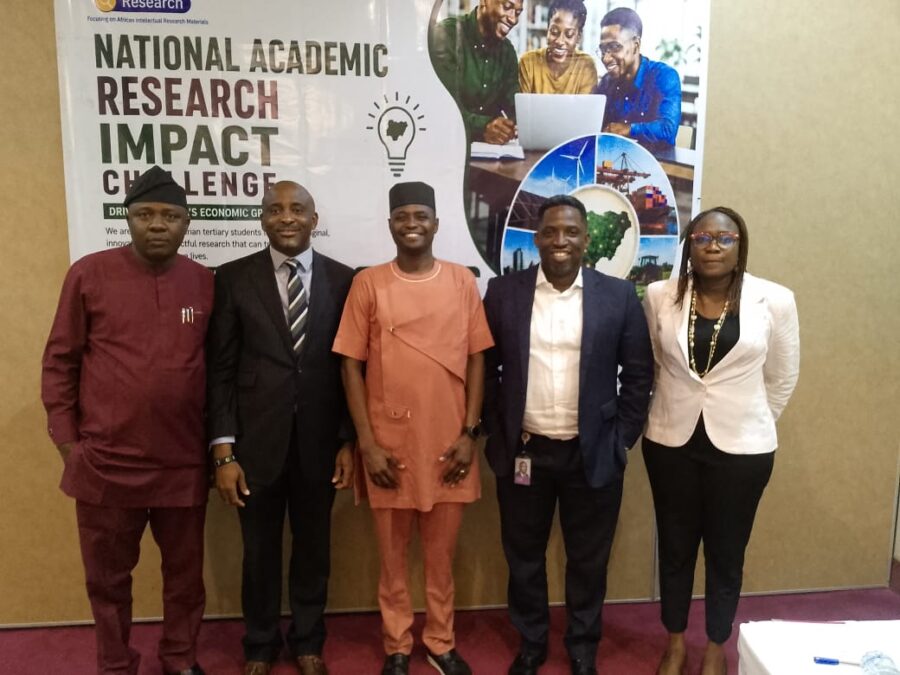
Nigeria’s research ecosystem has received a boost with the launch of the country’s first indigenous private data repository by Iwemi National Academic Research Impact Challenge (INARIC), providing a locally driven platform for data storage, analysis, and knowledge generation.
Ejimofor Akah, the founder/ CEO of RODIC Africa, speaking at the groundbreaking and media briefing held on Tuesday in Lagos, said the organisation is proud to be the first indigenous Nigerian repository database, and poised to take Nigeria to the global rankings when it comes to research.
“We’re proud to say, we’re the first indigenous private sector driven Nigerian repository database.
“We want Nigeria to be up there in rankings when it comes to research; we want to see that our researches hidden in laboratories, libraries, and stores of our tertiary institutions make their ways into the industry space where they are needed,” he said.
Akah emphasised that Nigeria has a lot of intellectuals in its education system, which the platform will be able to help harness their potentials and improve the country as a whole.
He explained that the Iwemi National Academic Research Impact Challenge is open for all Nigerians both at home and in diaspora, and that there basically 10 pillars which the research contest is looking at, which include Agriculture, Health, Fintech, and SME growth, among others.
Besides, he noted that there is a prize pool of N25 million for the top 10 winners for the year 2026 edition, and emphasised that the prize money would be higher in subsequent editions.
“We have 10 different industries that we feel that Nigeria needs supporting, areas such as Health, Agriculture, Fintech, and SME growth, among others that’s important to us.
“We know this is an annual event and in next year the prize money definitely will increase,” he said.
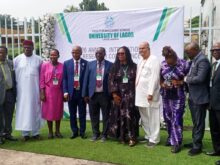
Olatokunbo Okiki, the University Librarian of the University of Lagos (UNILAG), speaking on the topic, ‘The Need for Originality in Research Output’, said that most of the researches carried in most Nigerian tertiary institutions are just recogitation of ideas.
“There is nothing new we are adding to knowledge, and if there’s nothing we are adding to knowledge, there’s no way knowledge can be extended,” he said.
Okiki highlighted the need for Nigerian scholars to be original in whatever research they carry out; though it is believed that there is nothing new in the world, he explained that originality in research is that idea that emanates from the researcher.
“That new thing you are bringing to bear, that extends the frontiers of knowledge that is going to add to national development, that’s originality.
“Something that brings a new idea on how to tackle and how to resolve, and that’s what Iwemi is trying to do by creating a national database that curates original research in higher institutions,” he said.
Furthermore, he explained that Iwemi will in addition to financial inducement, guide Nigerian students on how to carry out research with original research output, that will have an impact on national development.
Okiki frowned at the fact that lack of repositories, and students’ financial inducement undermines research efforts of Nigerian students.
“Students have researched in their own element, in the innocence of their heart, and come up with their findings; but nobody is working on this finding, nobody is even reading it.
“Most of us, your project in undergraduates, nobody actually synthesised to bring out what we found out. So it remains on the shelf, and then it’s thrown into the dustbin. Besides, students don’t get the uptake for their research, unlike what is obtainable in South Africa and Europe, and that’s what Iwemi is trying to resolve,” he noted.
Amadi Iheukwumere, the executive director for INARIC project, emphasised the need for government, other stakeholders such as foundations, and corporate organisations to be part of the INARIC move to rewrite the existing narrative and give impact to Nigeria’s job creation drive.
“We are using this opportunity to call on stakeholders, non-governmental institutional stakeholders such as foundations, and corporate organisations to be part of this, so we can rewrite the existing narrative and give impact also to the job creation aspirations of everyone, you know, and wealth creation as well to the level that we can say, yes, we have started developing economic development along those lines.
John Falolu, a senior lecturer at the University of Lagos, who spoke on ‘Bridging the Gap between Research and Industry’, said, “Bridging research and industry is essential for addressing climate change, pandemics, AI ethics, and global supply chains.
Innovations must address real challenges, climate, health, and AI, and the gap prevents this from happening at scale.
“Universities must broaden their impact beyond citations, while industry must support long-term research and science.
Aligning incentives, timelines, and funding enables research to become real-world solutions faster.”

Join BusinessDay whatsapp Channel, to stay up to date
Open In Whatsapp