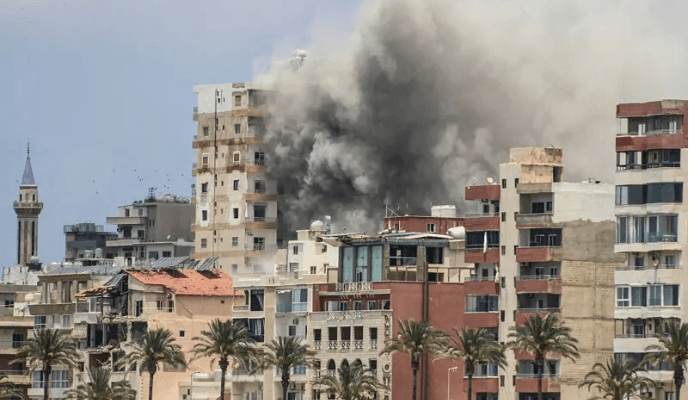
Israel carried out one of its deadliest attacks on the southern Lebanese port city of Tyre since the latest conflict began, killing at least eight people on Tuesday and deepening concerns that fighting in Lebanon could derail fragile efforts to secure a broader peace agreement across the Middle East.
The strike came less than 24 hours after Israel and Iran halted direct attacks on each other following an appeal by Donald Trump, United States president. Despite the pause, Tehran warned that any continued Israeli military action against Hezbollah in Lebanon could trigger a renewed confrontation.
Read also: Oil prices climb more than $4 after Israeli strikes on Iran and Lebanon
According to Lebanon’s health ministry, all eight victims were killed in a single Israeli strike on the eastern edge of Tyre. The attack followed an evacuation warning issued by Israel earlier in the day, prompting residents to flee while civil defence teams moved elderly people into temporary shelters. Video verified by Reuters showed debris scattered across a road near the site of the strike.
The attack marked a significant escalation in a conflict that has increasingly become a stumbling block for diplomatic efforts aimed at ending a wider regional war.
Israel has insisted that its military campaign against Hezbollah is separate from any ceasefire arrangements involving Iran. Tehran, however, has repeatedly argued that a lasting settlement with Washington cannot be achieved while Israeli operations in Lebanon continue.
The disagreement has complicated efforts by Trump to transform the fragile ceasefire reached in April between Iran and Israel into a broader peace framework.
Speaking to reporters on Tuesday, Trump suggested progress remained possible.
“I might have an idea for an Iran deal within a few days,” he said, without providing further details.
The US president also revealed details of a conversation with Israeli Prime Minister Benjamin Netanyahu, saying he had urged restraint.
“I said, ‘Bibi, you better be careful, or you will be on your own very soon,'” Trump told Axios.
Meanwhile, tensions remained high across the region. In Iran, funeral ceremonies were held for two air defence personnel killed in Israeli strikes a day earlier. No deaths were reported in Israel following the latest Iranian missile attacks.
Read also: Israel, Lebanon agree fragile ceasefire in fighting as deeper tensions remain
The conflict has also continued to affect global energy markets. Oil prices, which rose sharply during the exchange of fire between Iran and Israel, fell on Tuesday after both sides paused direct attacks.
Further uncertainty emerged after a United States AH 64 Apache helicopter went down near the Strait of Hormuz. US Central Command said the two crew members were rescued by a Navy surface drone. Trump later confirmed their safety.
“The pilots are fine. Nobody injured,” he said.
Diplomatic efforts to prevent a wider war continued despite the violence. United Nations secretary general Antonio Guterres expressed alarm over the latest developments, calling for an immediate end to hostilities.
“I am deeply alarmed by the renewed escalation in the Middle East,” Guterres said in a statement posted on X.
“All attacks must stop immediately. Ceasefires in Lebanon, Iran and Gaza must be fully respected.”
“There is no military solution to the conflicts in the Middle East. The only way forward is through dialogue and negotiations.”
In Beirut, optimism over ongoing negotiations remained cautious. Following talks with Lebanese President Joseph Aoun, United States ambassador Tom Barrack said discussions aimed at resolving the crisis remained on track despite the latest violence.
“We have reached a point of no return. The ice is broken and we will continue to help Lebanon emerge from its crisis,” Barrack told reporters.
Aoun said discussions with Israel were focused on establishing a non aggression agreement that could eventually lead to what he described as a “just and comprehensive peace”.
Yet with Israel continuing its operations against Hezbollah, Iran maintaining pressure over Lebanon’s future, and tensions still simmering across multiple fronts, the path to a lasting settlement remains uncertain.

Join BusinessDay whatsapp Channel, to stay up to date
Open In Whatsapp