There is an African proverb that says, “The child who is not embraced by the village will burn it down to feel its warmth.” While often quoted in discussions about social inclusion, it captures a profound ESG truth: societies and businesses that neglect education ultimately pay a far greater price than those that invest in it.
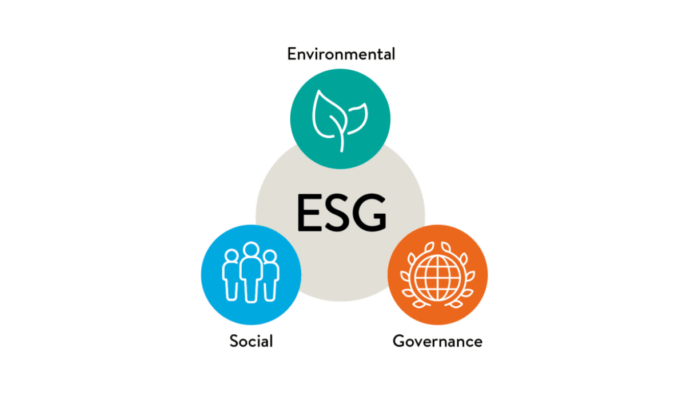
In boardrooms around the world, Environmental, Social, and Governance (ESG) conversations often gravitate toward climate action, renewable energy, carbon emissions, and corporate governance. Yet one of the most transformative ESG investments remains hiding in plain sight: education.
Education is not philanthropy. It is infrastructure for the future.
The assertion that education drives innovation, inclusion, sustainability, and long-term economic success is not merely aspirational; it is supported by global evidence. The United Nations’ Sustainable Development Goal 4 (SDG 4) recognises quality education as a foundational enabler of sustainable development. UNESCO and the World Bank consistently identify education as one of the strongest pathways out of poverty, a driver of workforce productivity, and a catalyst for economic growth.
From an ESG perspective, education sits squarely within the social pillar, but its impact extends far beyond it. Educated populations are more likely to innovate, adopt sustainable practices, participate in democratic governance, and contribute meaningfully to economic development. In fact, emerging research on the interconnectedness of the Sustainable Development Goals suggests that progress in education creates positive ripple effects across multiple development outcomes. (arXiv)
Nigeria offers compelling examples.
The remarkable rise of the country’s technology ecosystem did not happen by accident. It was built on decades of investment in human capital. Today, Nigerian innovators are building fintech, agritech, healthtech, and climate-tech solutions that are attracting global investment and solving local problems. Behind every successful startup is an educated workforce capable of transforming ideas into scalable solutions.
Across Africa, similar stories abound. Rwanda’s deliberate investments in education and digital skills have helped position the country as one of Africa’s emerging innovation hubs. Kenya’s thriving technology ecosystem, often referred to as the “Silicon Savannah”, is powered by a growing pool of educated young professionals. These are not merely education success stories; they are ESG success stories.
The inclusion dimension is equally important.
Education remains one of the most effective tools for reducing inequality. Scholarships, vocational training programmes, digital literacy initiatives, and girl-child education projects create pathways to opportunity for populations that might otherwise be excluded from economic participation. Every scholarship awarded is more than financial assistance; it is an investment in social mobility and future productivity.
I have witnessed this firsthand through leadership development and youth empowerment initiatives. Many young people need only one opportunity – a scholarship, a mentor, or a skills programme – to alter the trajectory of their lives and, in some cases, the fortunes of entire families.
There is also a direct connection between education and health outcomes. The World Health Organization identifies education as a critical social determinant of health. Better-educated populations generally experience better health outcomes, higher incomes, and greater resilience. Communities with stronger educational opportunities are better positioned to break cycles of poverty and vulnerability.
For businesses, the implications are significant.
Companies frequently complain about skills gaps, low productivity, and talent shortages. Yet these challenges cannot be solved solely through recruitment. They require sustained investment in education, workforce development, technical training, and lifelong learning.
Leading global companies increasingly recognise this reality. From apprenticeship programmes in Europe to STEM education initiatives in Asia and scholarship funds across Africa, businesses are moving beyond traditional corporate social responsibility toward strategic human-capital investment.
The returns are substantial: stronger talent pipelines, greater innovation capacity, improved stakeholder trust, and enhanced long-term competitiveness.
This is particularly important as we navigate the transition to a green economy. The sustainability leaders of tomorrow will need skills in renewable energy, sustainable agriculture, environmental science, data analytics, artificial intelligence, and climate finance. Without investment in education today, the workforce required for a sustainable future simply will not exist.
The ancient Chinese proverb teaches that “if your plan is for one year, plant rice; if your plan is for ten years, plant trees; if your plan is for one hundred years, educate people.” The ESG community would do well to remember this wisdom.
Tree planting remains important. Carbon reduction remains essential. Governance reforms remain critical. But the most enduring sustainability investment may be the one that develops human potential.
When we educate a child, fund a scholarship, strengthen a school, support vocational training, or invest in lifelong learning, we are not merely spending money. We are planting seeds of innovation, inclusion, resilience, and prosperity.
And like every good seed, the harvest often exceeds the investment.
Sarah Esangbedo Ajose-Adeogun is the Founder and Managing Partner at Teasoo Consulting Limited, a foremost ESG consulting firm. She is a former Community Content Manager at Shell Petroleum Development Company and served as the Special Adviser on Strategy, Policy, Projects, and Performance Management to the Government of Edo State. She is also the host of the #SarahSpeaks podcast on YouTube @WinningBigWithSarah, where she shares insights on leadership, strategy, and sustainable growth.

Join BusinessDay whatsapp Channel, to stay up to date
Open In Whatsapp