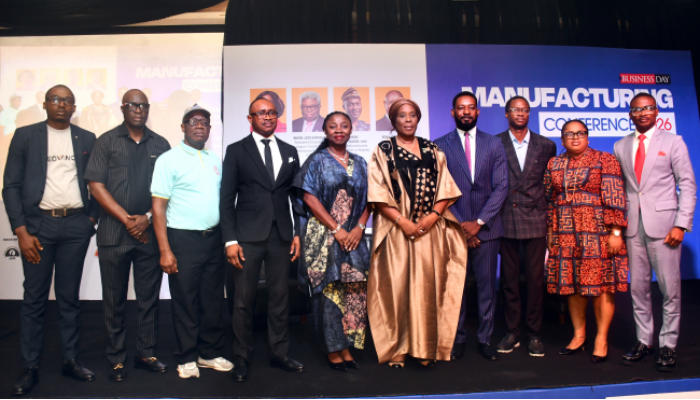
BAT Nigeria (BATN) has called for stronger implementation of existing industrial policies, emphasising that Nigeria’s manufacturing challenge lies less in policy design and more in translating policy commitments into practical outcomes that support investment, productivity and economic growth.
Speaking during a high-level panel session titled “Fixing the Structural Barriers Holding Nigerian Manufacturing Back” at the BusinessDay Manufacturing Conference 2026, themed “Manufacturing Nigeria’s Future: Jobs, Competitiveness & Industrial Prosperity,” Ruth Owojaiye, director of Corporate & Regulatory Affairs, BATN, said Nigeria’s manufacturing challenge is not the absence of industrial policies, but the country’s ability to execute them effectively.
According to Owojaiye, Nigeria has developed several well-intentioned policies designed to support industrialisation and economic growth, including the recently launched Nigeria Industrial Policy. However, the impact of these policies ultimately depends on the speed and effectiveness of implementation.
“The challenge facing Nigeria today is not policy formulation; it is policy execution. We have numerous frameworks designed to support manufacturing, investment and industrial growth. The real question is how quickly and effectively we can translate these policies into tangible outcomes for businesses, investors and the wider economy,” she said.
She identified power supply as one of the most significant constraints to industrial productivity, noting that manufacturers continue to operate in an environment where inadequate electricity infrastructure increases operating costs and limits competitiveness. This challenge is reflected in Nigeria’s significant power deficit: while the country requires an estimated 100,000 megawatts (MW) of electricity to effectively power its economy. It currently generates only about 4,000-5,000MW.
“Nigeria’s manufacturing ambitions cannot be realized without addressing the energy challenge. Businesses are increasingly forced to generate their own power to sustain operations. While some large organisations can make substantial investments in alternative energy solutions, many manufacturers, particularly small and medium-sized enterprises, simply do not have that capacity,” she added.
Speaking from BAT Nigeria’s experience of investing in local manufacturing and alternative energy solutions, Owojaiye highlighted the company’s transition to 100 per cent Compressed Natural Gas (CNG) operations and the deployment of a 1.4-megawatt solar power system as examples of private-sector investments aimed at strengthening operational resilience. She noted, however, that such investments remain difficult for many manufacturers to replicate, underscoring the need for broader reforms that improve access to reliable and affordable energy across the sector.
Addressing Nigeria’s regulatory environment, Owojaiye pointed to overlapping regulations, fragmented oversight and policy inconsistencies as factors that continue to increase compliance costs and create uncertainty for businesses.
She explained that while many regulations are introduced with positive intentions, inadequate coordination among government institutions often results in duplicated requirements that place additional burdens on manufacturers.
“Government agencies may pursue legitimate policy objectives independently, but without sufficient coordination, the cumulative impact can create unintended consequences for businesses. Effective stakeholder engagement and inter-agency collaboration are essential to ensuring that regulations achieve their intended goals without undermining industrial growth,” she stated.
Owojaiye further emphasised the importance of a predictable regulatory environment, foreign exchange stability and consistent policy enforcement in attracting long-term investments. According to her, businesses make investment decisions based on future expectations and therefore require confidence that economic and regulatory conditions will remain stable over time.
She also called for faster settlement of Export Expansion Grant obligations, including the use of phased payments and redeemable promissory notes to improve liquidity for exporters and encourage greater participation by local manufacturers.
“Export-led industrialisation remains one of the most effective pathways for sustainable economic growth. When manufacturers are supported to compete in regional and global markets, the benefits extend beyond individual businesses to job creation, foreign exchange generation and broader economic development,” she noted.
Owojaiye concluded by noting that Nigeria possesses the talent, market size and entrepreneurial capacity to become a leading manufacturing hub in Africa, but sustained progress will depend on coordinated action across government and industry to bridge the gap between policy ambition and implementation
The BusinessDay Manufacturing Conference 2026 brought together policymakers, industry leaders, investors and development stakeholders to explore practical solutions to the structural barriers affecting manufacturing, job creation and industrial prosperity in Nigeria.

Join BusinessDay whatsapp Channel, to stay up to date
Open In Whatsapp