
The federal government is reviewing Nigeria’s automotive policy to accommodate the growing adoption of electric vehicles (EVs), Compressed Natural Gas (CNG)-powered vehicles, and other emerging technologies, amid calls from industry stakeholders for a long-term framework that prioritises local manufacturing and value creation to reduce dependence on imported vehicles.
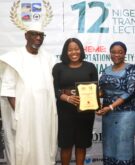
Boboye Oyeyemi, former Corps Marshal of the Federal Road Safety Corps (FRSC), stated this at the 30th anniversary of Motoring World with the theme: ‘Celebrating Three Decades of Excellence in Automotive Journalism,’ held in Lagos recently.
Oyeyemi said that Nigeria possesses one of the largest automotive markets in Africa, but regretted that the country failed to fully harness its enormous potential due to policy inconsistencies and weak support for local manufacturing.
According to him, the country’s population of over 240 million, vehicle fleet estimated at 21 million, road network spanning more than 204,000 kilometres, and growing urban population presented significant opportunities for vehicle assembly, component manufacturing, automotive financing, electric vehicle infrastructure, and related services.
Read also: Spare parts manufacturing, NAIDP to drive Nigeria’s auto industry growth – Experts
Oyeyemi, who is also the chairman of the Chartered Institute of Logistics and Transport (CILT), noted that despite these advantages, the country’s automotive manufacturing sector is still underdeveloped and heavily dependent on imported used vehicles.
He lamented that the National Automotive Industry Development Plan (NAIDP) and other regulatory frameworks had been repeatedly reviewed and restructured without generating the sustained industrial growth expected from a country of Nigeria’s size and market potential.
According to him, investors had entered and exited the sector, while several assembly plants had struggled to remain operational due to policy uncertainty.
“Nigeria’s domestic automotive manufacturing industry remains embryonic, dependent on the fairly used vehicles, the portable components that are manufactured locally, are struggling to develop the supply chain depth, the technical workforce, and the policy consistency that would make local automotive manufacturing genuinely competitive.
“The automotive policy architecture, the national automotive industry development plan, the delivery frameworks, the assembly plant licensing regime, have been constructed and reconstructed multiple times without producing a sustained industrial momentum that Nigeria of this size requires,” Oyeyemi said.
He commended Motoring World for consistently advocating policies aimed at strengthening the automotive sector over the last three decades, describing the publication as a major stakeholder in the industry’s development.
Oyeyemi raised concerns about road safety, describing it as the most critical human dimension of the transportation sector, noting that road crashes have continued to claim too many lives and require sustained interventions.
Jumoke Oduwole, minister of Industry, Trade, and Investment, noted that the automotive policy is under review to accommodate emerging technologies in the sector.
Oduwole, who was represented by Samuel Adetoro, desk officer for the auto industry at the Ministry, stressed that the ongoing review was designed to align the country’s automotive ecosystem with global trends in sustainable mobility and industrial development.
According to the minister, the automotive industry is a necessary pillar of Nigeria’s industrialisation agenda and has the potential to generate significant employment opportunities, attract investments, deepen local manufacturing, and reduce dependence on imported vehicles.
She noted that while the existing automotive policy provided a framework for the growth of vehicle assembly operations in the country, changing global realities and advancements in technology have made it necessary to update the policy to reflect current and future transportation needs.
Joseph Osanipin, director-general, National Automotive Design and Development Council (NADDC), called for stronger collaboration between government, industry stakeholders, and the media to accelerate the country’s automotive industrialisation and position Nigeria as a leading automotive manufacturing hub in Africa.
Osanipin, who was represented by Susan Taiwo, said the future of mobility is being reshaped globally by electric vehicles, alternative fuels, smart manufacturing, and green transportation technologies, stating that Nigeria must not be left behind in the transition.
According to him, the council is implementing a range of initiatives aimed at transforming Nigeria from a vehicle-consuming nation into a competitive automotive manufacturing and innovation centre on the continent.
He listed key focus areas of the council to include EV development, Compressed Natural Gas (CNG) conversion programmes, local content promotion, automotive component development, skills acquisition, and strategic partnerships across the industry.

Join BusinessDay whatsapp Channel, to stay up to date
Open In Whatsapp